


Jelly Cup Filling and Sealing Machine
A counting bottling line has two connected duties: processing individual pieces and presenting bottles ready to receive the required count. Increasing the pieces in each bottle generally increases the counting workload per finished bottle.
A bottles-per-minute claim is therefore incomplete without the product, target count and operating conditions.
How the line assembles a counted pack
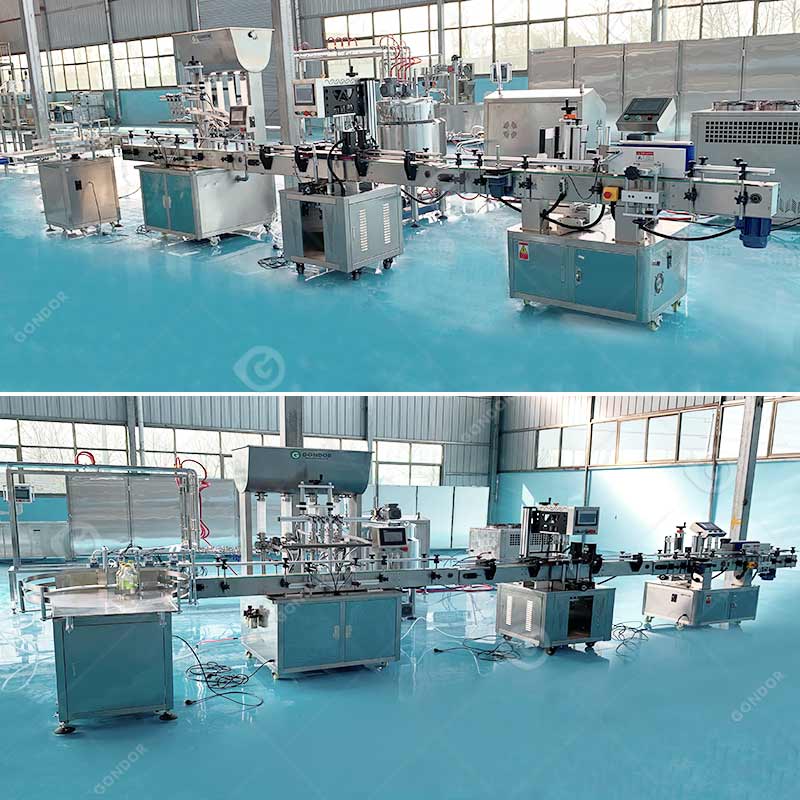
An integrated arrangement orients bottles, feeds small solid products to counting channels, separates pieces for detection and releases the required quantity into the positioned container. Capping, sealing, labeling and collection follow according to the selected scope.
The supplied line material includes candies, gummies, nuts, seeds and similar small solids. Suitability must still be demonstrated with the actual pieces, particularly where they are sticky, irregular or easily damaged.
Optional desiccant or liner-sealing stages should follow the product and packaging specification. They are not automatically necessary for every counted food.
Convert piece flow into a bottle limit
For an initial estimate:
Theoretical bottles per minute = usable counted pieces per minute ÷ pieces per bottle.
Suppose a tested counting arrangement supplies 1,800 usable pieces/min:
| Required count | Initial bottle-rate calculation |
|---|---|
| 30 pieces/bottle | 60 bottles/min |
| 60 pieces/bottle | 30 bottles/min |
| 90 pieces/bottle | 20 bottles/min |
This example isolates the count requirement. Actual output also depends on gating, bottle positioning, changeover between bottles and other machine functions. The figures are not a rating for the current line.
Why channel count alone is insufficient
More channels can increase available piece flow if the product feeds and separates correctly. A poorly supplied channel or clumped material may not contribute its expected output.
Ask whether the proposed channel arrangement has been tested with the intended product at the intended count. The smallest piece, the stickiest variant and the largest count may create different limits.
A machine that counts free-flowing hard pieces well has not necessarily demonstrated the same rate with coated gummies. Product condition and room conditions can change the feed behaviour during a long run.
Check the bottle-transfer time
The counter needs a bottle in the correct position before releasing a batch. A narrow bottle neck, unstable bottle or a poorly matched discharge funnel can slow filling or cause pieces to bridge.
Watch the transition from one bottle to the next during the trial. If the counting section waits while bottles move into place, increasing piece-feed speed may produce little improvement.
The capper and labeler must then accept the resulting bottle stream. Their relevant speed is the sustainable rate with those bottles and closures, rather than a maximum rate measured on a different format.
Define counting quality clearly
Request a test method that explains what the accuracy figure measures. Piece-detection accuracy and the percentage of bottles containing exactly the target count describe different outcomes.
For a purchasing trial, verify finished bottles using an agreed independent method. Record overcounts, undercounts, damaged pieces and empty or missed containers separately. An overall average count can hide both overfilled and underfilled bottles.
| Trial input | Reason to include it |
|---|---|
| Actual product lots and condition | Reveals variation in separation and feeding |
| Each main count per bottle | Establishes the real counting workload |
| Production bottles and closures | Tests neck clearance and downstream handling |
| Agreed run duration | Exposes refill, buildup and intermittent stops |
| Finished-bottle count verification | Measures the package outcome the buyer needs |
Distinguish channel capacity from complete-line capacity
A counter's piece flow may be adequate while bottle exchange, capping or labeling limits the accepted output. Observe the time spent counting and the time spent waiting for each positioned bottle.
If the counting channels remain ready while the bottle-handling section catches up, adding channels may not remove the constraint. If correctly positioned bottles wait for their count, examine piece supply and separation before changing downstream equipment.
Record those states over the same trial period. Comparing an isolated counter test with a separate capper demonstration can hide the interaction that determines performance when the equipment operates together.
Use the intended count in every production calculation
For an illustrative order of 12,000 bottles containing 60 pieces each, the line must deliver 720,000 accepted pieces into those bottles. A 30-piece version of the same bottle count would require half as many pieces, although other machine-cycle limits might remain.
Include the expected SKU mix in the schedule. A day containing several high-count formats can require more counting time than a day with the same number of low-count bottles.
State whether the output target counts accepted bottles or total bottles passing the machine. Rejected or interrupted packages must be handled consistently in the calculation so the claimed order capacity is not overstated.
Examine the product and bottle combination
Provide piece dimensions, shape variation and the expected surface condition. Then check the discharge path with the actual bottle neck. Pieces that count correctly can still bridge, bounce or miss the intended opening if the transfer arrangement is unsuitable.
Observe both the beginning and end of each discharged batch. A bottleneck can occur as the final pieces clear the funnel or when the gate changes state. The supplier should evaluate these events at the intended count rather than showing only continuous loose-piece flow.
If several products share one bottle, test the combination that presents the most difficult fit or feeding behaviour. A nominal product-size range is not a substitute for that package-specific assessment.
Define a verification sample that answers the commercial question
Select finished bottles using an agreed method and verify the actual counts independently. Report how many contain exactly the target, how many contain too few and how many contain too many.
An average count of 60 can result from some bottles containing 59 and others 61. That average does not establish that the required 60-piece pack was produced consistently. The acceptance record should retain the distribution rather than only the mean.
Also record damaged pieces and interruptions that require manual intervention. The line's useful output depends on product condition and accepted package quality as well as counting speed.
Plan replenishment and component supply
The powder and solid bottling workflow connects the core measurement with bottle supply, closure handling and collection. For a counting project, specify how product reaches the hopper and how bottles and caps are replenished.
Include ordinary refill events in the trial. Product level and material handling may change how pieces feed, while a cap shortage can stop an otherwise capable counter. Keep those causes separate in the downtime record.
Review format changeover and trial scope
Changing the count setting may be simple, but changing product or bottle can require guides, funnels, contact-part cleaning and verification. Ask which parts and settings change for each intended format.
Measure the interval until accepted production resumes rather than only the time spent entering a new count. Identify the tested product, bottle, closure, count and operating duration in the supplier's report.
A complete record makes the capacity claim usable for production planning. It explains which combinations have been demonstrated and which remain estimates requiring a representative product trial.
The [counting bottling line page](/product/counting-line/) describes the integrated arrangement. For a capacity assessment, [send piece dimensions, surface condition, counts per bottle and target accepted bottles per shift](/contact/). Include representative product and packaging samples, plus any sealing or labeling requirements.
Related guides
Related Products


Sizing equipment for your line?
Send the product, the batch size and the utilities you have. We reply with the model, the cycle time and what the cooling side needs.



