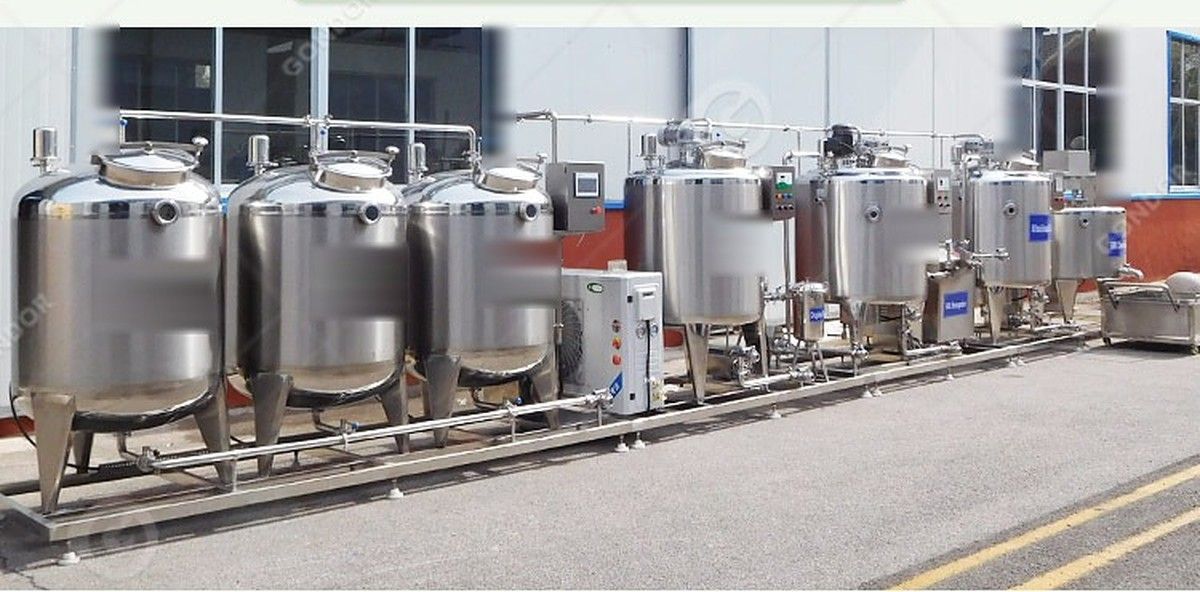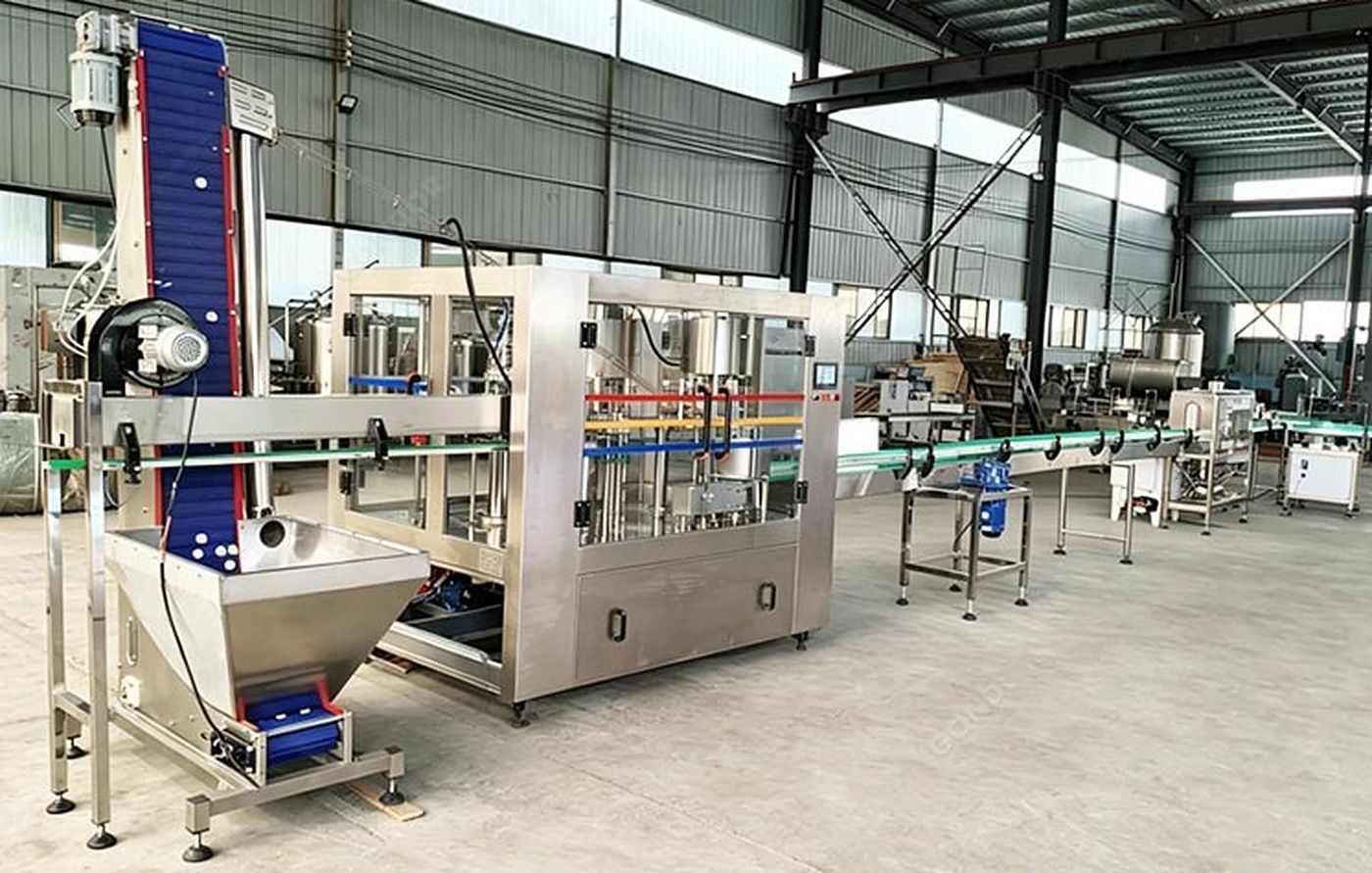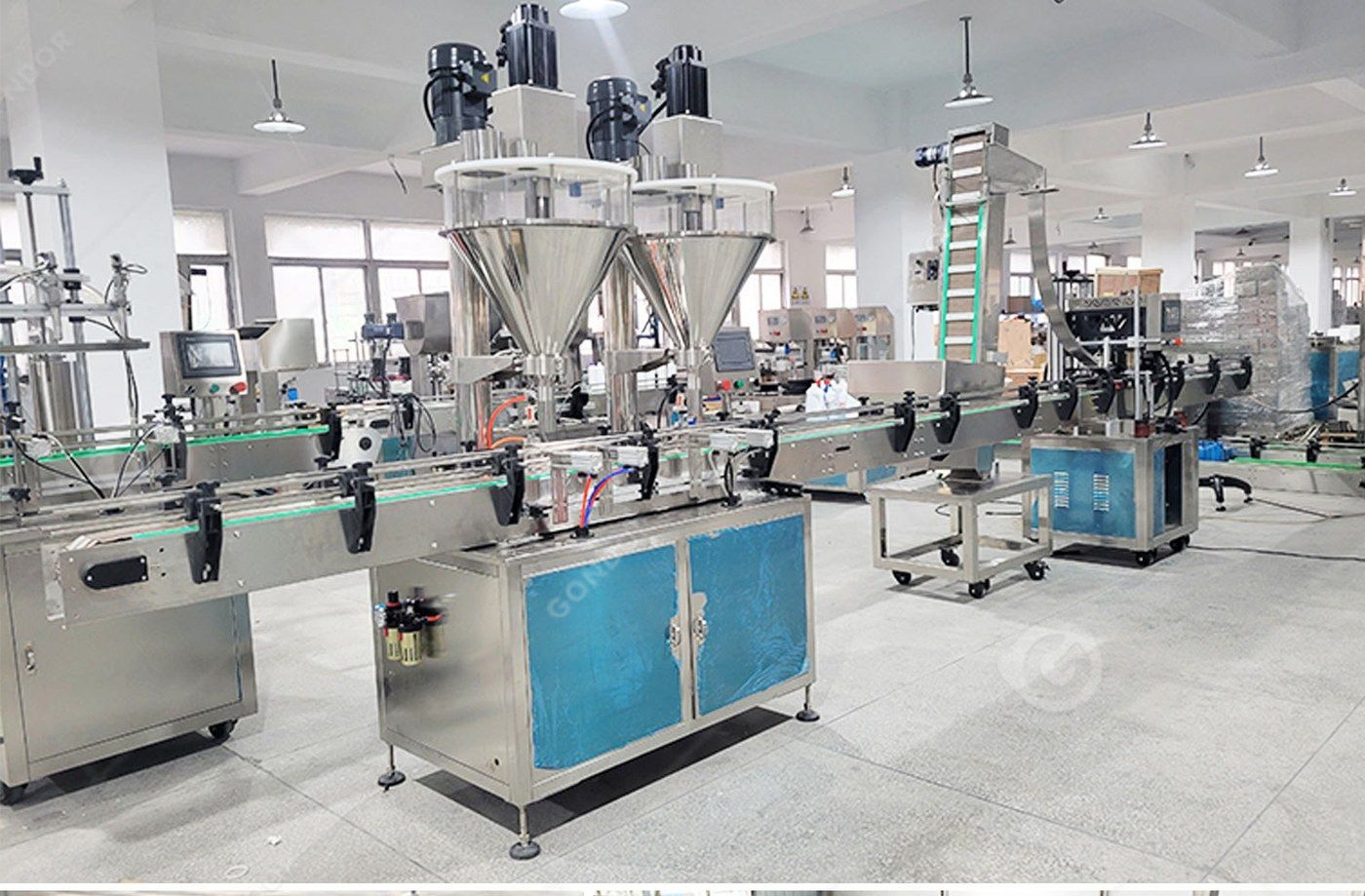

Vinegar is an acid first and a food second, and that order decides what the equipment is made of. Acetification itself happens in a generator, usually aerobic and purpose-built; what a filling plant needs downstream is dilution to the target titre, blending, a hold before packing and a filler that does not drip.
Our part of that route starts at the holding tank. It is the stage where the product is brought to strength, clarified and then bottled, and it is where most of the variation between batches is either removed or locked in.
What has to go right
- Titre that drifts between batches Diluting by eye gives a product that is 4.6% one week and 5.4% the next, which is a labelling and a taste problem at the same time.
- Corrosion at the seams Acetic acid attacks 304 stainless above roughly five percent at ambient temperature, and it finds welds and crevices first.
- Drips on a thin liquid Vinegar is close to water in viscosity, so a filler tuned for a thicker product leaves the bottle wet and the label lifts.
The line, step by step
- 01
Receive the stock
High-titre vinegar is stored in a dedicated tank sized for a production run, not for the whole season.
- 02
Dilute to titre
Soft water is metered in under agitation and the batch is checked before it moves on, not after.
- 03
Blend and hold
Sugar, herbs or caramel are added where the product calls for it, then the batch rests so any haze settles.
- 04
Filter or rack
Filtration removes the haze and any residual mother that would keep working in the bottle.
- 05
Fill and cap
Accurate, drip-free filling into glass or PET, then cap and label.
Machines for this application
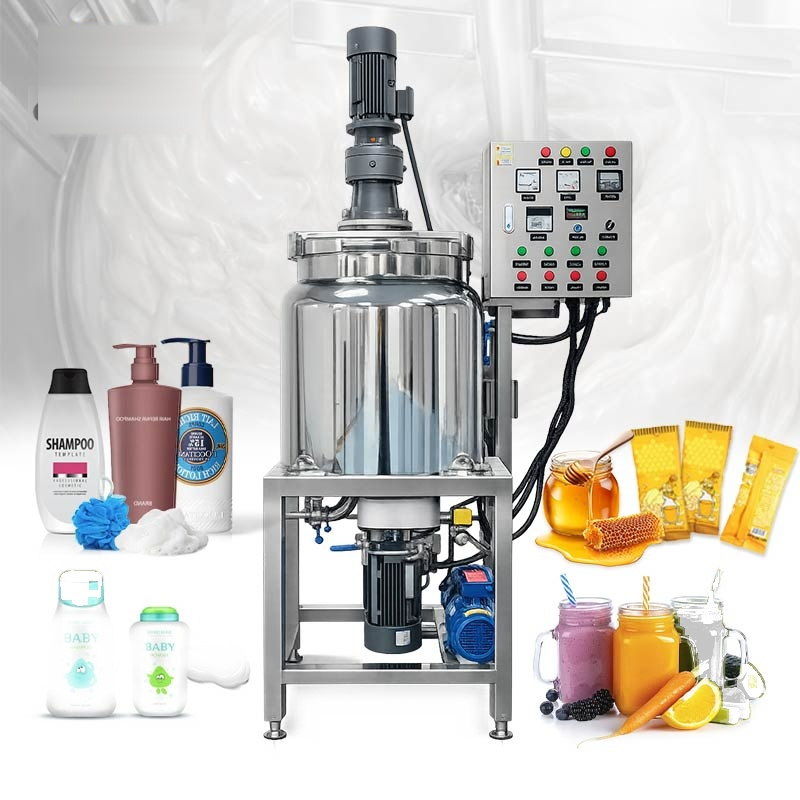 Mixing Tankmetered dilution and blending; specify 316L where the titre runs high.
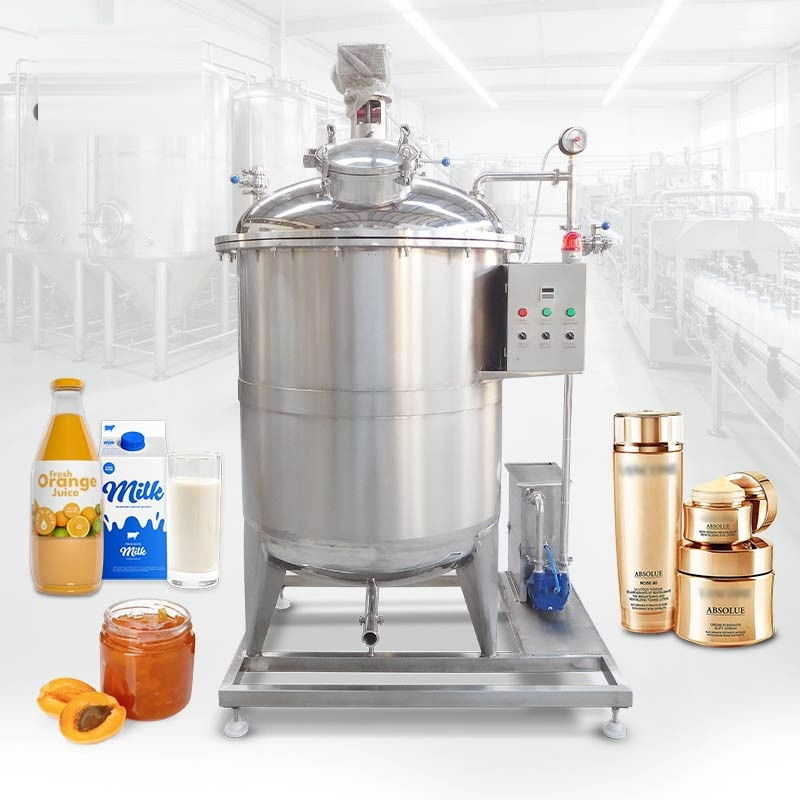 Vacuum Degasserstrips oxygen picked up during dilution, which is what dulls the colour.
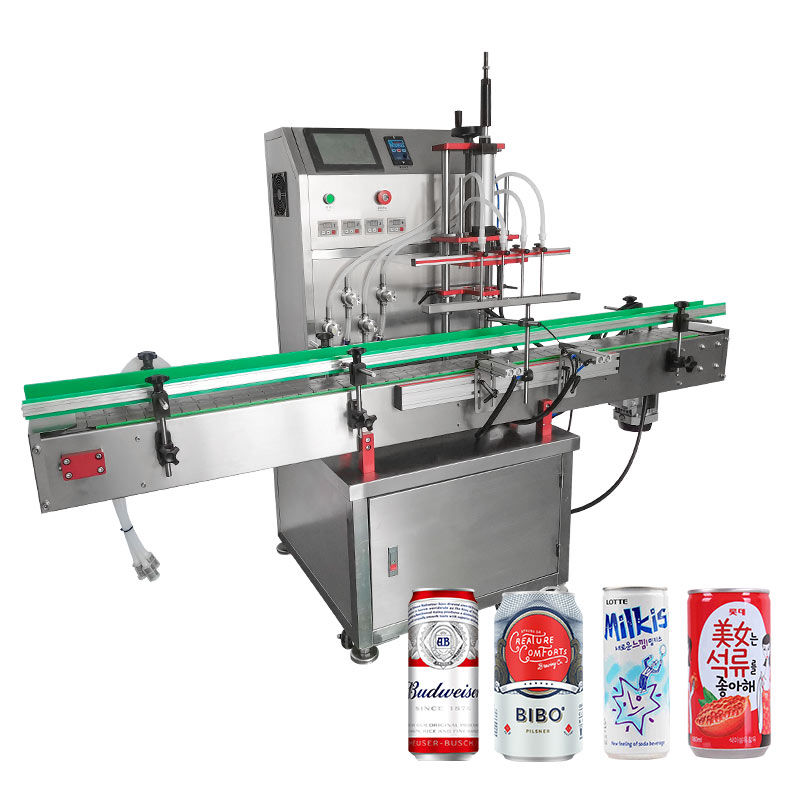 Liquid Filling Machinesuck-back nozzles stop the drip on a water-thin product.
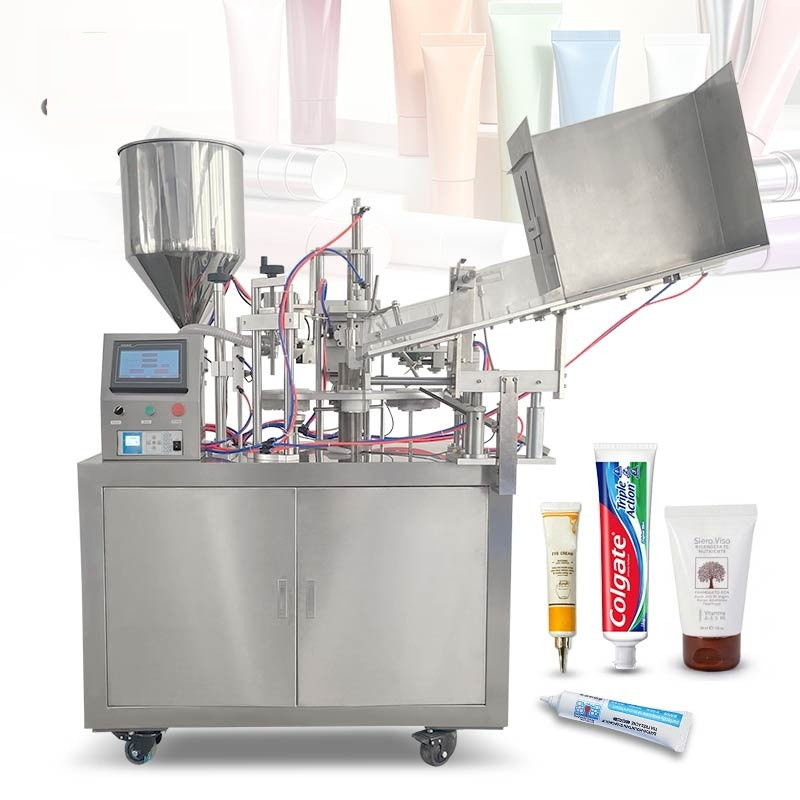 Tube Filling and Sealing Machinesingle-serve sachets and small tubes for food service.
Typical process parameters
| Stage | Typical setting | What it protects |
|---|---|---|
| Titre | 4–8% acetic acid in the finished product | legal strength and taste balance |
| Dilution water | softened, below 50 ppm hardness | haze formation in the bottle |
| Material | 304 up to about 5%, 316L above | weld and crevice corrosion |
| Filling | 100–5000 ml, ±1%, suck-back nozzles | clean bottle threads and label adhesion |
Questions we get asked
Will 304 stainless steel survive vinegar?
At table strength and ambient temperature, usually yes. At higher titres, at elevated temperature, or where the vessel sits wet between runs, 316L is the safer specification and the price difference is small next to a weld repair.
Can you supply the acetification tank?
Not as standard. Acetification is an aerobic generator process with its own design rules; we supply from the holding and blending stage onward, which is where most bottling plants start.
Why does my vinegar go cloudy after bottling?
Usually residual mother or protein haze that was not filtered out, sometimes hardness in the dilution water. Both are solved upstream of the filler, not in the bottle.
Is a piston filler right for a thin liquid?
A piston works, but the nozzle matters more than the piston. Suck-back or blow-off nozzles are what keep the thread dry on a product this thin.
Tell us the product and the pack
Send the product, the daily volume and the container you fill into. We come back with the machine list for each stage, the utility requirements and a price.