
Water is the simplest product on the line and the least tolerant of a badly set machine. There is no colour, no viscosity and no flavour to hide behind, so a fill level that varies by five millilitres is visible to the customer before it is visible on the report.
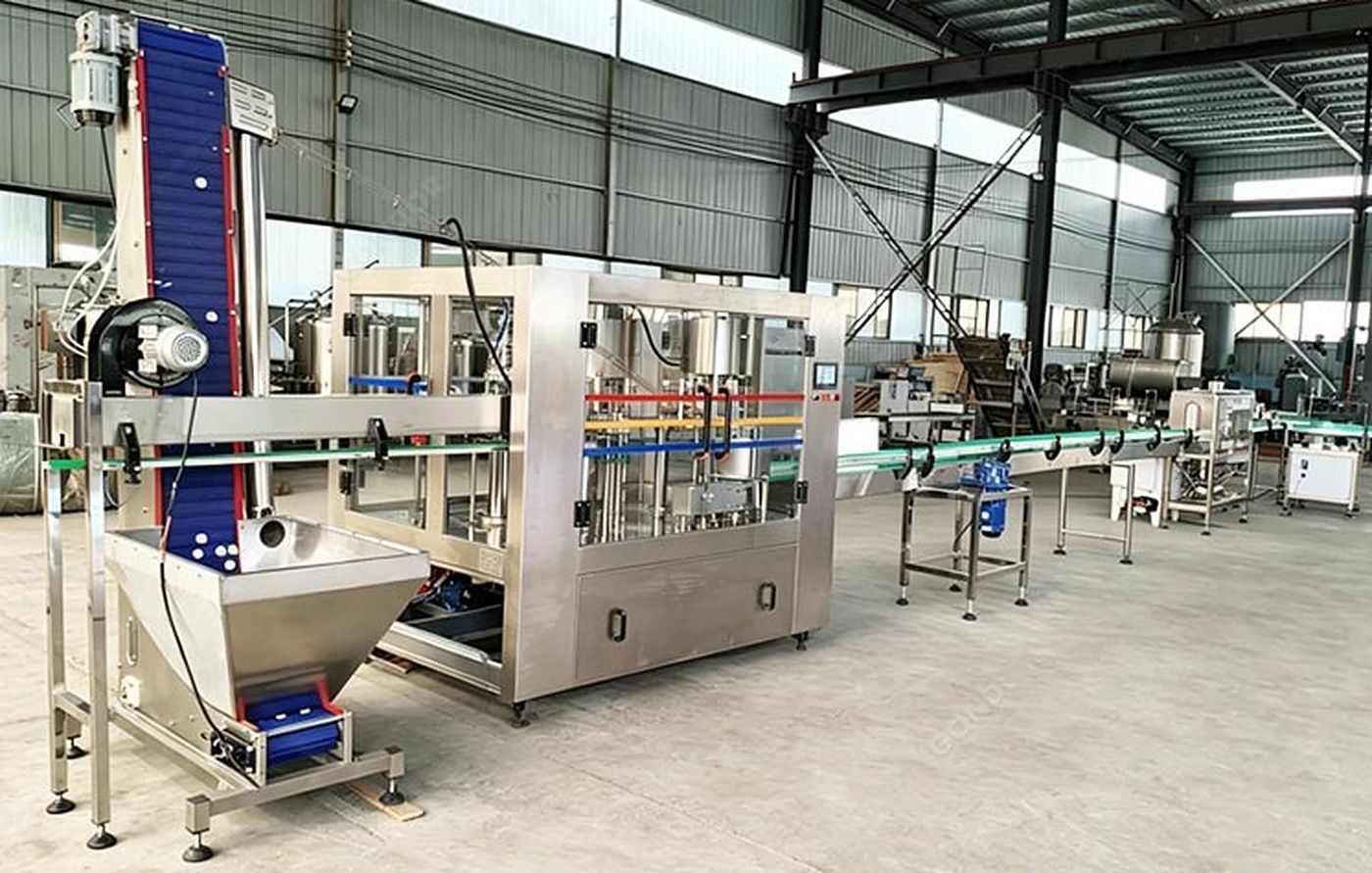
That is why water lines are usually built as a monobloc: rinser, filler and capper on one frame, driven from one shaft, so the bottle is never out of registration between stations.
What has to go right
- Fill level that visibly varies On a transparent bottle there is nothing to hide a short fill, and the check-weigher rejects the same bottles the customer would.
- Bottles that arrive dirty Rinsing is a two-second operation that decides whether the pack is compliant; skipping it to gain speed is the usual false economy.
- Cap torque that is either loose or seized Under-torque leaks in transit, over-torque splits the cap, and both are set by a magnetic clutch that nobody re-checks.
The line, step by step
- 01
Treat the water
Filtration, softening and disinfection to the specification the source needs, not to a generic one.
- 02
Blow and rinse the bottle
Air rinse, then water rinse, on the same neck-handling principle the filler uses.
- 03
Fill
Gravity or pressure filling to a level set by the bottle, at the temperature the product is packed at.
- 04
Cap
Caps are picked, oriented and torqued on the monobloc so the bottle never leaves registration.
- 05
Label and pack
Labelling, shrink wrapping or cartoning, then palletising.
Machines for this application
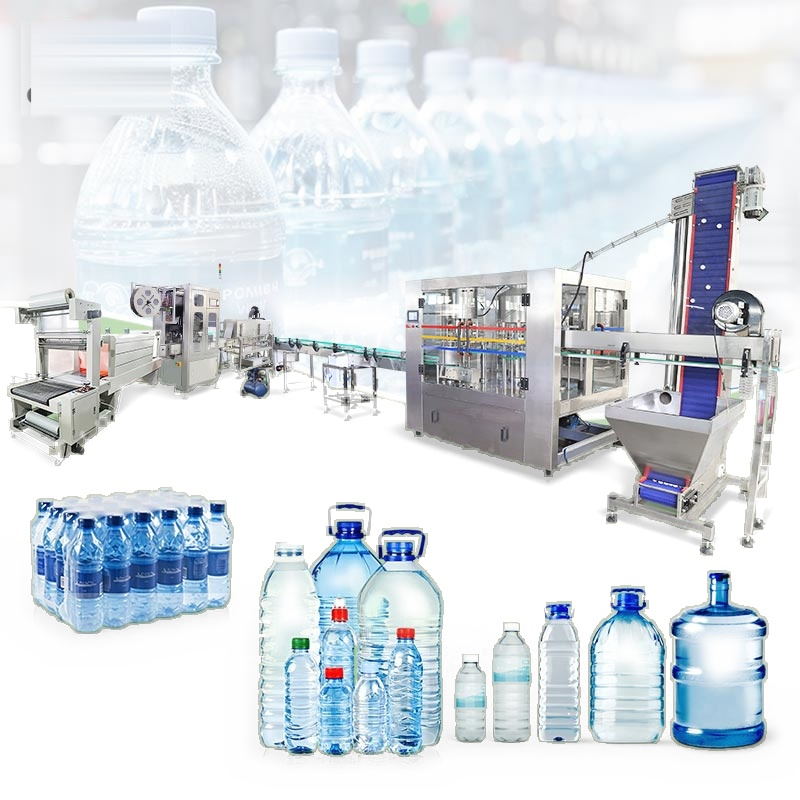 Water Bottling Linerinser, filler, capper and packer laid out as one flow for 0.33 to 2 L bottles.
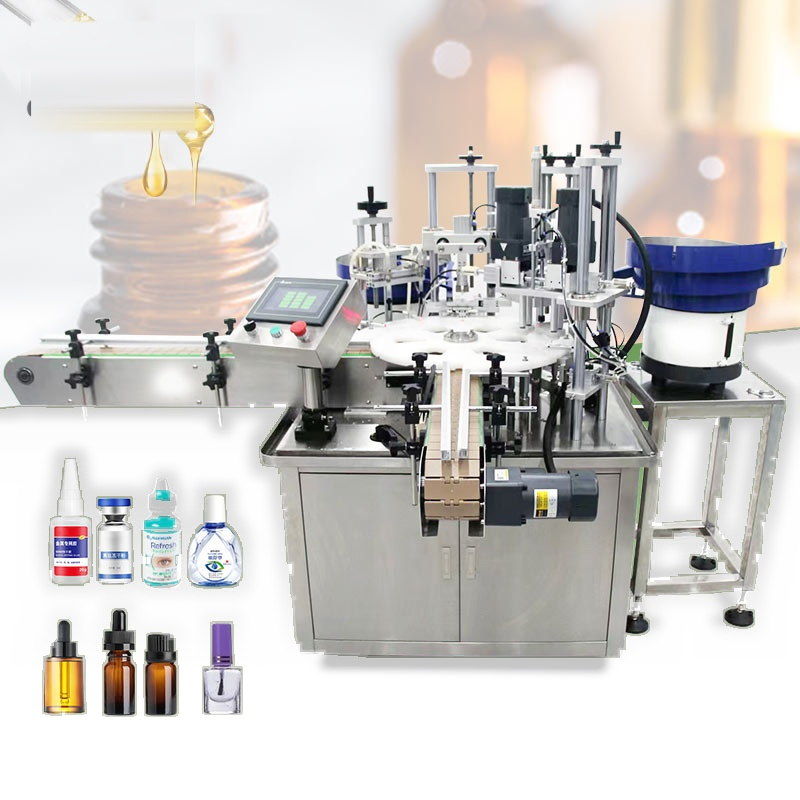 3-in-1 Filling and Capping Machinerinse, fill and cap on a single frame, so the bottle stays in registration.
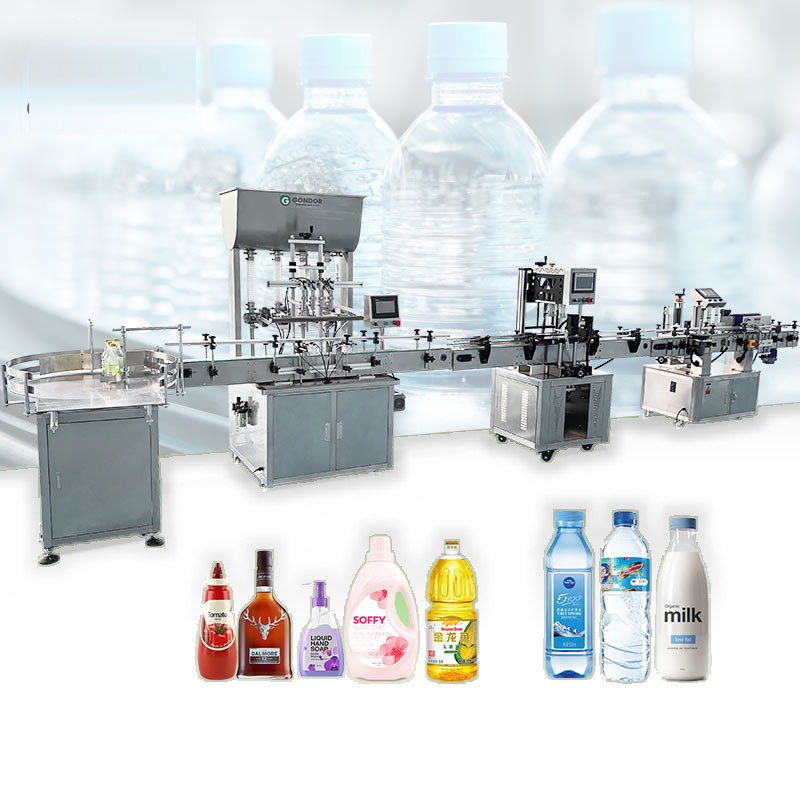 Liquid Filling Linethe wider filling and packing line for formats beyond the standard bottle.
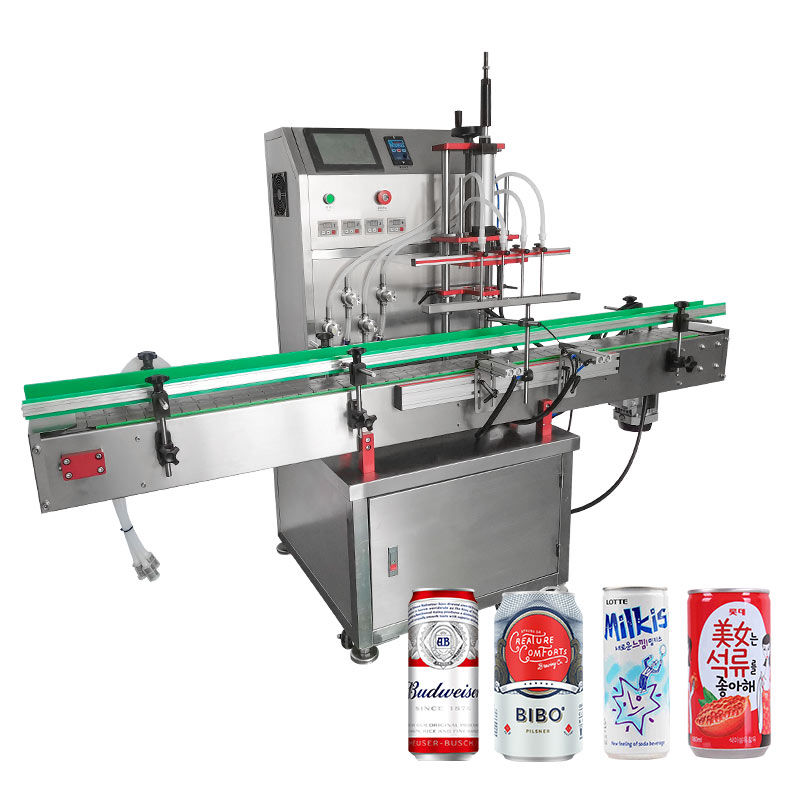 Liquid Filling Machinesemi-automatic and small-volume filling for 5 gallon and specialty formats.
Typical process parameters
| Stage | Typical setting | What it protects |
|---|---|---|
| Bottle range | 0.33–2 L PET, glass on request | which filler head and gripper set you need |
| Output | from 2,000 bottles/h on a compact monobloc | line balancing against the labeller and packer |
| Rinse | air then potable or product water | compliance on a product with nothing to hide behind |
| Fill accuracy | level filling, ±1% by weight check | visible fill height and check-weigher rejects |
| Cap torque | set by magnetic clutch and re-checked each shift | leaks in transit and split caps |
Questions we get asked
Monobloc or separate machines?
A monobloc is more compact, keeps the bottle in registration and needs one operator. Separate machines are easier to expand and to repair, but every transfer is a chance for the bottle to go out of alignment.
How fast can a small line run?
A compact 3-in-1 starts around 2,000 bottles per hour, which is roughly what one shrink-wrapping station can keep up with. Faster than that and the packing end becomes the constraint.
Do I need a blow moulding machine too?
Only if preform logistics are cheaper than shipping empty bottles. Most small plants buy bottles in and put the capital into the filling end.
What water treatment is actually required?
It depends on the source and the claims on the label. Spring water is filtered and disinfected; purified water goes through reverse osmosis. The line downstream is the same either way.
Tell us the product and the pack
Send the product, the daily volume and the container you fill into. We come back with the machine list for each stage, the utility requirements and a price.