
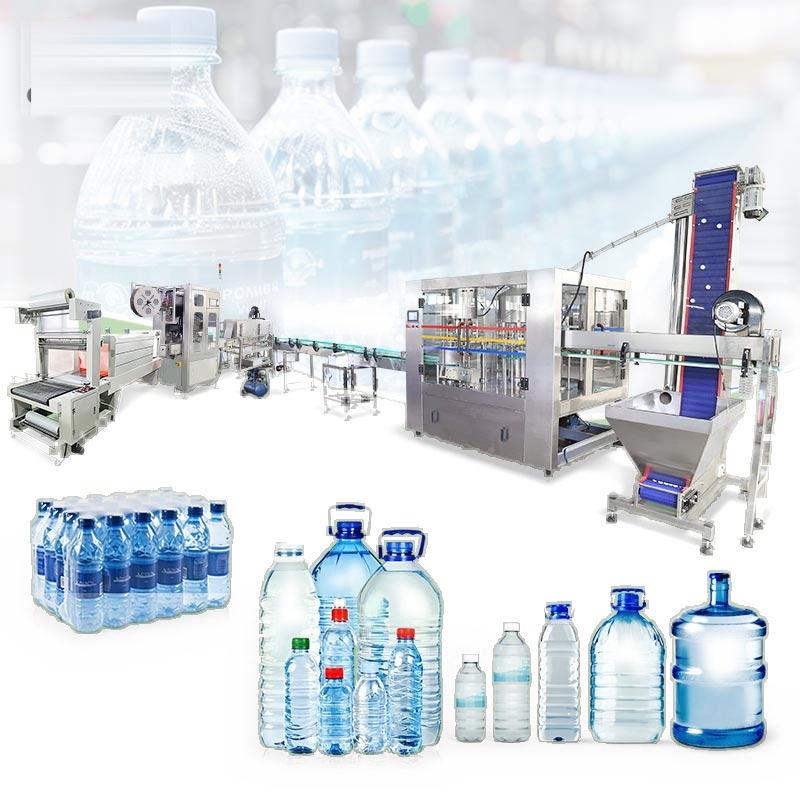
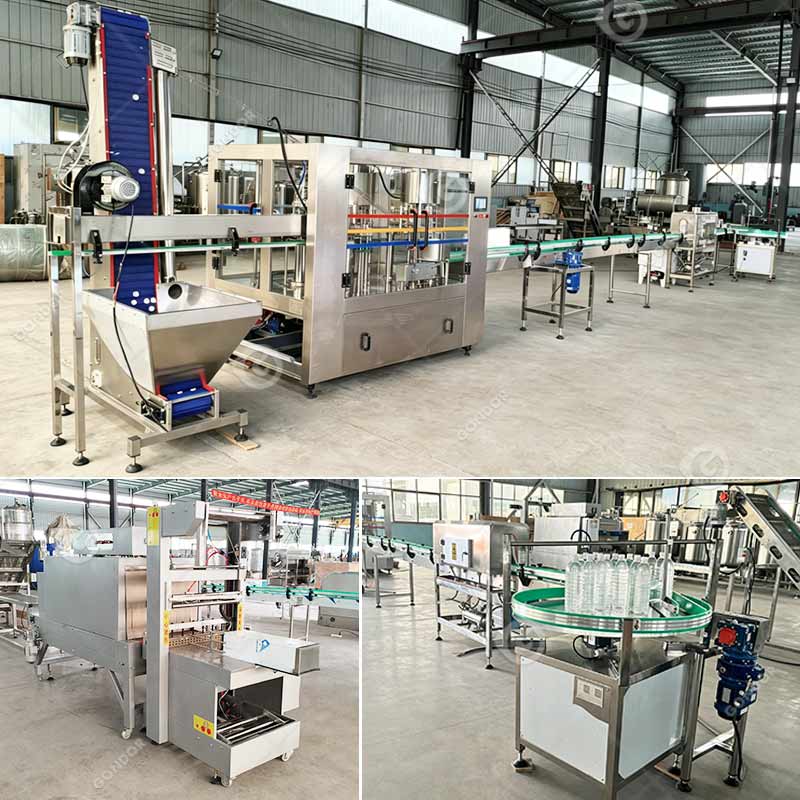
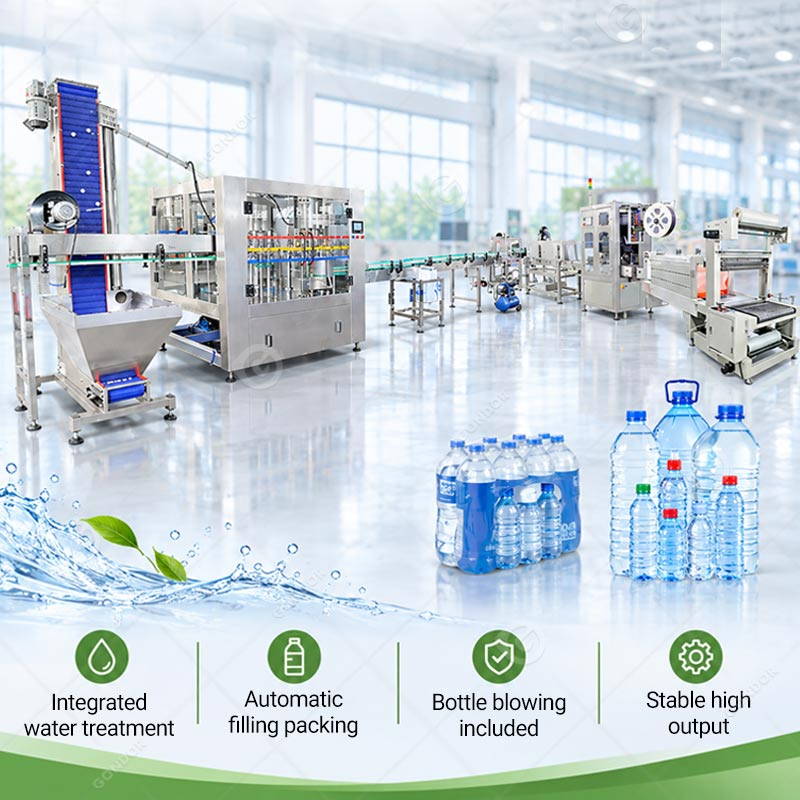
Eight stations from water treatment to palletizing for 200-2000 ml PET at a 3000 bottles per hour core, with cycle times matched before installation.
The Hard Part of a Water Bottling Line Is Not Buying Machines but Joining Them
First-time water plant builders often assume the recipe is simple: buy water treatment from one supplier, a blower from another, a filler from a third, and bolt them together. Installation tells a different story. Treatment output cannot feed the filler, bottles from the blower jam at the 3-in-1 infeed starwheel, packs pile up before the shrink wrapper, and four people still hand-stack pallets. Nobody aligned the data between machines, commissioning drags past a month, and the trial-run power bill alone could have bought a small machine.
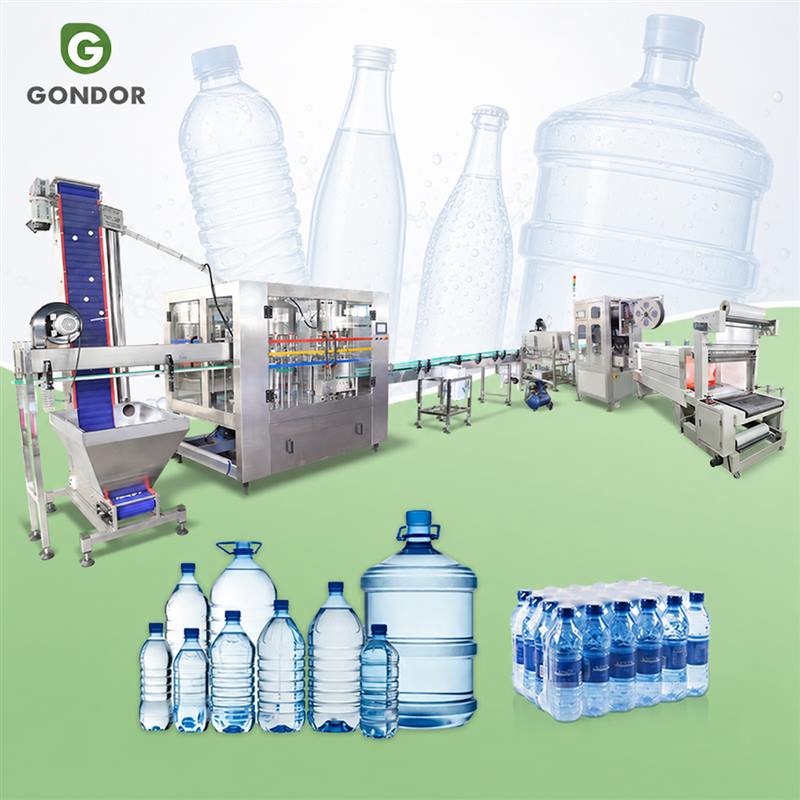
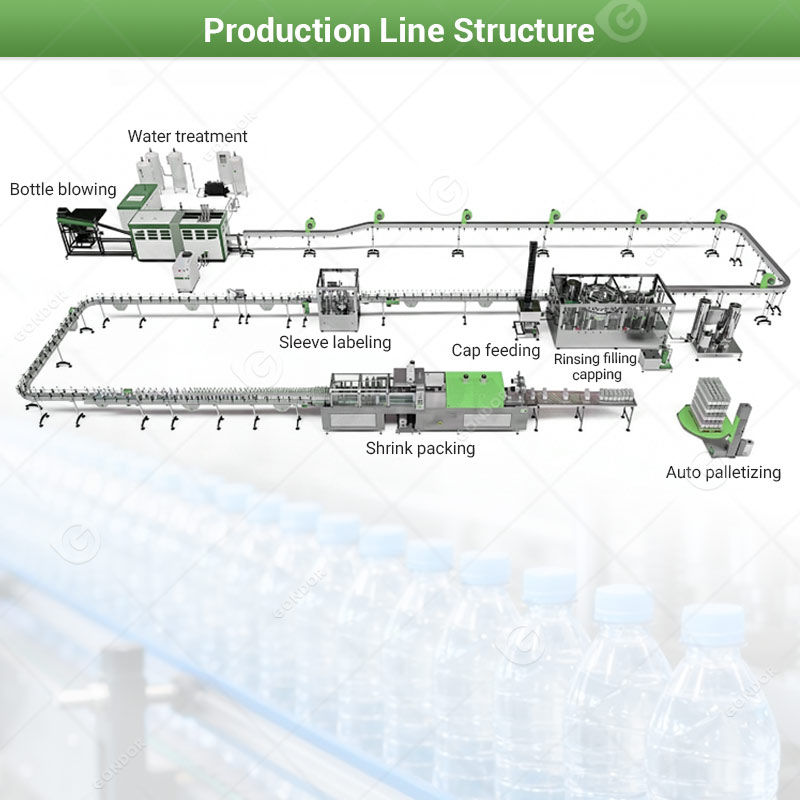
This mineral water bottling line is engineered for whole-line delivery. The treatment system is sized at 2 t/h, the blower at 3000 bottles per hour, and the 3-in-1 rinsing filling capping machine is the core, with cap feeding, sleeve labeling, shrink packing, collecting and palletizing following in sequence. Every station is matched to the same bottle and capacity data. From raw water at the gate to finished pallets in the warehouse, no bottle touches the floor.
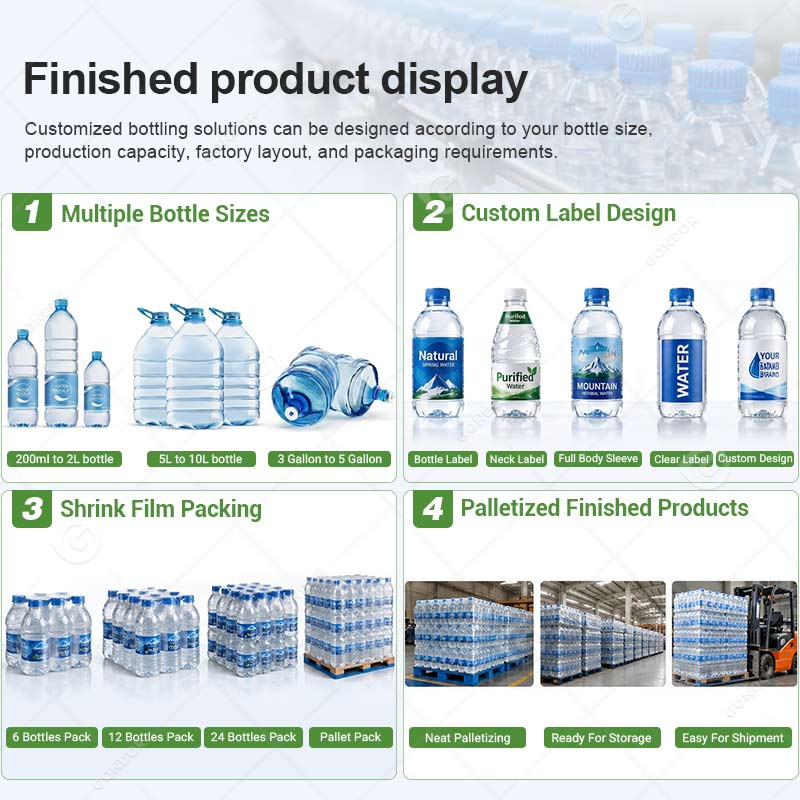
Filling heads run from 8 to 32 by capacity. PET bottles cover 200 to 2000 ml. Plastic screw caps and sleeve or sticker labels follow the habits of the target market. For retrofit projects, send the floor plan and the water source report, and the line is rematched to the site.
Water Bottling Line Capacity, Dimensions and Utility Loads
Line overview (per the official parameters)
| Item | Specification |
|---|---|
| Line model | GD-WBPL |
| Core capacity | 3000 bottles/h (3-in-1 machine / bottle blowing machine) |
| Water treatment capacity | 2 t/h |
| Applicable products | Mineral water, purified water, drinking water and similar non-carbonated products |
| Applicable bottles | PET, 200-2000 ml, customizable |
| Filling heads | 8 / 12 / 16 / 24 / 32 heads, customizable |
| Filling accuracy | Within ±1% (depending on model) |
| Cap type | Plastic screw cap |
| Label type | Sleeve label / sticker label optional |
| Packing forms | Bottled, shrink film pack, carton pack |
| Voltage | 220 V / 380 V, customizable |
| Drive | Electric and pneumatic |
| Product-contact material | Food-grade stainless steel |
| Automation | Fully automatic, PLC touch screen control |
| Certification | ISO 9001, ISO 14001, ISO 45001, CE, BSCI, ETL |
| OEM / ODM | Accepted |
| Core component warranty | 1 year |
Per-station specifications (per the official parameter table)
| Station | Power | Voltage | Weight | Dimensions | Capacity |
|---|---|---|---|---|---|
| Bottle blowing machine | 55 kW | 380 V, 50 Hz | 2000 kg | 2700×1800×2200 mm | 3000 bottles/h |
| Water treatment system | 2.95 kW | 380 V, 50 Hz | 800 kg | 1800×800×1900 mm | 2 t/h |
| 3-in-1 rinsing filling capping machine | 3.5 kW | 380 V, 50 Hz | 3000 kg | 2600×1600×2300 mm | 3000 bottles/h |
| Sleeve labeling machine | 3 kW | 380 V, 50 Hz | 300 kg | 5000×1050×2000 mm | 30-80 pcs/min |
| Shrink film packaging machine | 26 kW | 380 V, 50 Hz | 350 kg | 3300×980×1700 mm | n/a |
| Palletizing machine | 3 kW | 220 V, 50 Hz | 350 kg | 1505×1716×2100 mm | n/a |
Note: The cap elevator and bottle collecting machine ship with the line configuration; the source file lists no standalone parameters for them. Voltage at 220 V / 380 V can be customized for the target market.
Customization
- OEM / ODM scope. Accepted. Line capacity (up from 3000 bottles/h), filling head count, bottle sizes, packing forms and layout can all be customized, and the interface language can be set for the target market.
- Line engineering. The line is drawn from bottle type, source water quality, capacity, workshop layout and packaging needs. The treatment configuration is based on the source water test report.
- Modification lead time. Planned against the drawing and confirmed with the offer, against the bottle format and the tooling drawing.
- MOQ. One set, or one line for a complete system.
Quality Inspection and After-sales
- Pre-shipment inspection. A machinery test report and video inspection are provided. The line runs as a whole before being packed in sections, and buyers can inspect by live video.
- Warranty. One year on the line and one year on core components (PLC, motor, pump, filling valve, conveyor system, pneumatic components).
- Installation and commissioning. Line installation drawings and remote guidance are provided, and engineers can install, commission and train operators on site.
- Spare parts. Common spares such as filling valve seals, heating tubes and cutters are stocked long term; the parts list is confirmed against your sample and pack format.
- Response. Faults are diagnosed remotely first; a field visit is arranged when the issue cannot be resolved from distance.
Inside a Water Bottling Line: From Blow Moulding to Shrink Wrap
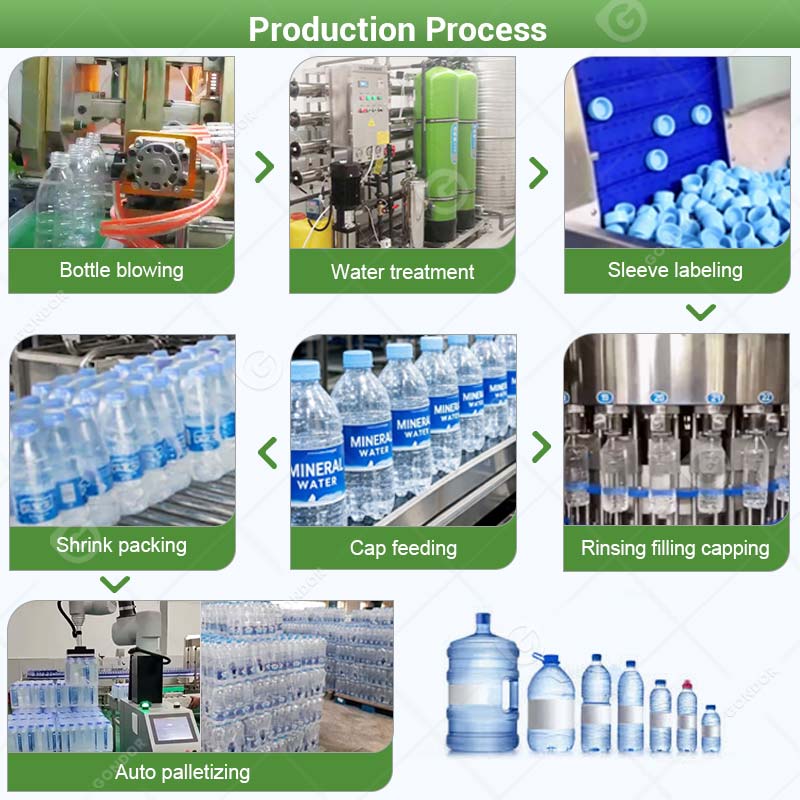
The flow in one paragraph. Raw water is purified by the treatment system and enters the filling section. PET preforms are heated and blown into bottles, then travel through the air conveyor into the 3-in-1 machine. Inside, each bottle is rinsed, filled and capped in turn, while the cap elevator feeds caps to the capping station. Finished bottles pass through sleeve labeling, shrink film packing and collecting, and the palletizer stacks them onto pallets.
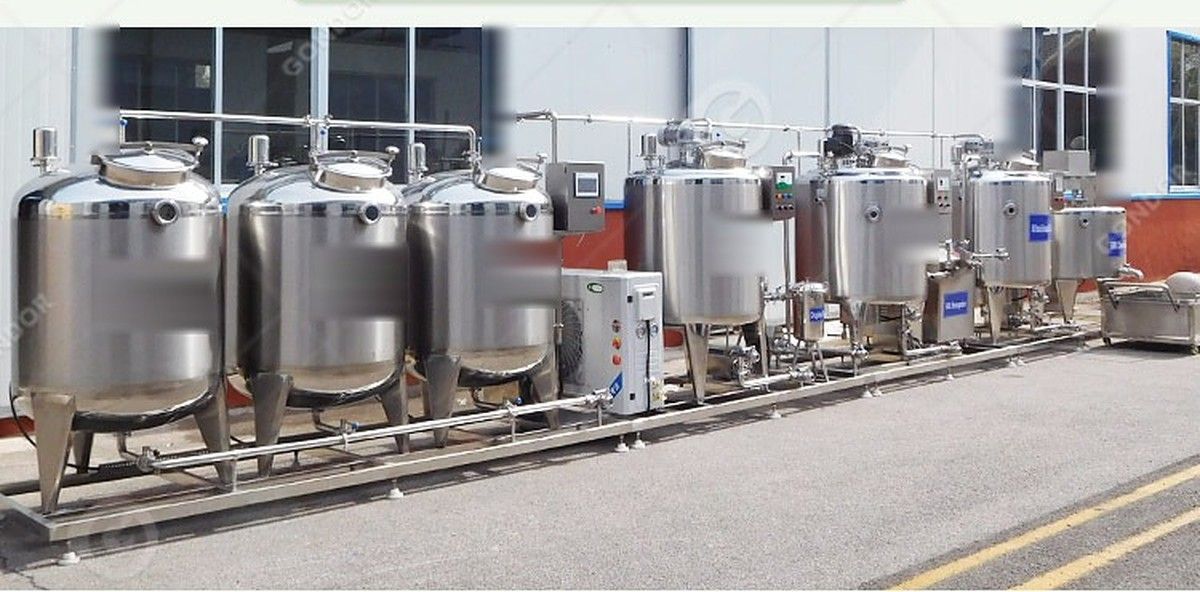
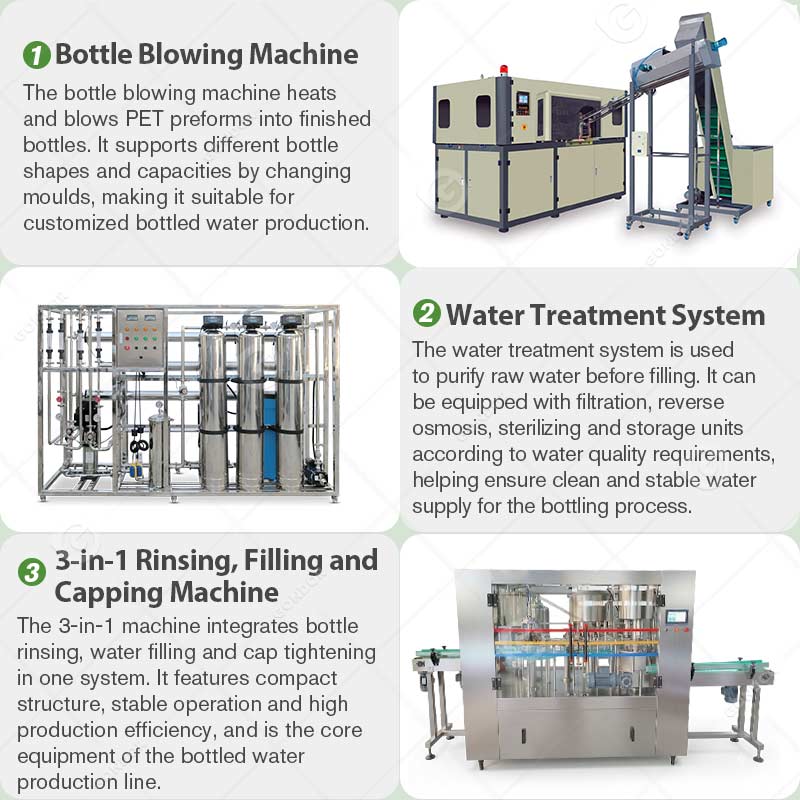
- Water treatment. Raw water is configured with filtration, reverse osmosis, sterilizing and storage units according to the water quality report. Treated water sits in a sealed tank, giving the filling section a clean and stable supply. Water quality decides the configuration; it is the one part of the line that standardization cannot shortcut.
- Bottle blowing. PET preforms soften in the heating oven and are blow-molded under high pressure in the mold. A mold change changes the bottle, so one blower covers 250 ml to 1500 ml common sizes.
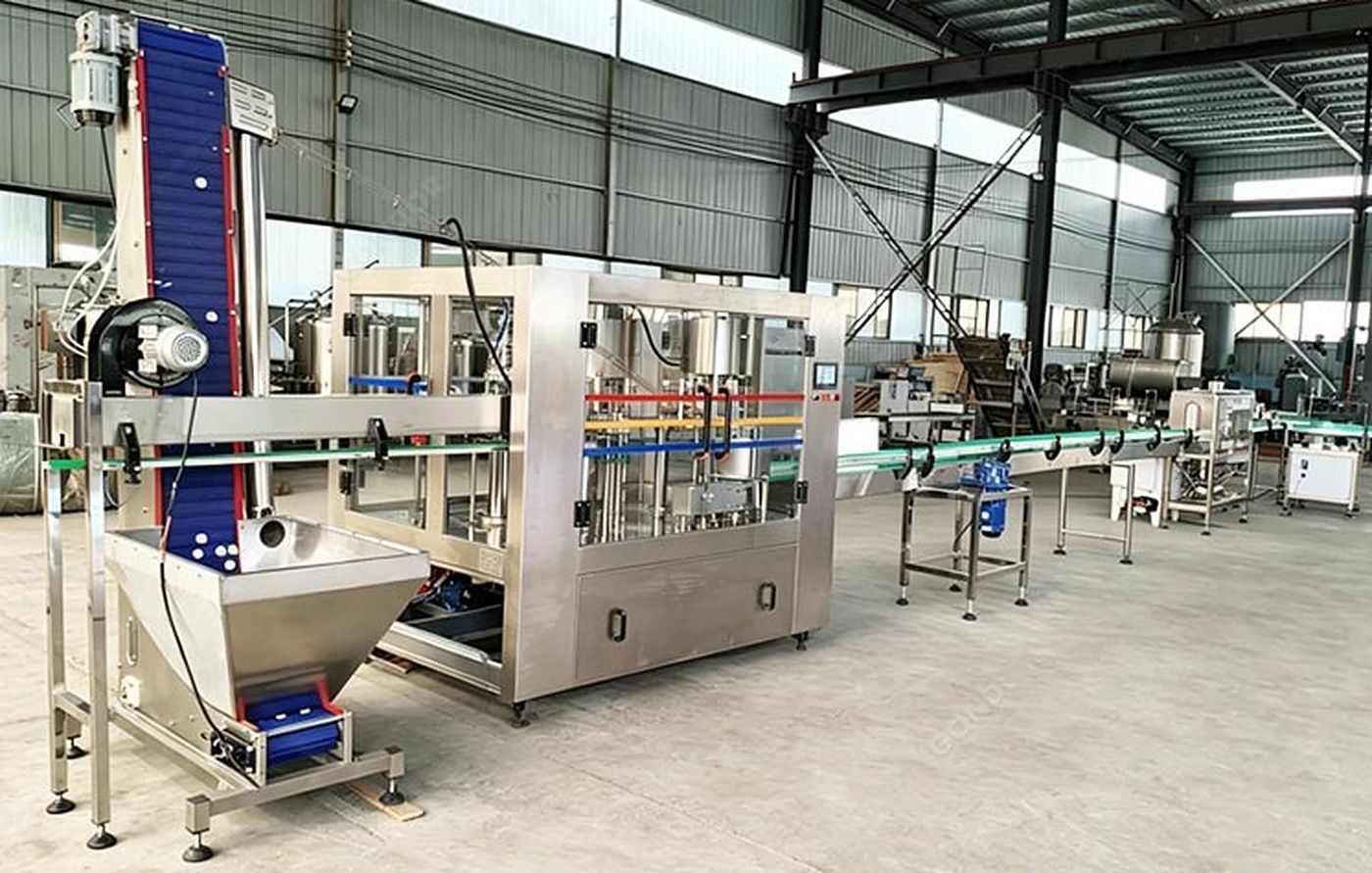
- Cap feeding. The cap elevator lifts caps automatically to the capping station, feeding continuously without stopping; an operator only tops up the cap hopper now and then.
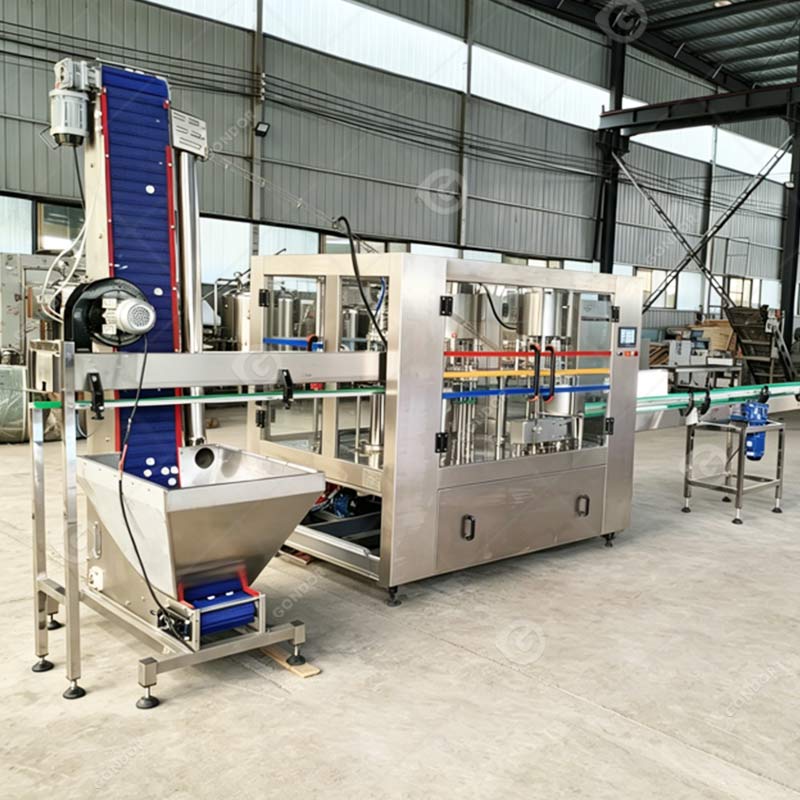
- Rinsing, filling and capping (3-in-1). Bottles enter the 3-in-1 machine, are inverted and rinsed with treated water, filled to the set volume, then pressed and tightened with caps. Three actions in one machine remove bottle transfer, which is the key design for footprint and hygiene.
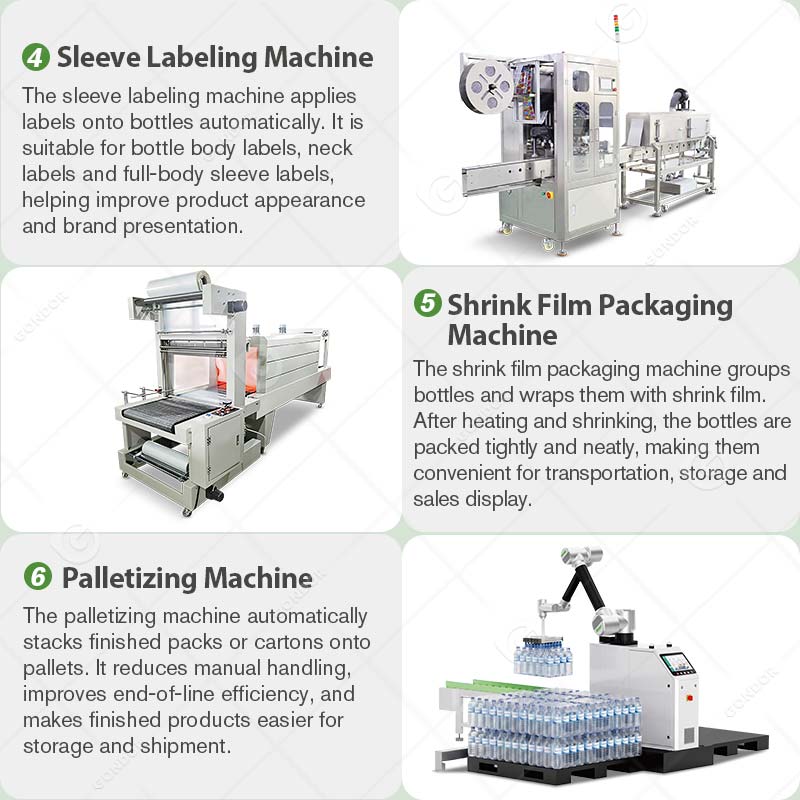
- Sleeve labeling. Heat-shrink labels are applied to the set position on the bottle: body, neck or full-body sleeves, chosen by product positioning.
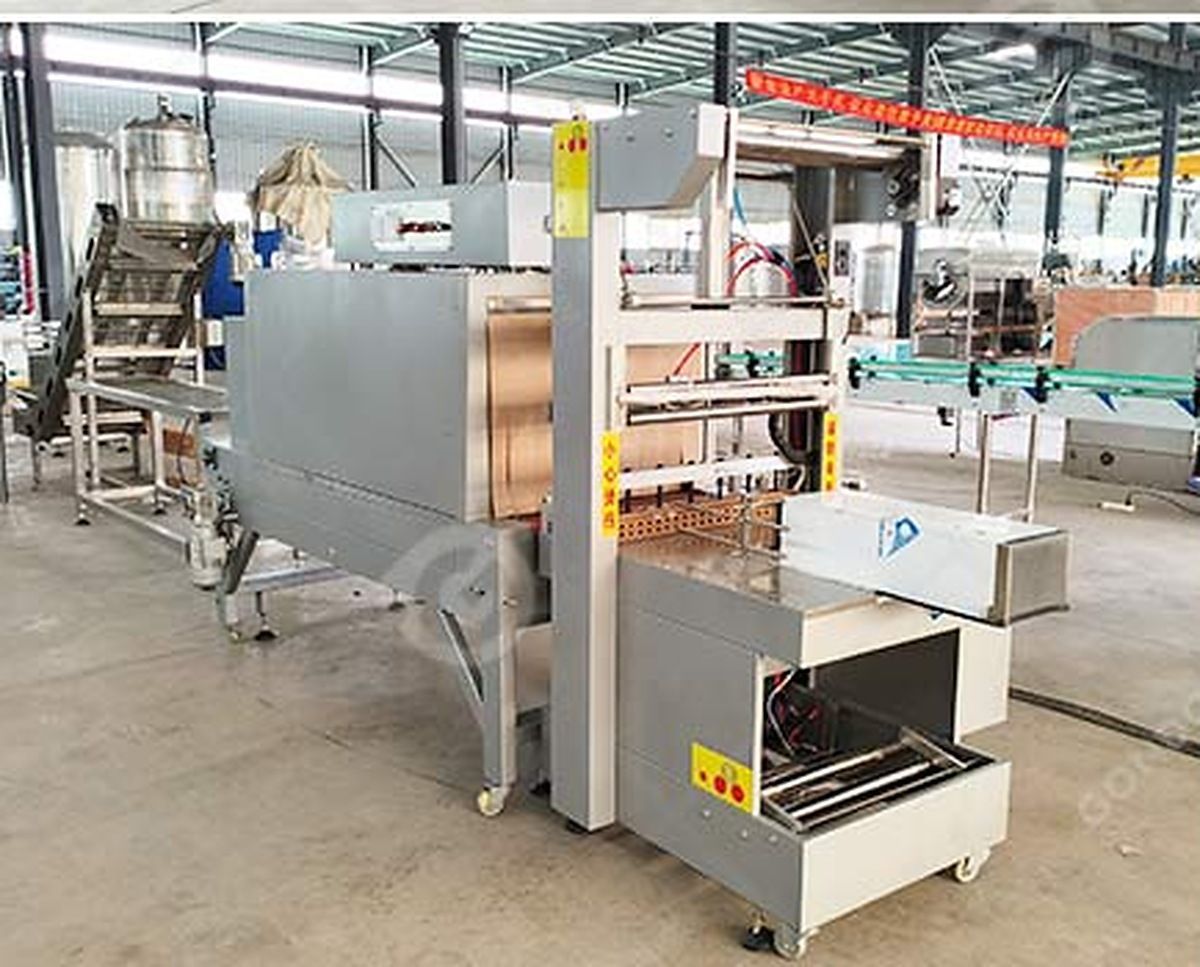
- Shrink film packing. Finished bottles are grouped and wrapped in PE shrink film, then heat-shrunk into tight packs ready for transport and retail display.
- Collecting and palletizing. Packed products are arranged by the collecting machine, and the palletizer stacks them onto pallets for forklift handling into storage.
Product Performance Advantages
- Whole-line matching around 3000 bottles per hour. Treatment at 2 t/h, blowing at 3000 bottles/h and the 3-in-1 at 3000 bottles/h are designed to the same number. No station is oversized and no bottleneck sits in the wrong place.
- 3-in-1 structure, bottles never touch the floor. Rinsing, filling and capping in one machine cut transfer steps, footprint and contamination risk together. This is the mainstream answer in the bottled water industry.
- 200 to 2000 ml bottle coverage. Common sizes at 250, 330, 500, 1000 and 1500 ml run after a mold change, with square and special shapes by evaluation. One line serves a multi-size product plan.
- Filling accuracy within ±1%. Filling valves hold within ±1% depending on model. Fill level consistency is what the consumer sees as value, and this is not the place to economize.
- Automation through to the pallet. Labeling, packing and palletizing run automatically. Line labor concentrates on cap topping, patrol and forklift, and nothing is hand-carried at the end.
Station Design
Water treatment system. The quality source of the line. Filtration, reverse osmosis, sterilizing and storage units are configured to the source water report, with output aligned to the bottled water standard of the target market. The water report is the first document of selection; without it, any configuration is a guess.
Bottle blowing machine. 55 kW main drive at 3000 bottles per hour. Preform heating temperature and blowing pressure decide wall uniformity. Molds are custom per bottle, and the mold-change routine is the daily homework of every water plant.
Cap elevator. A small machine with an outsized role. Continuous cap feeding keeps the line running, and a cap-channel sanitizing option is worth adding for markets with strict microbiological control.
3-in-1 rinsing filling capping machine. The core of the line: 3.5 kW main drive at 3000 bottles per hour, and a 3000 kg body whose foundation needs its own load check. The rinsing section uses treated water, filling valves run 8 to 32 heads by capacity, and capping torque is adjustable. Select this machine first; every other station is matched around it.
Sleeve labeling machine. 3 kW at 30 to 80 pieces per minute, for body, neck or full-body sleeves. Sleeve labeling is the mainstream choice in bottled water: the shrunk label hugs the bottle and presents well on the shelf.
Shrink film packaging machine. 26 kW sits in the shrink tunnel heater. Pack counts such as 6, 12 or 24 bottles follow the habits of the target market, and the film is PE shrink film.
Collecting and palletizing machines. The collecting machine arranges packed products, and the palletizer stacks pallets automatically, replacing manual handling at the end. Pallet size and layer count follow warehouse and transport conditions.
Typical Applications for a Water Bottling Line
Mineral and purified water plants. The standard scenario for a new plant: the whole line from treatment to palletizing in one delivery, with 3000 bottles per hour matching the starting scale of a regional water brand.
Contract bottlers. Multi-brand, multi-size work fits the line’s 200 to 2000 ml coverage and mold-change production, matching an order pattern of small batches and frequent changeovers.
Retrofit and capacity upgrades. Plants replacing only the 3-in-1 machine, or adding only packing and palletizing, get the line rematched around existing stations. Nothing needs tearing out.
Horeca and channel-label water. Custom bottles for chains, hotels and events in small, frequent runs, with sleeve and pack sizes adjusted to channel requirements.
Export-oriented water projects. Target markets differ in water standards, bottle habits and packing forms. The line is customized to the destination data, and certification requirements are confirmed before ordering.
How to Specify a Water Bottling Line Around Your Bottle Format
- Test the water first. The source water report decides the treatment configuration. It is the first document of selection; groundwater, tap water and spring water call for completely different processes.
- Then capacity and bottles. 3000 bottles per hour is the ready baseline. Higher targets take a larger 3-in-1 machine; the bottle set fixes the molds and sleeve specifications.
- Then building conditions. The 3-in-1 weighs 3000 kg and the blower 2000 kg, so floor loading and access routes come first. The height difference between treatment and filling rooms decides the pump head.
- Then packing forms. Pack counts for the shrink wrapper, whether carton packing is needed, and pallet sizes follow the transport and display habits of the target market.
- Last, certification and voltage. Export projects state the target market certification requirements and voltage frequency in one go, so nothing is rebuilt after arrival.
Limits worth stating plainly. The line covers non-carbonated drinks. Carbonated products such as soda and sparkling water need an isobaric filling machine and sit outside this line. Capacity is configured at a 3000 bottles per hour baseline; higher targets scale up the 3-in-1 and blower. Treatment must follow the tested water quality, and sources with strong fluctuation should add pretreatment margin.
Water Bottling Line Questions Buyers Ask
1. What equipment does the line include?
The standard scope covers a water treatment system, bottle blowing machine, cap elevator, 3-in-1 rinsing filling capping machine, sleeve labeling machine, shrink film packaging machine, bottle collecting machine and palletizing machine. Stations can be added or dropped to need.
2. Can the line be customized to my factory layout?
Yes. The layout is designed from workshop size, production direction, bottle specifications and automation requirements. Send the floor plan and we return a proposal.
3. Which bottle sizes can it run?
Common PET sizes at 250 ml, 330 ml, 500 ml, 1000 ml and 1500 ml, customizable within 200 to 2000 ml. Square and special-shaped bottles are confirmed after evaluation.
4. What does the 3-in-1 machine offer?
Rinsing, filling and capping integrated in one compact machine. Fewer transfer steps, smaller footprint and lower contamination risk, which is the proven answer for bottled water production.
5. How do I choose the labeling method?
Sleeve labeling is the bottled water mainstream: the shrunk label hugs the bottle and presents well. A sticker labeling machine is also available by label style and bottle type. Confirm the labeling habit of the target market before ordering.
6. What packing methods are available after filling?
Shrink film group packing is the common choice, with carton packing or other end-of-line options by market. Packing forms are fixed during the proposal stage.
7. Can the line fill carbonated drinks?
No. This line is built for mineral water, purified water, drinking water and similar non-carbonated products. Carbonated drinks need an isobaric filling machine, which is a different solution.
8. How does installation work for an overseas project?
Line installation drawings and remote guidance are provided, and engineers can install, commission and train on site. Video inspection before shipment is available; details are confirmed when ordering.
From Inquiry to Water Bottling Line Installation
Send the water test report, target capacity, bottle specifications and floor plan. We will return a line proposal, station configuration and quotation. For integration with existing equipment, include the parameters of current stations and engineering will assess the match.
Contact
Henan Gondor Machine Co., Ltd. Website inquiry form, WhatsApp or email. Replies within 24 hours on working days.
Related Equipment
- Liquid Filling Production Line — four-station linear line for 10 to 1000 ml bottles, up to 100 bottles a minute
- 3-in-1 Filling and Capping Machine — rotary block for 5 to 30 ml small-dose bottles
- Liquid Filling Machine — standalone servo piston filler when the treatment and blowing already exist
- Tube Filling and Sealing Machine — for tubes rather than bottles
Request Water Bottling Line Pricing
Send us the daily volume, the product and the container or pack format you are working with, and we will come back with a model recommendation, a utility list and a price.