
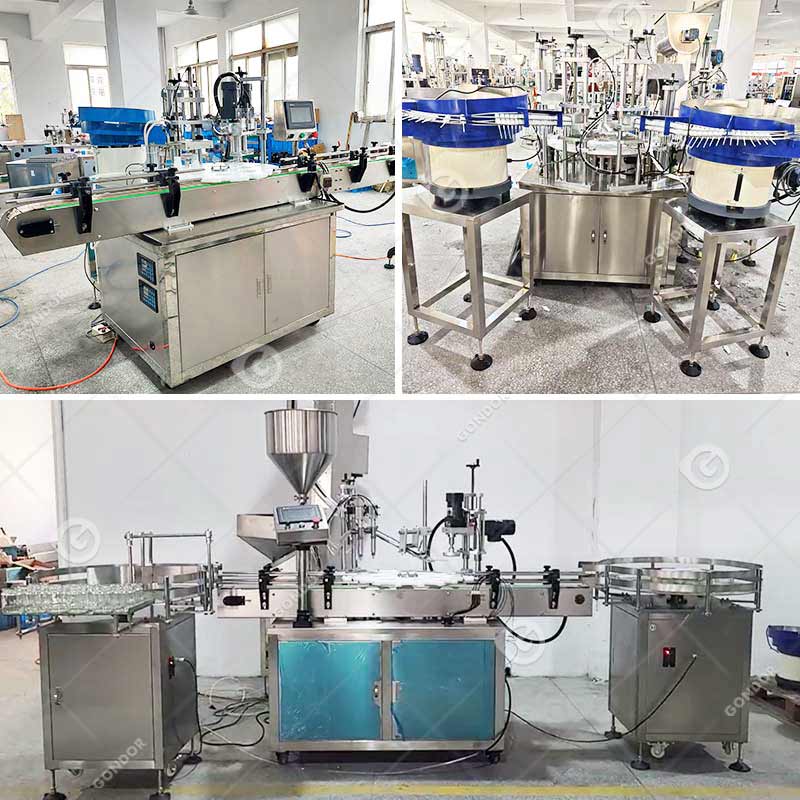
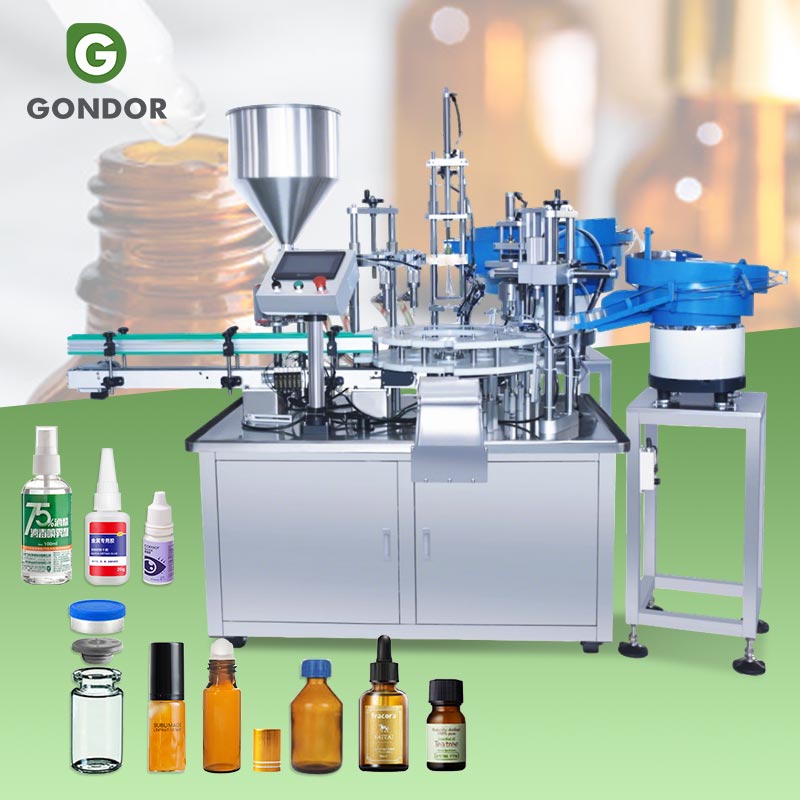
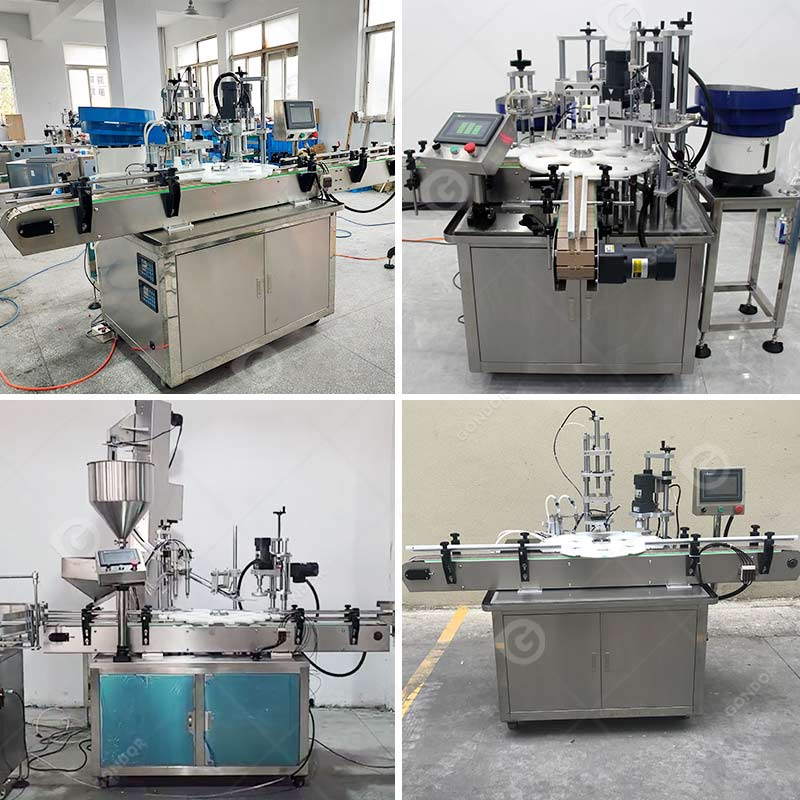
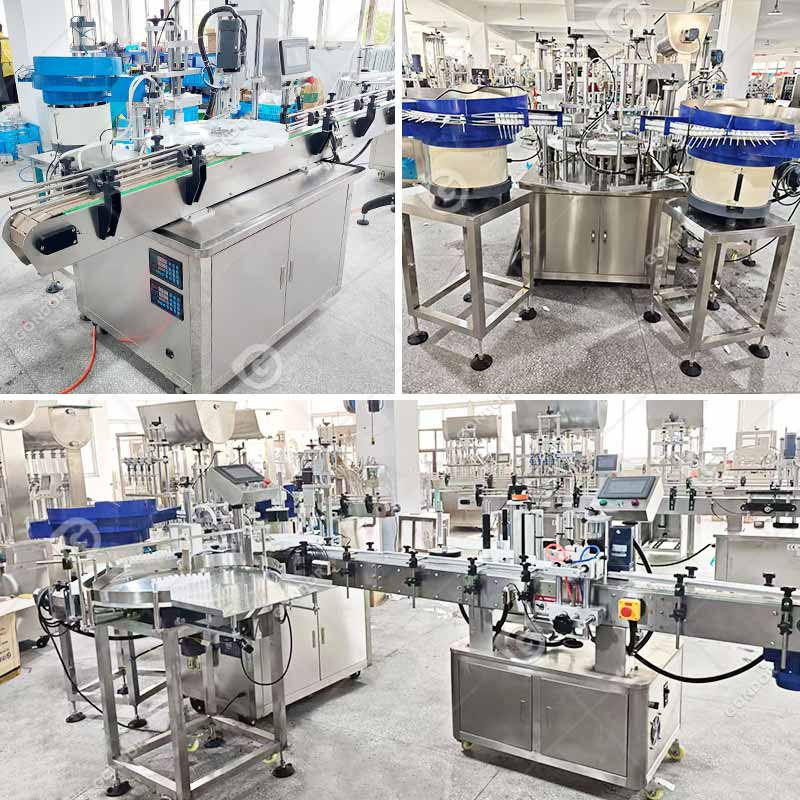
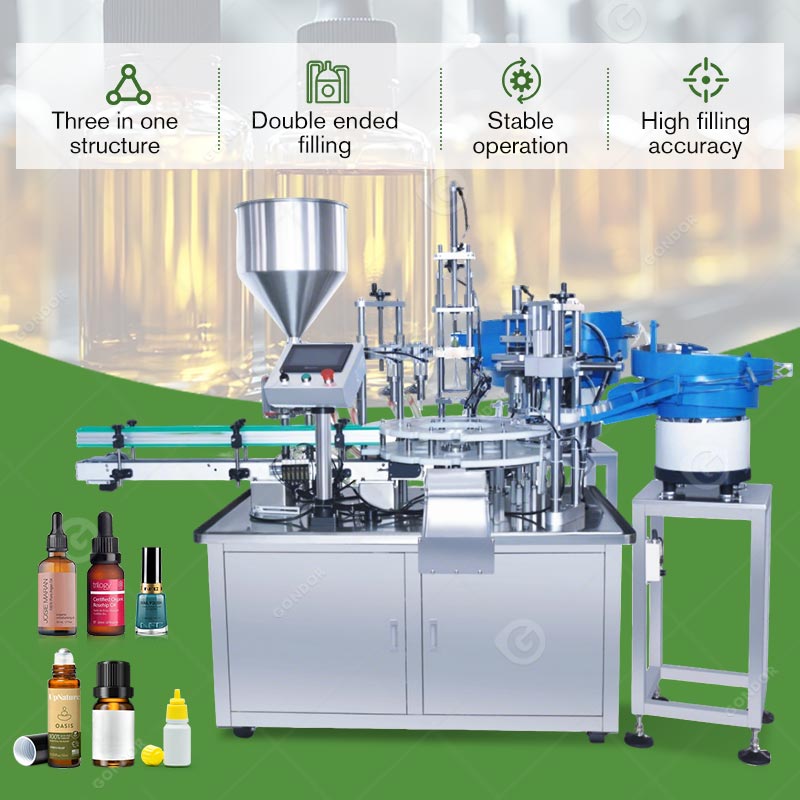
A 5-30 ml filling, plugging and capping unit in one frame at ±1% dosing, replacing three manual steps and the product loss they carry.
Where a 3-in-1 Filling and Capping Machine Removes a Whole Shift of Labor
Anyone who has run a small-dose bottling line knows the pinch point is rarely the filling itself. It is the scrambling around it: one worker pouring by hand, one pressing plugs, one gripping bottles for capping, and someone else still has to sort and collect the empties. Between an empty bottle and a finished one, three or four pairs of hands pass over it, and every manual pass adds a chance of splash, of dosing drift, and of hygiene problems.
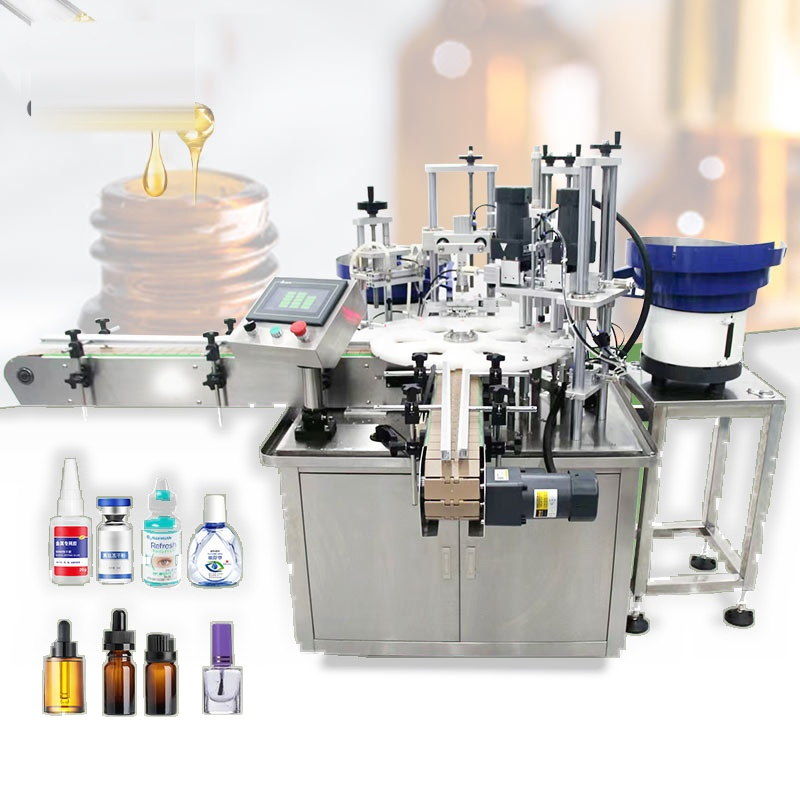
The 3-in-1 filling and capping machine brings bottle feeding, dosing filling, plug placement, cap dropping and capping together on one rotary indexing machine. Bottles travel through every station on the turntable without touching the floor or changing hands. Dosing follows the product: a magnetic pump for low-viscosity liquids or a piston mechanism for thicker ones, holding accuracy within ±1%. The two-head version runs at 18-25 bottles per minute and the single-head version at 20-25. For a daily chemical, cosmetics or light food plant bottling several thousand units a day, this one machine replaces a group of people.
3-in-1 Filling and Capping Machine Technical Data
Model comparison (per the official configuration table)
| Item | Two-head version | Single-head version |
|---|---|---|
| Voltage | 220 V 50/60 Hz | 220 V 50/60 Hz |
| Power | 2000 W | 2000 W |
| Output | 18-25 bottles/min | 20-25 bottles/min |
| Filling range | Custom per order | 5-30 ml (custom) |
| Filling heads | 2 | 1 |
| Machine size | 2000×1300×1600 mm | 2600×1500×1300 mm |
| Machine weight | approx. 400 kg | approx. 400 kg |
Note: power and weight appear only once each in the source table and are published as shared values for both versions.
General parameters
| Item | Specification |
|---|---|
| Filling accuracy | ≤ ±1% |
| Air supply | 0.5-0.7 MPa |
| Filling method | Magnetic pump (low viscosity) / piston (high viscosity) |
| Automation | Full automatic, PLC control, touch screen setting |
| Core components | Motor, PLC, cam indexer |
| Package type | Bottles, cans |
| Container material | Plastic, metal, glass |
| Certification | ISO 9001, ISO 14001, ISO 45001, CE, BSCI, ETL |
| OEM / ODM | Accepted |
Working Principle and Structure of a 3-in-1 Filling and Capping Machine
In short. Empty bottles are fed from a sorting table onto the indexing turntable, driven step by step by a high-precision cam indexer. Each station step carries the bottle through filling, plugging, cap dropping and capping, and the finished bottle leaves on the conveyor. A PLC coordinates every station, parameters are set on a touch screen, and stations skip automatically when no bottle is present. The dosing unit is chosen by viscosity: magnetic pump for thin liquids, piston for thick ones.
Product Performance Advantages
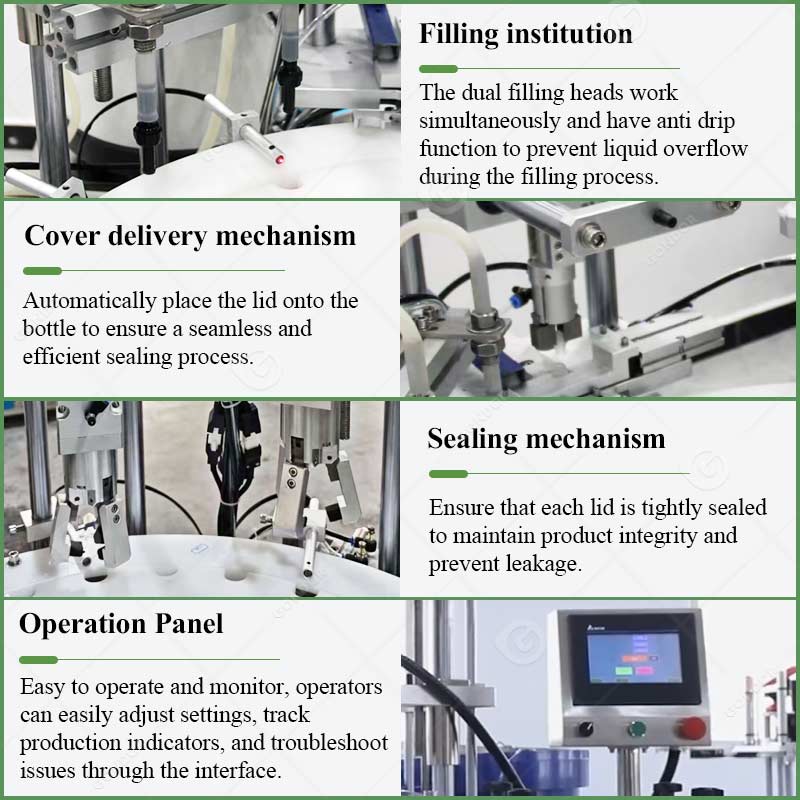
- Three operations on one machine, bottles never touch the floor. Filling, plugging and capping run station by station on a single host, removing manual transfers and the splash and contamination risks that come with them.
- ±1% dosing accuracy backed by two metering methods. The magnetic pump covers low-viscosity products and the piston covers high-viscosity ones; matching the meter to the material is what keeps the accuracy honest.
- Cam indexer plus PLC control for stable positioning and rhythm. The indexer holds repeat positioning at every station, the PLC sequences all motions, and a bottle-format change means editing parameters on the touch screen.
- No bottle, no fill, no plug. Photo-sensors detect empty cavities and the corresponding motions skip automatically, so no material is wasted and no mechanism idles.
- Anti-drip dual heads with adjustable speed for tricky products. Foaming or wall-clinging products run slower through the same heads, cutting bubbles and drips.
Engineering Design and Operating Procedure
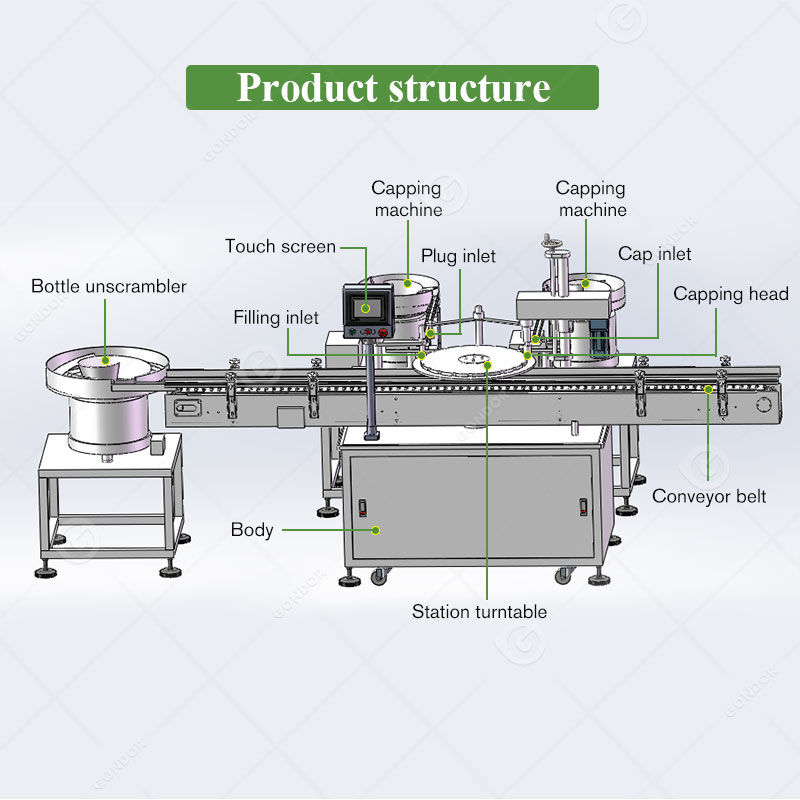
Structure, in feed direction. Bottle unscrambler, touch screen, cap lifter, plug inlet, cap inlet, capping head, conveyor belt, filling inlet, station turntable and main body. Optional equipment includes the unscrambler, which aligns bottles by vibration, and the bottle collecting machine, which arranges finished bottles in order. With both fitted, one operator at each end is enough.
Metering selection logic. A magnetic pump drives the liquid with an impeller and keeps product away from moving pump parts, which suits low-viscosity liquids and simplifies cleaning. A piston mechanism meters by cylinder volume and delivers real pushing force for lotions and other thick materials. The machine does not pretend to be universal: settling viscosity during selection saves a retrofit later.
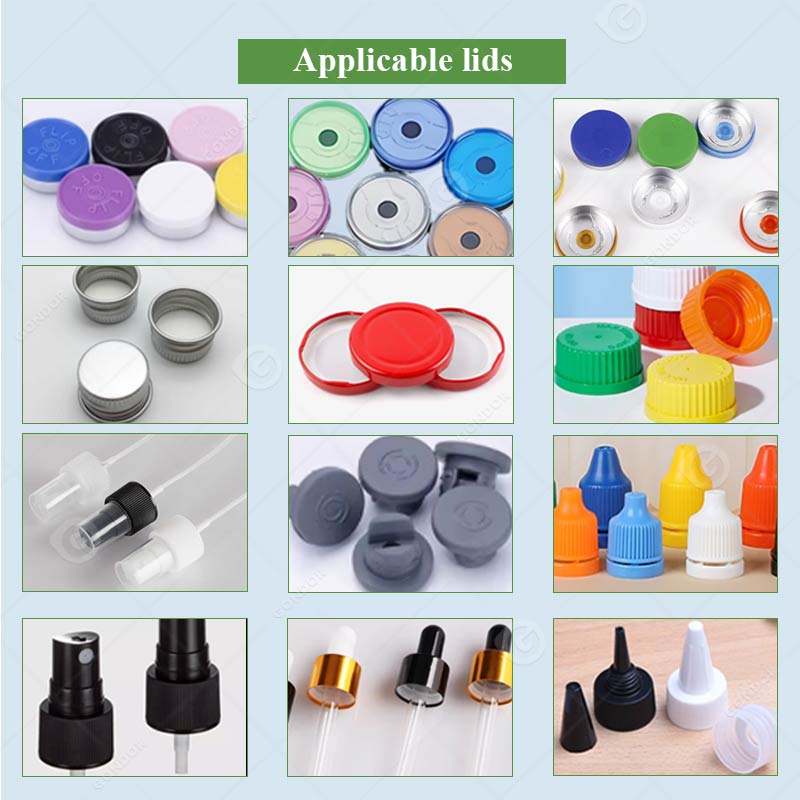
Capping adaptation logic. Dropping and capping methods match the cap type, whether a threaded cap or a plug-plus-cap combination. Changing cap formats is tooling work, and lead time and cost are quoted per project.
Operating procedure. 1 Pre-start: check air supply at 0.5-0.7 MPa, filling lines and bottle tooling. 2 Set fill volume, capping torque and cycle rate on the touch screen. 3 Load empties into the unscrambler. 4 The machine fills, plugs, drops and caps automatically. 5 Collect finished bottles and sample-check dosing accuracy at intervals. 6 At the end of a run, clean filling heads and lines, always before switching to a different product.
Application Range for a 3-in-1 Filling and Capping Machine
Materials. Low to medium viscosity small-dose liquids: essential oils, perfume, nail polish, lotion, glue, liquid aromatherapy, care solutions, alcohol-based products and liquid flavoring for light food industry use. Reagent-type liquids listed in the source material can be discussed for laboratory batch runs.
Industries. Daily chemical and personal care, cosmetics, light food processing, chemical auxiliaries and laboratories. Typical buyers: essential oil repacking plants bottling thousands a day, perfume and nail polish contract workshops, aromatherapy brands building their own filling line.
Containers. Small glass bottles, plastic bottles, dropper bottles, perfume bottles and nail polish bottles; bottle and cap formats are confirmed per customization.
Selection and Sizing of a 3-in-1 Filling and Capping Machine
Four things to settle first. 1 Output: the two-head version runs 18-25 bottles per minute and the single-head 20-25; pick with a 20% margin over target daily volume. 2 Viscosity: it decides magnetic pump or piston metering, and a wrong call here is expensive to fix later. 3 Filling range: the single-head version lists 5-30 ml custom; anything outside needs confirmation before ordering. 4 Bottle and cap: non-standard formats are tooling jobs, and sending physical samples for a trial run is the safest route.
Customization. Filling range, bottle molds, cap adaptation and output configuration are all project-based, and OEM and ODM orders are accepted. Tooling changeover time and cost are assessed per bottle format: quoted with the offer. Openings and exterior can carry the customer’s brand identity.
Business Information
| Item | Details |
|---|---|
| MOQ | 1 set |
| Lead time | Stock machines ship within 48 hours after order confirmation; custom machines are quoted per project |
| Packaging | Waterproof film wrap, standard wooden case, fit for international transport |
| Trade terms and port | Quoted per order |
Quality Inspection and After-Sales
Pre-shipment inspection. A trial-run video inspection and a machinery test report are provided before dispatch, so filling accuracy and capping results can be confirmed remotely before shipping.
Warranty and technical support. Core components carry a one-year warranty with lifetime technical support. Routine faults are diagnosed remotely by video and online support first; an engineer is arranged on site when needed.
Wear parts. Seals, filling needles and capping wheels are the daily check items. Keep one spare set with the machine; spare part pricing and supply cycle Quoted with the offer.
3-in-1 Filling and Capping Machine Questions Buyers Ask
1. What materials can this machine fill?
Low to medium viscosity small-dose liquids: essential oils, perfume, nail polish, lotion, glue, liquid aromatherapy, care solutions, alcohol-based products and liquid flavorings. High-viscosity pastes are outside the standard configuration and need a sample review first.
2. What filling accuracy can it hold?
Within ±1%. The metering method follows viscosity: pulse counting on the magnetic pump for thin liquids, cylinder volume on the piston for thick ones, and both are accepted at this accuracy.
3. Are there limits on filling range and bottle type?
The single-head version lists 5-30 ml custom, and the two-head version is built to order. Bottle and cap formats are confirmed per customization; send physical samples for a trial run before molds are made.
4. Will foaming or thick products leak or bubble?
The filling heads are anti-drip and the filling speed is adjustable on the touch screen. Running thick products slower with an optimized needle path reduces foaming and drips, and capping torque set to the cap spec prevents weak seals.
5. What happens when a station has no bottle?
Photo-sensors detect the empty cavity and the corresponding motions skip automatically: no fill, no plug, no idle mechanism wear. Operators only attend the feeding and collection ends.
6. What should we watch when switching products?
Clean the filling heads, lines and metering chamber, especially when moving from a dark or strongly scented product to a light, odorless one. On the magnetic pump version the product never touches moving pump parts, so cleaning is quicker.
7. How is after-sales covered?
Core components carry a one-year warranty with lifetime technical support. A trial-run video and test report ship before dispatch; faults are checked remotely first and an engineer visits when required.
8. Can you build it under our brand?
Yes, both OEM and ODM are accepted, with exterior identity and openings arranged per project. Send your specific filling range and bottle combination and we will respond with a sample-based proposal.
Moving Forward With a 3-in-1 Machine Project
If your material, target bottle and daily volume are already clear, send those three items with photos and we will propose the metering method, machine configuration and a formal quotation. To verify results first, ship material and bottles to the factory and we will run a trial and send finished sample bottles back.
Contact
Henan Gondor Machine Co., Ltd. Website inquiry form, WhatsApp or email. Replies within 24 hours on working days.
Related Equipment
- Liquid Filling Production Line — the four-station route for 10 to 1000 ml at up to 100 bottles a minute.
- Liquid Filling Machine — a standalone filler when capping and labelling stay manual.
- Tube Filling and Sealing Machine — the same small-dose filling job, but into laminated tubes.
Talk to an Engineer About 3-in-1 Machine Pricing
Send us the daily volume, the product and the container or pack format you are working with, and we will come back with a model recommendation, a utility list and a price.