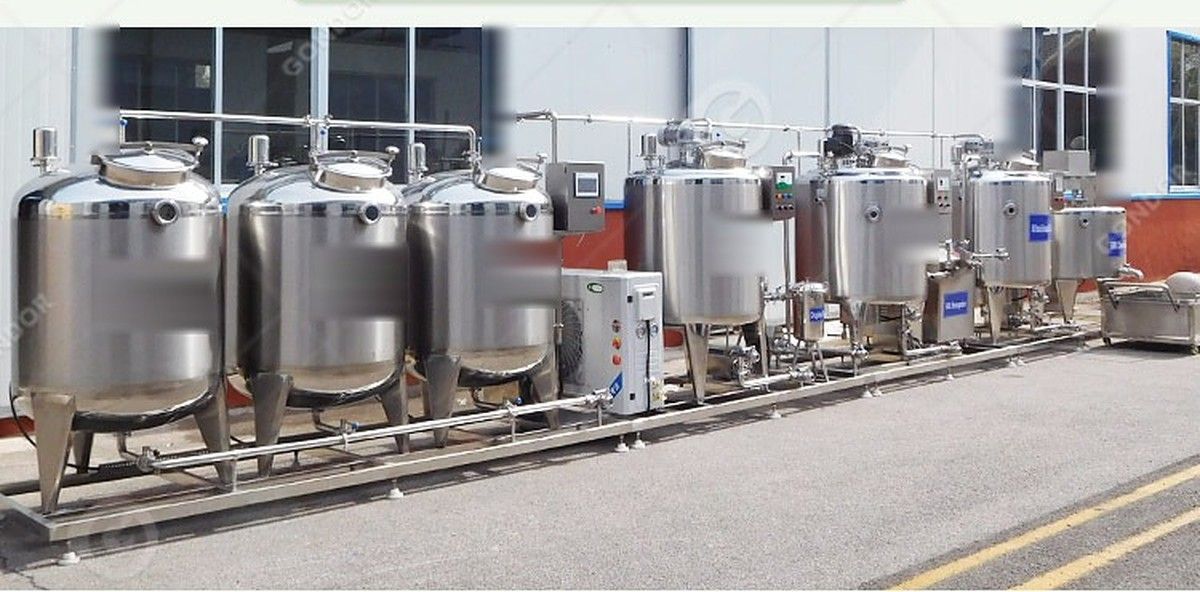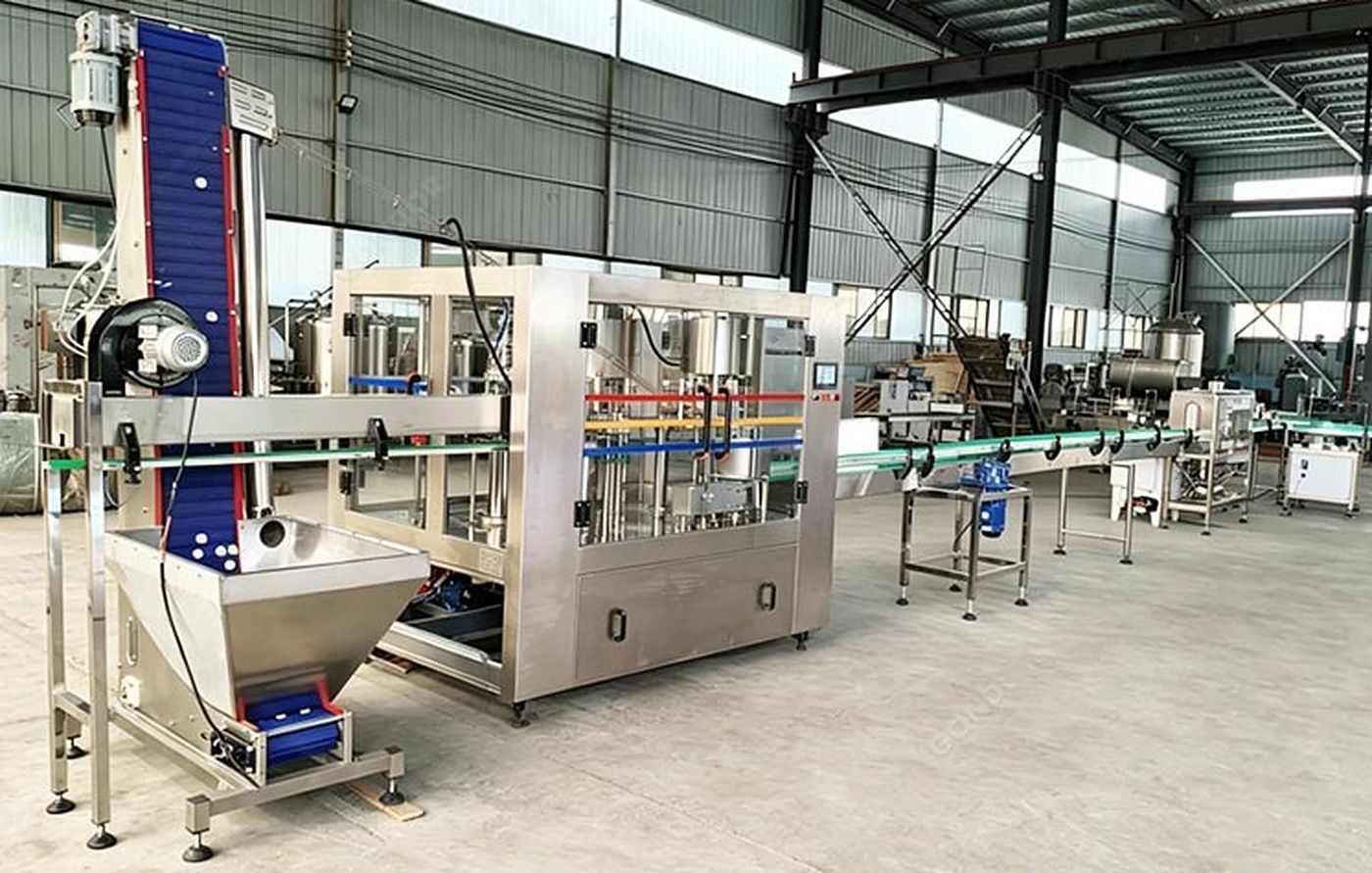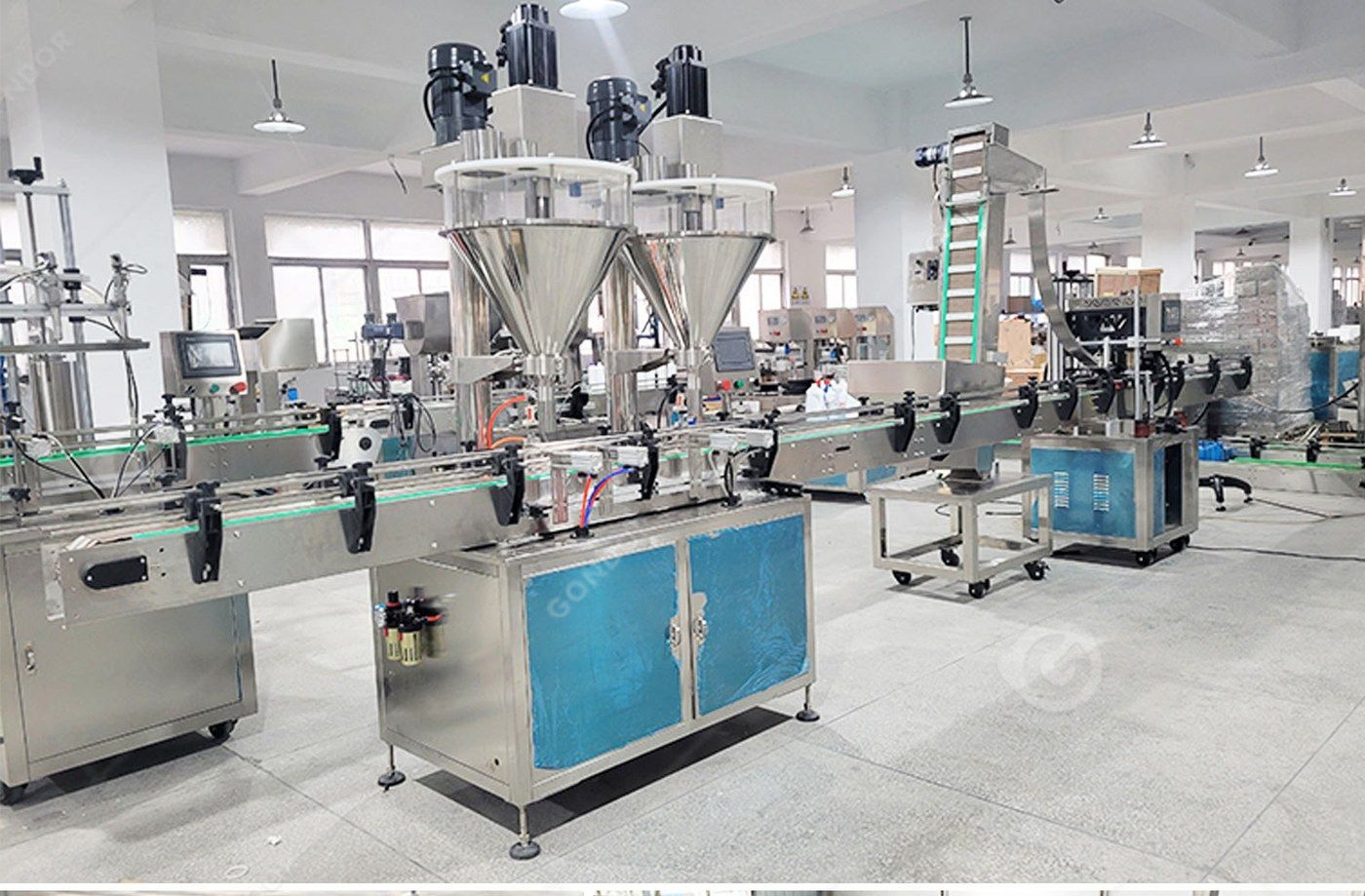


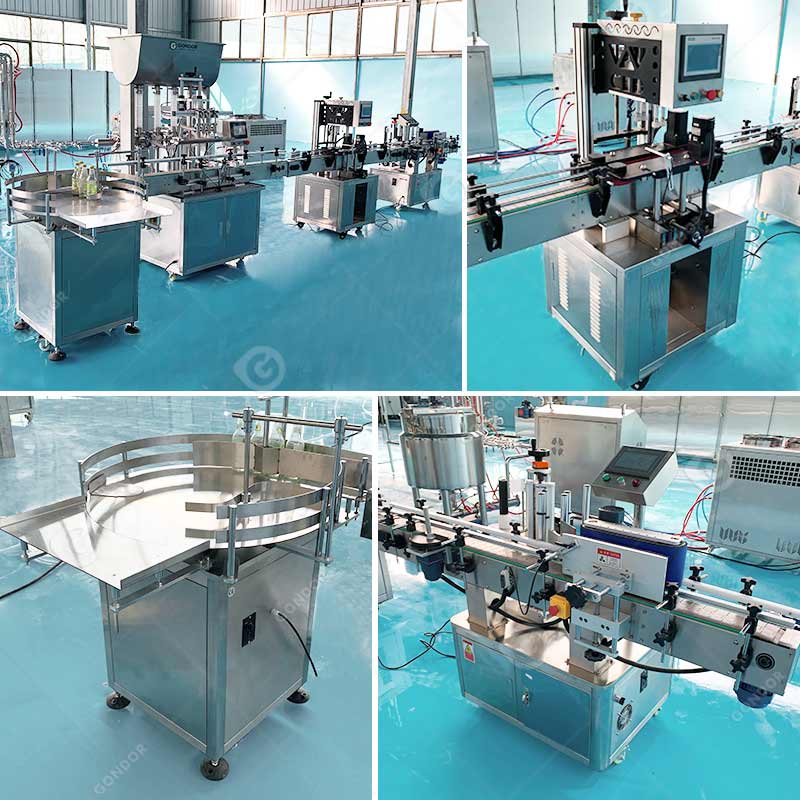
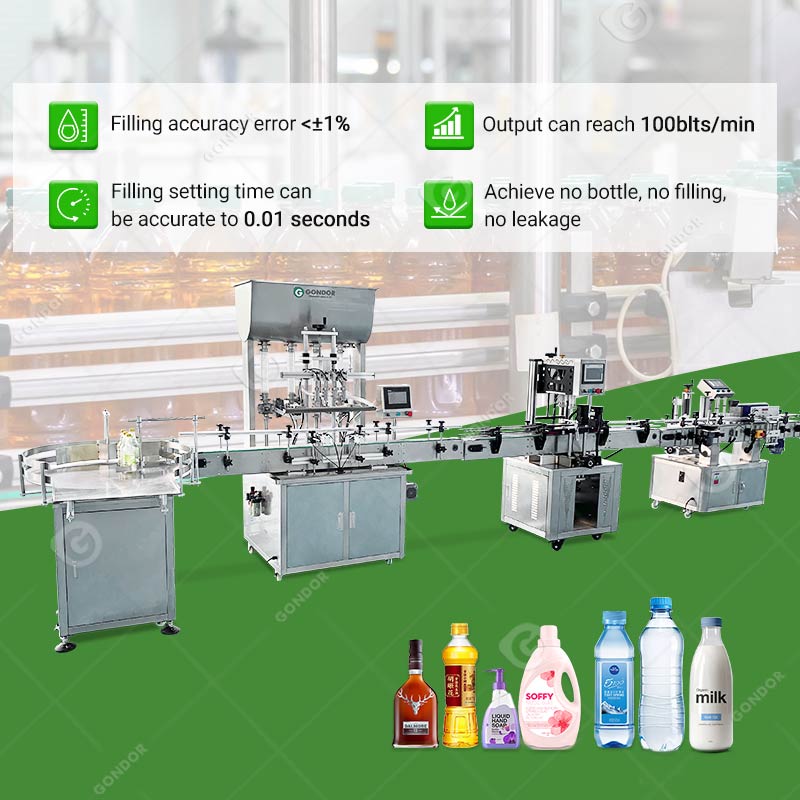
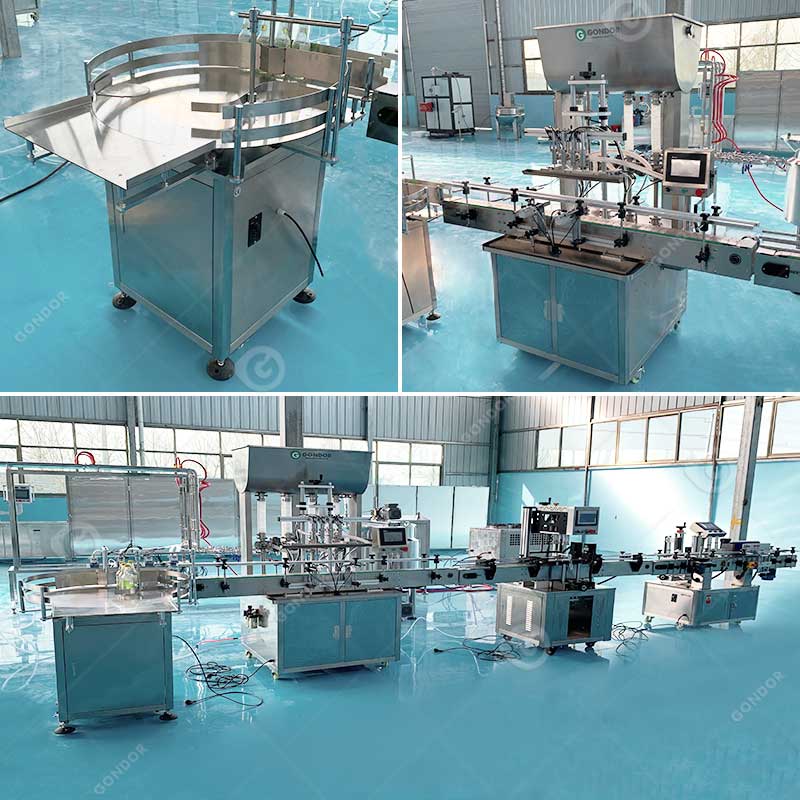
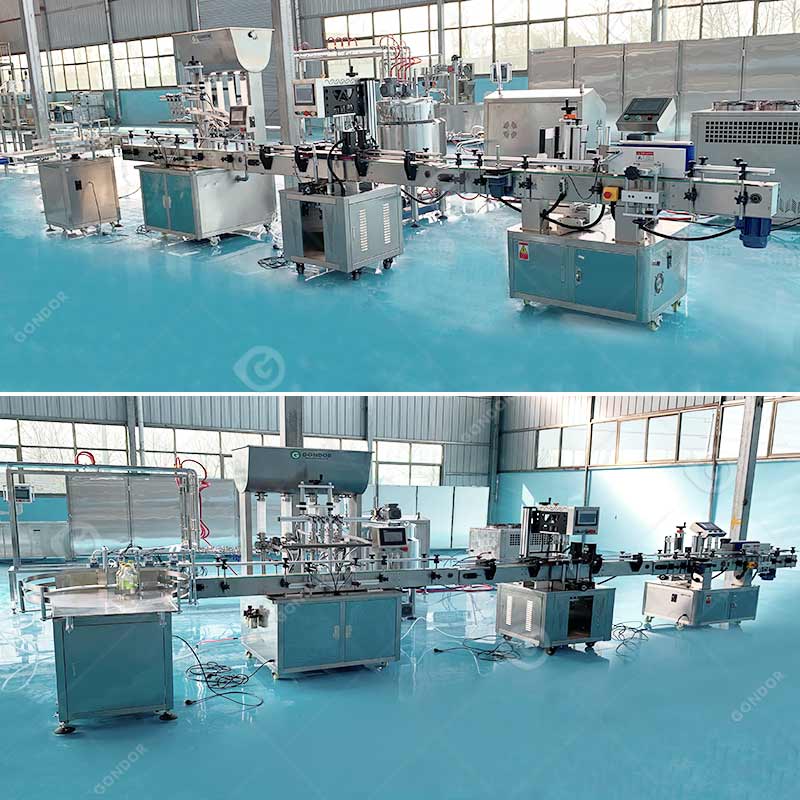
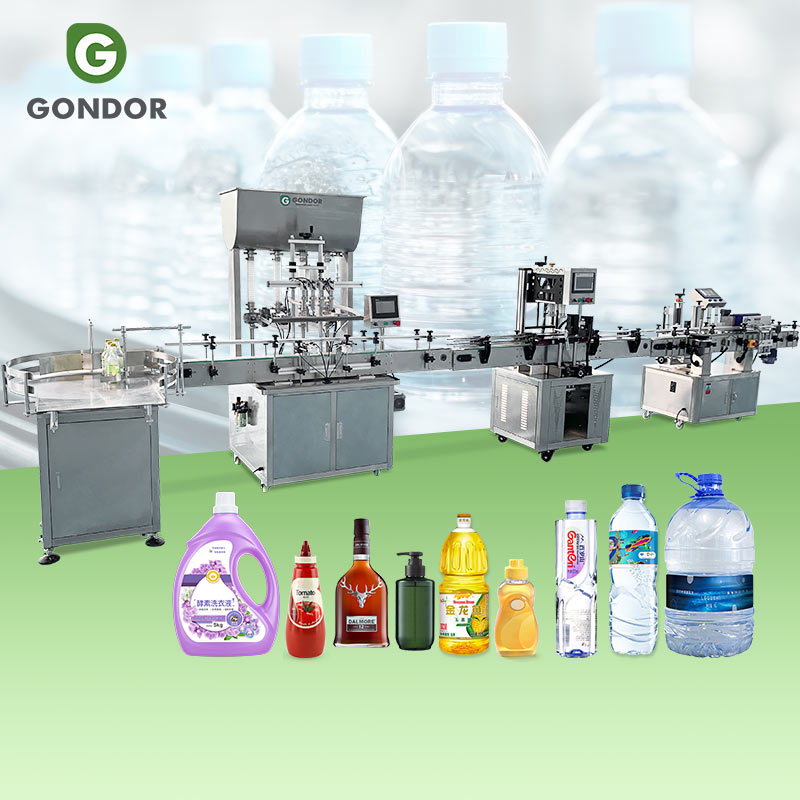
Unscrambling, filling, capping and labeling on one frame at ±1% and up to 100 bottles per minute, so the bottleneck stops moving between stations.
Why a Liquid Filling Production Line Beats a Row of Standalone Fillers
Many plants own a filler, a capper and a labeler, yet the line they form does not run. The filler waits for bottles, the capper chases the filler, and bottles pile up in front of the labeler. Each machine runs its own race, the bottleneck moves every day, operators fight fires, and output stays flat.
This liquid filling production line is engineered as a line. The unscrambler sorts jumbled empty bottles into a single file onto the conveyor, the filler doses at ±1% accuracy, the capper seals to the same beat, and the labeler finishes the job, all under one PLC. Speed reaches 100 bottles per minute, filling time sets down to 0.01 seconds, and no bottle means no fill and no label. A size change takes minutes. Different materials take different filling pumps, so beverages, mineral water, edible oil and daily chemical liquids rotate on the same line.
The line is food-grade 304 stainless steel, with 316 or 316L at product-contact points where the material demands it. The modular build adds or drops stations to fit the workshop layout. Send the material and bottle data first, and engineering lays out the line from the numbers.
Liquid Filling Production Line Specifications and Output
Line overview (per the official parameters)
| Item | Specification |
|---|---|
| Line model | GD-LFPL |
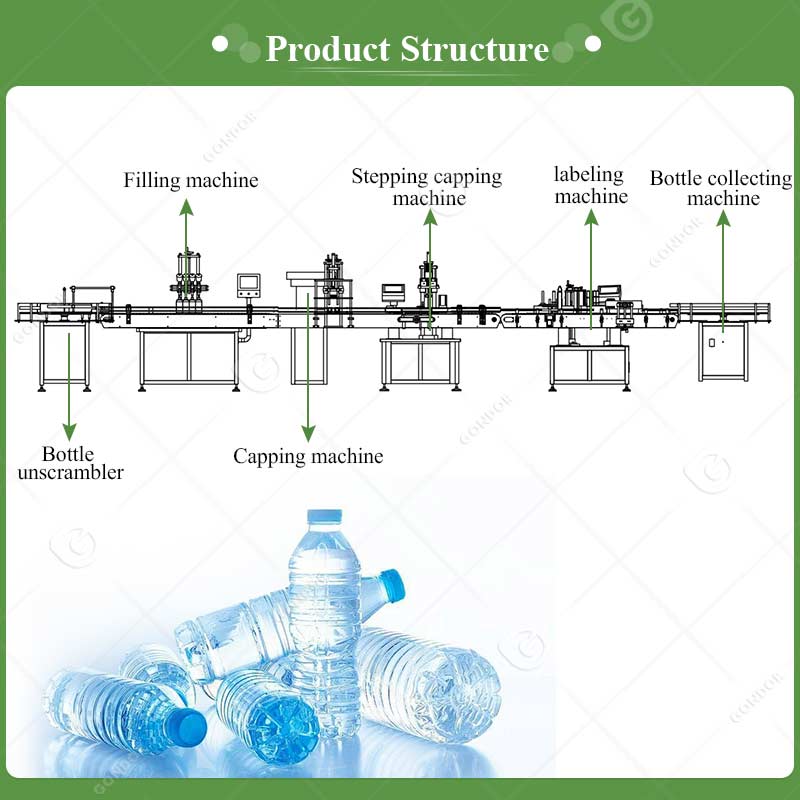
| Line type | Linear, four stations |
| Stations | Bottle unscrambler, filling machine, capping machine, labeling machine (collection optional) |
| Filling accuracy | ±1% |
| Line speed | Up to 100 bottles/min |
| Fill volume | 10-1000 ml |
| Filling time resolution | 0.01 s |
| Working air | 0.6-0.8 MPa |
| Voltage | 220 V |
| Construction | SUS304 / SUS316 / SUS316L / aluminum alloy |
| Applicable bottles | Glass, plastic, round, square, flat, special-shaped |
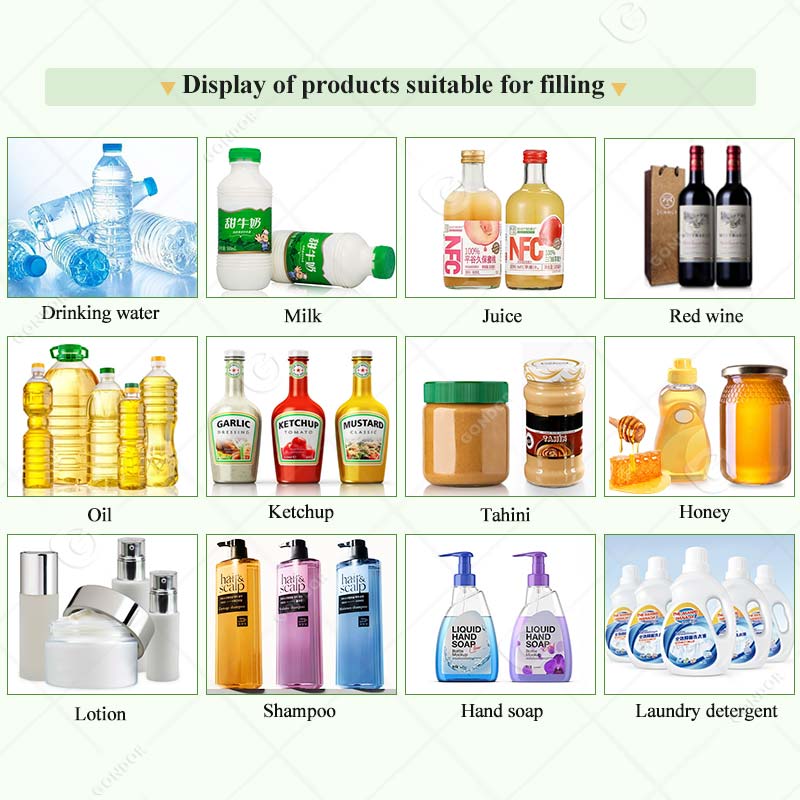
| Applicable materials | Drinking water, milk, juice, red wine, oil, ketchup, tahini, honey, lotion, shampoo, hand soap, laundry detergent |
| Automation | Fully automatic |
| Certification | ISO 9001, ISO 14001, ISO 45001, CE, BSCI, ETL |
| OEM / ODM | Accepted |
| Core component warranty | 1 year |
Per-station specifications (per the official parameter table)
| Station | Voltage | Power | Speed | Weight | Dimensions | Bottle diameter | Label height | Label length | Cap diameter |
|---|---|---|---|---|---|---|---|---|---|
| Bottle unscrambler | 220 V | 120 W | n/a | 120 kg | 1250×1250×1350 mm | n/a | n/a | n/a | n/a |
| Filling machine | 220 V | 500 W | 5-60 bottles/min | 800 kg | 2000×1250×1600 mm | n/a | n/a | n/a | n/a |
| Capping machine | 220 V | 0.8 kW | 30-60 pcs/min | 550 kg | 2000×850×1800 mm | ∅35-∅140 mm | n/a | n/a | 20-100 mm |
| Labeling machine | 220 V | 1.5 kW | 20-200 pcs/min | 270 kg | 1220×1250×1470 mm | ∅30-∅180 mm | 15-150 mm | 25-300 mm | n/a |
Note: The filling machine’s rated 5-60 bottles/min is a conservative single-head figure. The line reaches up to 100 bottles/min through multi-head filling and cycle matching. Different materials need different filling pumps; provide material and bottle data before selection.
Customization
- OEM / ODM scope. Accepted. Head count and filling type, capping mechanism, labeling method, conveyor length and line layout can all be adjusted, and the interface language can be set for the target market.
- Line engineering. The line is laid out from bottle type, capacity, workshop plan and packaging needs. Non-standard stations such as coding, checkweighing and metal detection can be added by evaluation.
- Modification lead time. Planned against the drawing and confirmed with the offer, against the bottle format and the tooling drawing.
- MOQ. One set, or one line for a complete system.
Quality Inspection and After-sales
- Pre-shipment inspection. A machinery test report and video inspection are provided. The line runs as a whole before being dismantled for packing, and buyers can inspect by live video.
- Warranty. One year on the line and one year on core components (motor, PLC, gear).
- Installation and commissioning. Installation guidance ships with the line, and engineers can commission on site and train operators; remote commissioning supports overseas projects.
- Spare parts. Filling valve seals, labeler consumables and common wear parts are stocked long term; the parts list is confirmed against your sample and pack format.
- Response. Faults are diagnosed remotely first; a field visit is arranged when the issue cannot be resolved from distance.
How a Liquid Filling Production Line Moves a Bottle From Empty to Capped
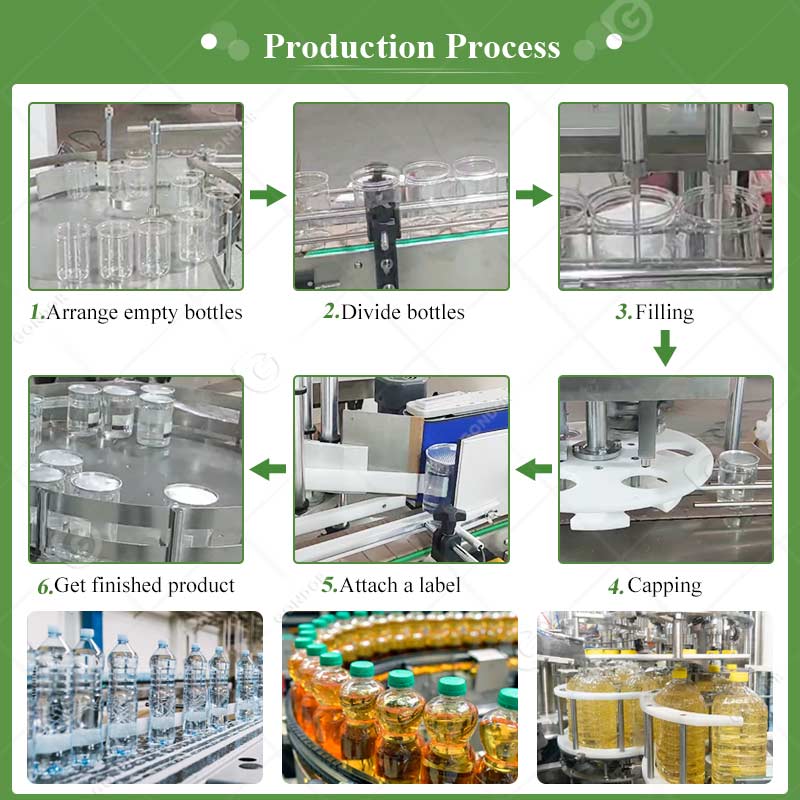
The flow in one paragraph. Empty bottles are poured into the unscrambler, which forms them into a single file. The conveyor carries them through filling, capping and labeling, one job per station, with the PLC matching every cycle to the slowest station. Bottles never touch the floor; operators patrol from the side.
- Unscrambling. The unscrambler sorts jumbled bottles into a uniform single file and feeds them onto the conveyor at line speed. This station sets the rhythm, and a jam here stops everything downstream.
- Spacing and filling. A spacing wheel opens bottle pitch before the filler. The filling valves dose on position, timing set to 0.01 seconds, no bottle no fill, no dripping, ±1% accuracy.
- Capping. Filled bottles enter the capper, which places and tightens caps automatically. Torque is adjustable, bottle height lifts easily, covering bottle diameters of ∅35 to ∅140 mm and caps of 20 to 100 mm.
- Labeling. Capped bottles move into the labeler for positioned labeling with easy adjustment. Finished bottles leave at the collection end for the next step.
Product Performance Advantages
- One line rhythm, up to 100 bottles per minute. Four stations run under one PLC, so the bottleneck lives in the design, not on the floor. Plan the line at up to 100 bottles per minute.
- ±1% filling accuracy, no bottle no fill. Filling time sets down to 0.01 seconds and missing bottles are skipped automatically. No empty shots, no sprayed product, minimal waste.
- Size changes in minutes. Volume and bottle changes run through saved recipes on the touch screen, with few parts to swap. Multi-SKU shops lose little line time.
- Modular layout to fit the building. The four stations run in one row or split apart. Irregular buildings and retrofit workshops are both workable.
- Materials graded to the product. Food-grade 304 as the base, with 316 / 316L at contact points for acid or alkaline daily chemical products, so one line plans for beverages and detergents alike.
Station Design
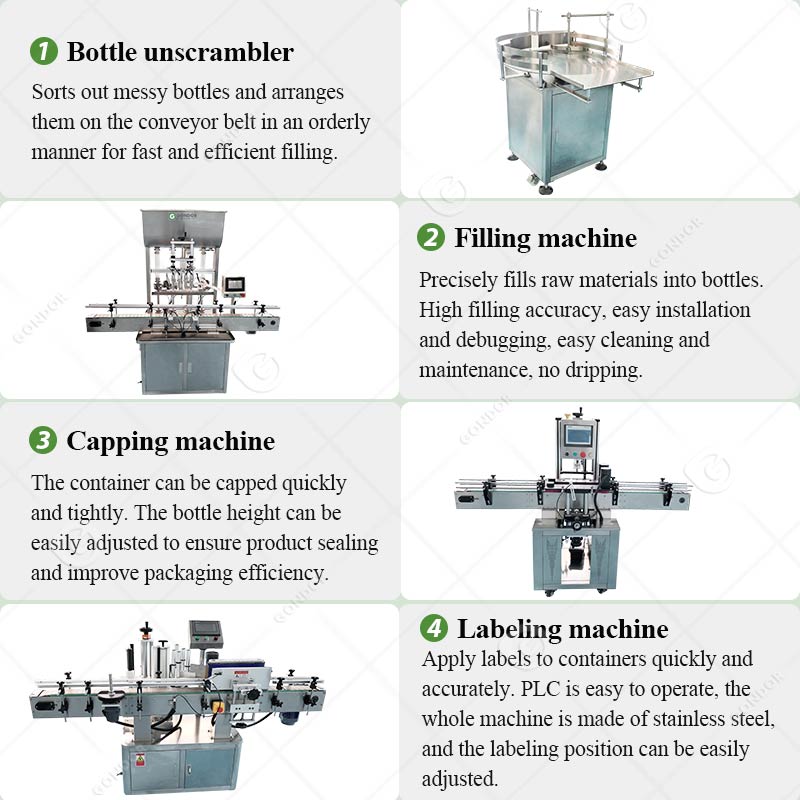
Bottle unscrambler. The throat of the line. Bottles are poured into the hopper, and the unscrambling mechanism forms a single oriented file onto the conveyor, matched to downstream speed. The spec that matters here is not top speed but jam rate, because one jam stops the whole line.
Filling machine. The accuracy anchor. Dosing valves open and close on 0.01-second timing, with suck-back anti-drip and easy strip-down for cleaning. Material viscosity varies widely, and the filling pump is selected per material, so state the material and the 10 to 1000 ml volume range together when inquiring.
Capping machine. The last gate on seal integrity. Automatic cap placement and tightening with adjustable torque, covering 20 to 100 mm caps on ∅35 to ∅140 mm bottles, with bottle height adjustment by lift. Pump heads and spray closures are optional by evaluation.
Labeling machine. Where the shelf appearance is made. Covers ∅30 to ∅180 mm bottles, label height 15 to 150 mm and length 25 to 300 mm, positioned labeling with intuitive adjustment. Round bottles are standard; square and flat bottles take station options.
Control and conveyor. One PLC touch screen runs the line with every station visible on one screen. The conveyor runs on variable frequency drive, coupled to line speed, and the collection end takes a collecting machine or manual stacking.
Applications for a Liquid Filling Production Line
Beverage and mineral water. Water, tea drinks and juice in bottles. At 100 bottles per minute, the line fits small and mid-size water plants turning out tens of thousands of bottles a day, its standard scenario.
Dairy and plant protein. Milk and soy milk filling, capping and labeling, with 316 / 316L at product-contact points and cleaning validation run to dairy plant standards.
Edible oil and sauces. Oil, ketchup, tahini and honey span a wide flow range, and the filling pump is selected per material within the same line frame.
Wine. Red wine and fruit wine in glass bottles. The unscrambler is designed for glass handling, and the labeler takes the long labels wine uses.
Daily chemical and detergent. Lotion, shampoo, hand soap and laundry detergent. Upgraded materials for acid or alkaline products and the anti-drip structures are exactly what these lines need.
Contract packing and multi-SKU shops. Size changes in minutes suit packers with many SKUs and small batches, keeping downtime loss at the minimum.
Configuring a Liquid Filling Production Line Around Your Bottle
- Fix the materials first. List everything to be filled. Viscosity, particles and foaming decide the filling pump and metering structure.
- Then capacity. Divide the daily target by shift hours and work back from 100 bottles per minute; near the top, head count and unscrambler capacity scale up together.
- Then bottle types. Check bottle diameter, height and cap type against the per-station ranges, and send samples for irregular bottles.
- Then the building. Send the floor plan and door dimensions. The layout is drawn from real data, and retrofit workshops need turning and service space.
- Last, expansion. If coding, checkweighing or cartoning arrive within half a year, reserve interfaces and floor space now; it costs far less than retrofitting later.
Limits worth stating plainly. Different materials need different filling pumps, so a line is not the answer for one plant forcing wildly different materials together. Line speed follows the slowest station, and real output depends on material, bottle type and changeover frequency. Foaming materials such as beer and some detergents need anti-foam measures or a vacuum filling evaluation.
Liquid Filling Production Line Questions Buyers Ask Most
1. What if the liquid foams or splashes during filling?
Slow the filling speed or switch to slope filling, fast then slow. Check whether the filling head sits too shallow in the bottle mouth and bring it near the bottom. Foaming materials such as beer and detergent can take an anti-foam device or a vacuum filling evaluation.
2. How do I cut material waste during filling?
Use anti-drip filling valves with spring suck-back, add a drip tray to recover residue, and maintain pipework and seals on schedule. The line’s no-bottle-no-fill function stops empty shots at the source.
3. How do I switch between materials quickly?
Use quick-change filling heads and modular pipework, run a CIP cleaning cycle to avoid cross-contamination, and keep parameter recipes for each material saved on the touch screen.
4. How do I confirm the line fits my material?
Send the material properties, volume range and bottle dimensions to our technicians. Engineering selects the pump and metering structure from the data, and sample trial fills verify when needed.
5. The filler alone is rated 5-60 bottles/min. How does the line reach 100?
The per-station figure is conservative for a single head. The line reaches up to 100 bottles per minute through multi-head filling and cycle matching, fixed during the proposal stage against your output target.
6. What does routine line maintenance look like?
Daily: clean the filling heads, check air and oil circuits. Weekly: lubricate moving parts such as guide rails and cylinders, inspect seal wear. Monthly: calibrate sensors and back up the PLC program.
7. How does installation work for an overseas project?
The line ships with an installation manual and video, and remote commissioning is available. On-site support can be arranged with engineers, with visa and travel confirmed ahead.
8. Can the line be customized to my workshop layout?
Yes. The layout is drawn from your floor plan, stations can be added or dropped, and non-standard stations such as coding or checkweighing are evaluated as options. OEM and ODM projects are accepted.
Next Step With Your Liquid Filling Production Line
Send the material list, output target, bottle dimensions and floor plan. We will return a line proposal, station configuration and quotation. To verify results first, send material samples and empty bottles, and we will trial-run the line at the factory and send back finished bottles with the trial video.
Contact
Henan Gondor Machine Co., Ltd. Website inquiry form, WhatsApp or email. Replies within 24 hours on working days.
Related Equipment
- Liquid Filling Machine — the filler on its own for lower volumes and existing lines.
- 3-in-1 Filling and Capping Machine — the rotary route for small bottles from 5 to 30 ml.
- Milk Pasteurizer Machine — stands upstream when the line fills dairy rather than water.
Request a Liquid Filling Production Line Quote
Send us the daily volume, the product and the container or pack format you are working with, and we will come back with a model recommendation, a utility list and a price.