
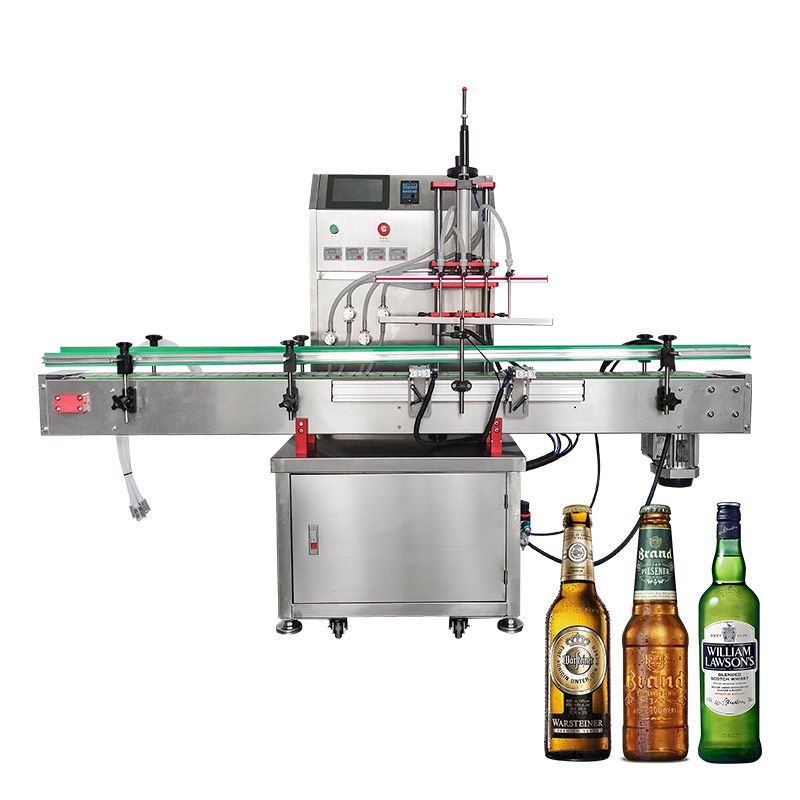
Servo piston dosing with 4-12 heads, 100-5000 ml and ±1% accuracy, where a format change is a parameter setting rather than a mechanical rebuild.
Drips and Dosing Error Are Where a Liquid Filling Machine Loses Money
Filling workshops in beverage and daily chemical plants share one hidden cost. A drip hangs off the nozzle when it lifts, and by the end of the day the floor is sticky. A dose running 2 or 3 percent heavy fails quality inspection and sends the batch back. Manual dosing is worse: the same drum of product fills differently in the afternoon than it did in the morning.
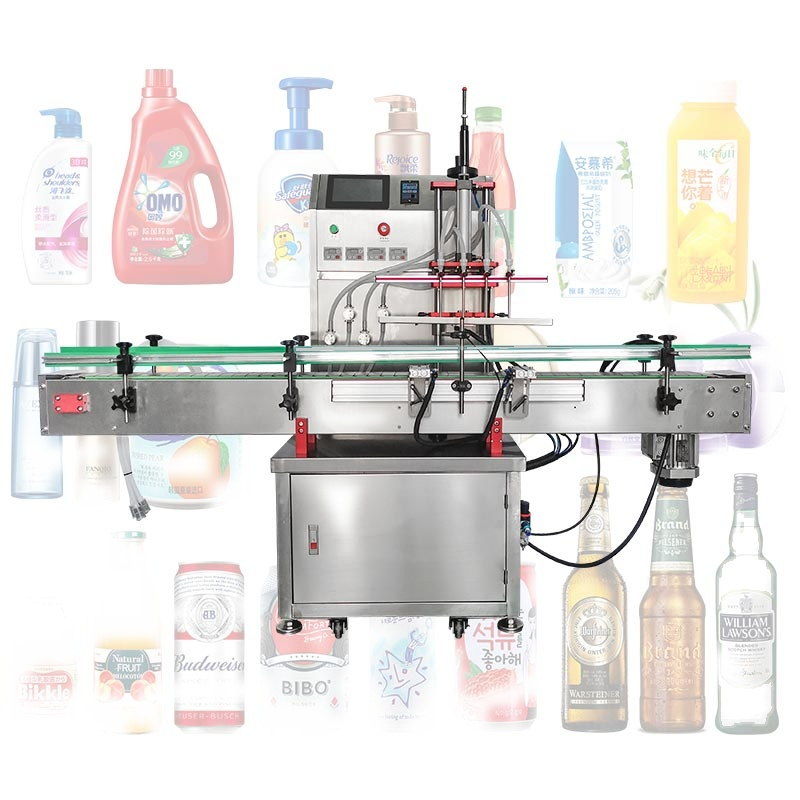
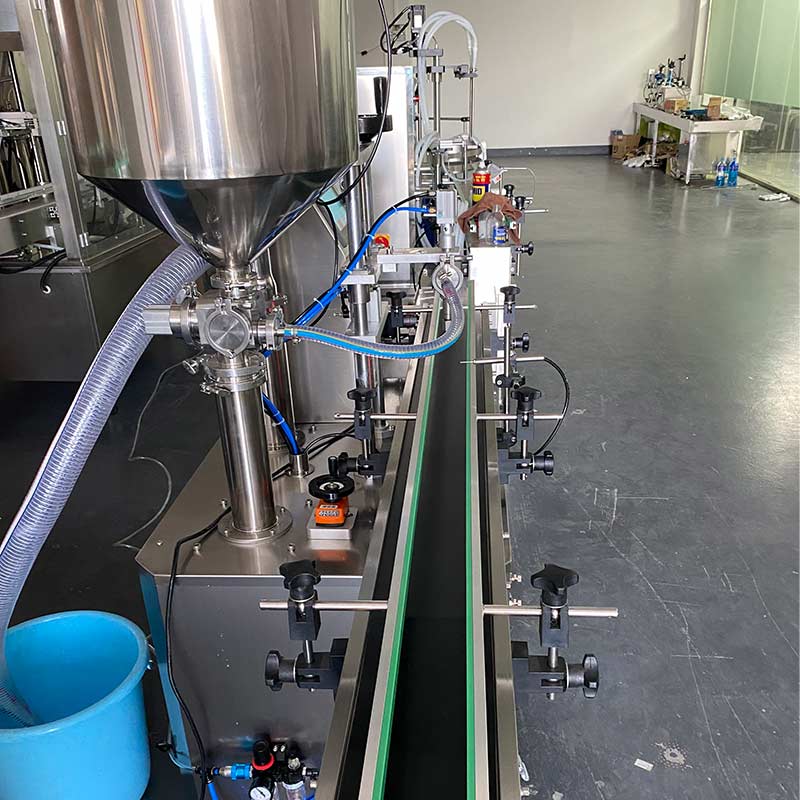
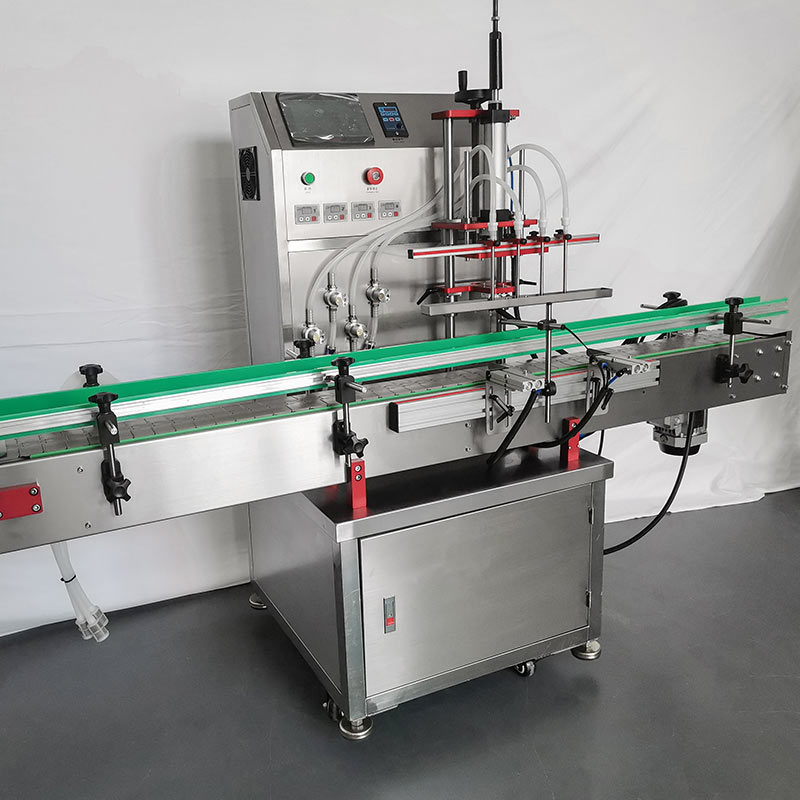
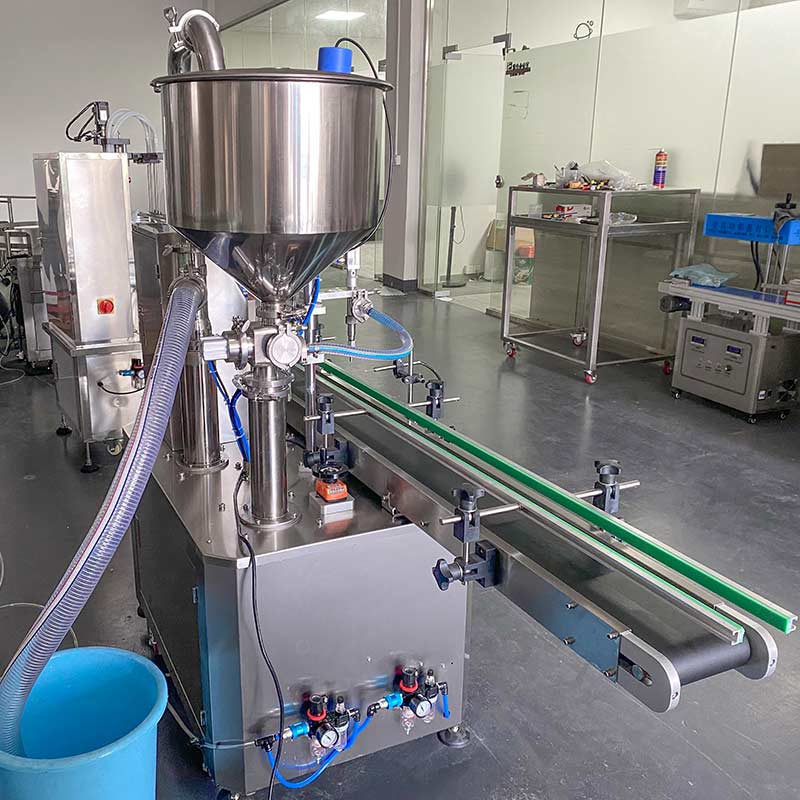
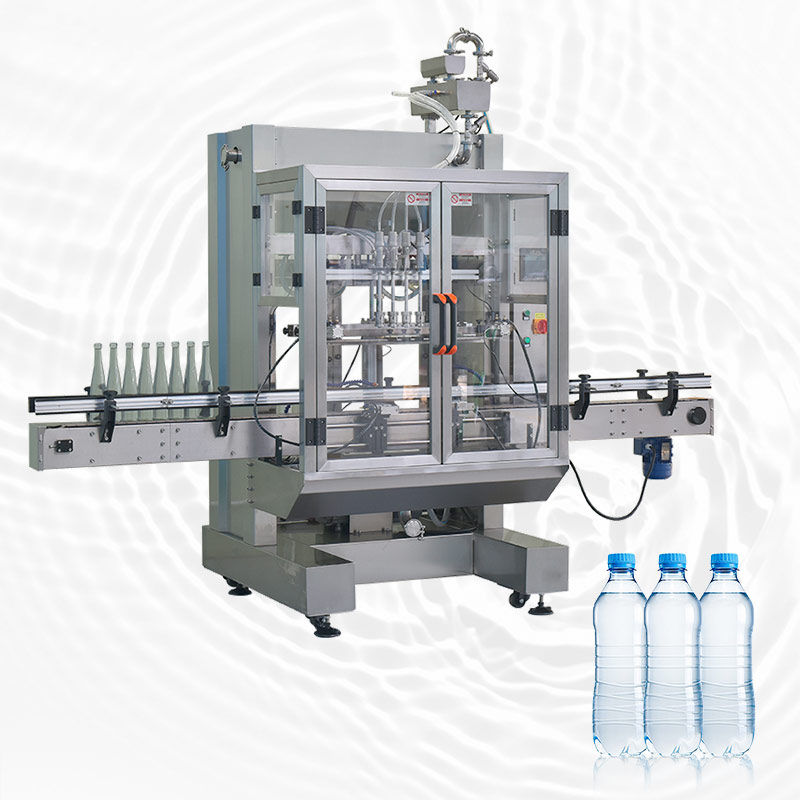
This automatic liquid filling machine meters by servo-driven piston. A cylinder drives the piston back and forth, locking every bottle to the set volume with error held within ±1%. Bottles ride in on the conveyor, a sensor detects each position and triggers the cycle automatically, and no bottle means no fill. The nozzle has a suck-back anti-drip structure, so nothing hangs when it lifts. Choose from 4, 6, 8, 10 or 12 heads, fill volumes from 100 to 5000 ml, and speeds from 1200 to 2400 bottles per hour.
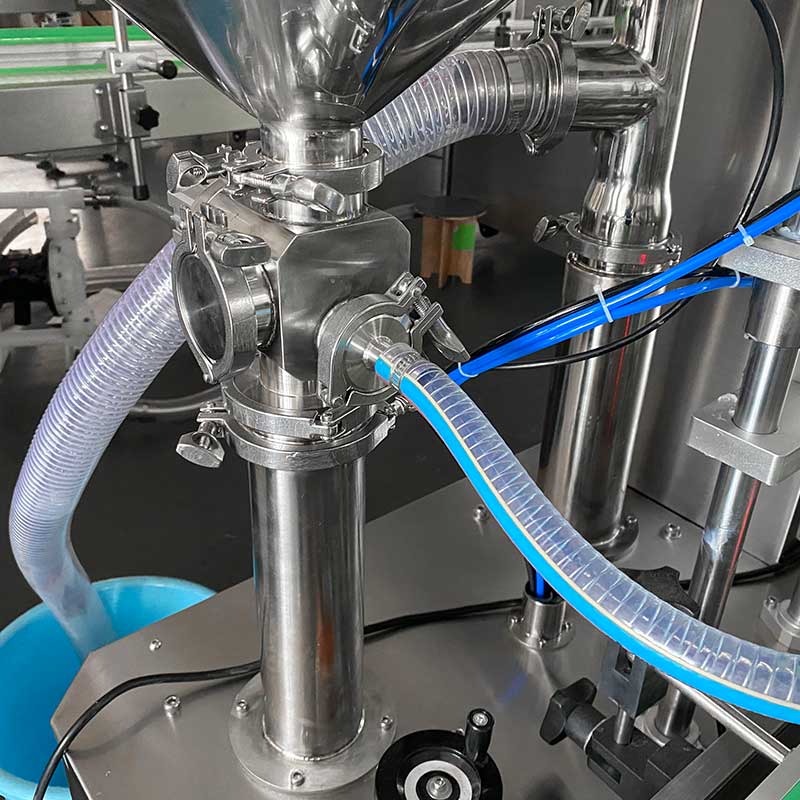
Product-contact parts are 316L stainless steel on a 304 frame. Low-viscosity liquids, lotions and oils all run. Water, milk, juice, beer, edible oil, shampoo, hand soap and detergent swap over with a few parameter changes when the bottle type changes.
Liquid Filling Machine Output, Nozzle Count and Power Ratings
Main models (per the official parameter table)
| Item | GD-FM01 | GD-T4 (desktop) | GD-T6 (desktop) |
|---|---|---|---|
| Filling heads | 4/6/8/10/12 heads (custom) | 4 heads | 6 heads |
| Filling type | Servo piston filling | Atmospheric filling | Atmospheric filling |
| Fill volume | 100-5000 ml (custom) | 4×(5-500 ml) | 6×(5-500 ml) |
| Accuracy | ±1% | Error 0.5% | Error 0.5% |
| Speed | 1200-2400 bottles/h | 4×8 bottles/min | 6×8 bottles/min |
| Voltage | AC 220 V, 50 Hz (custom) | 220 V, 50 Hz | 220 V, 50 Hz |
| Power | 2 kW | 400 W | 600 W |
| Air source | 0.5-0.8 MPa | 0.3-0.4 MPa | 0.3-0.4 MPa |
| Air consumption | 4 kg×30 L/min | n/a | n/a |
| Bottle height | n/a | 100-200 mm | 100-200 mm |
| Bottle neck | n/a | 70 mm (optional) | 70 mm (optional) |
| Control | PLC touch screen | PLC touch screen | PLC touch screen |
| Dimensions | 3000×900×2000 mm | 140×65×80 cm | 140×65×80 cm |
| Weight | 300 kg | 75 kg | 75 kg |
Note: GD-FM01 is the floor-standing servo model; GD-T4 and GD-T6 are desktop atmospheric models for smaller outputs. Voltage can be customized for the target market.
General parameters
| Item | Specification |
|---|---|
| Frame material | SUS304 stainless steel |
| Product-contact material | SUS316L stainless steel |
| Filling materials | Water, milk, juice, beer, edible oil, lotion, shampoo, hand soap, detergent and other low-viscosity liquids |
| Core components | PLC, motor, bearing, gear |
| Certification | ISO 9001, ISO 14001, ISO 45001, CE, BSCI, ETL |
| OEM / ODM | Accepted |
| Core component warranty | 1 year |
Wear parts
| Part | Note |
|---|---|
| Silicone tube | Product-transfer hose, a consumable. Not shipped with the machine; order spares with the unit |
Customization
- OEM / ODM scope. Accepted. Head count, fill volume range, nozzle form, machine dimensions and exterior can be adjusted to requirement, and voltage can be set for the target market.
- Modification lead time. Lead time for non-standard configurations such as higher head counts or large volumes: quoted with the offer.
- MOQ. One set, or one line for a complete system.
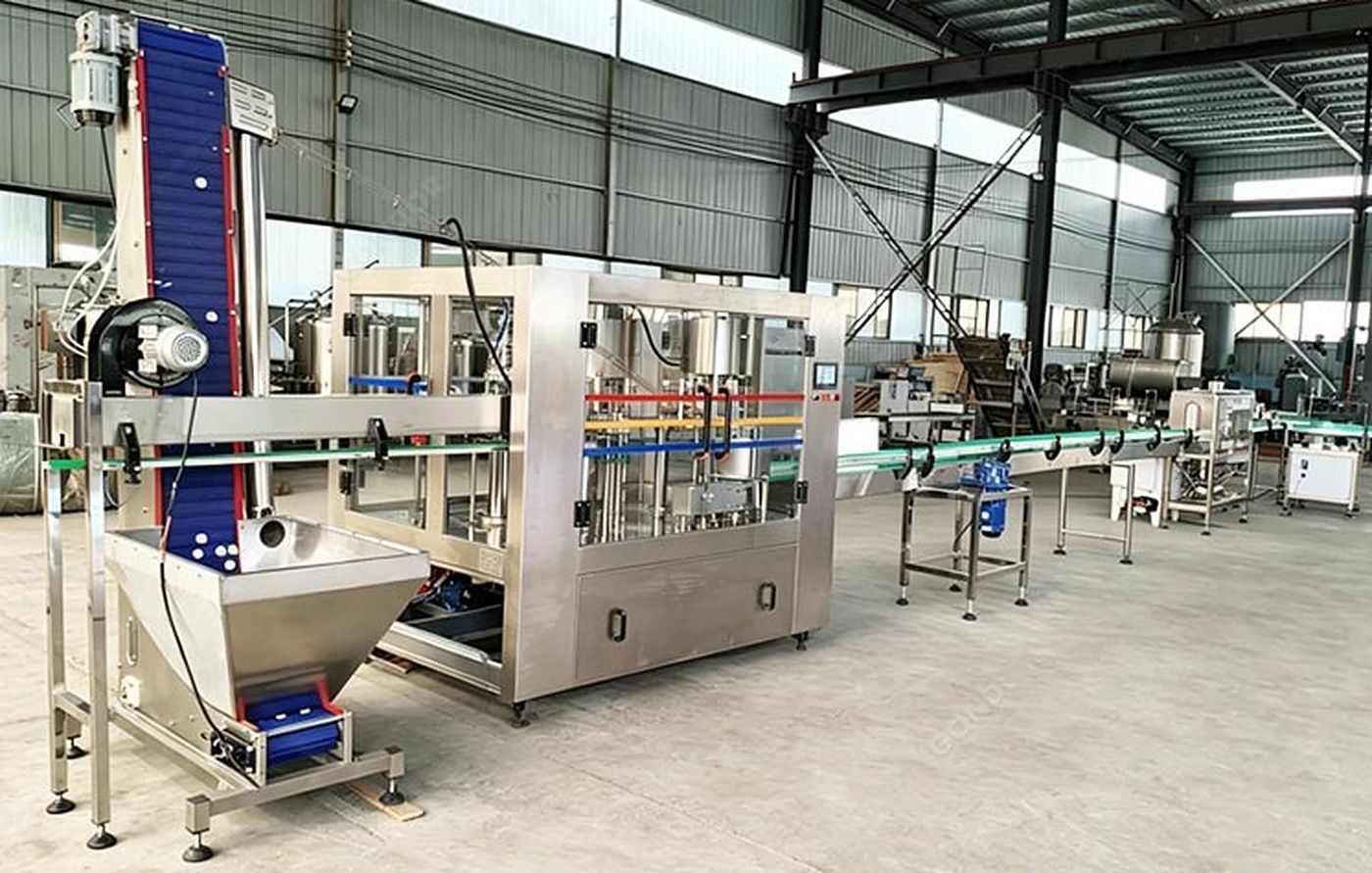
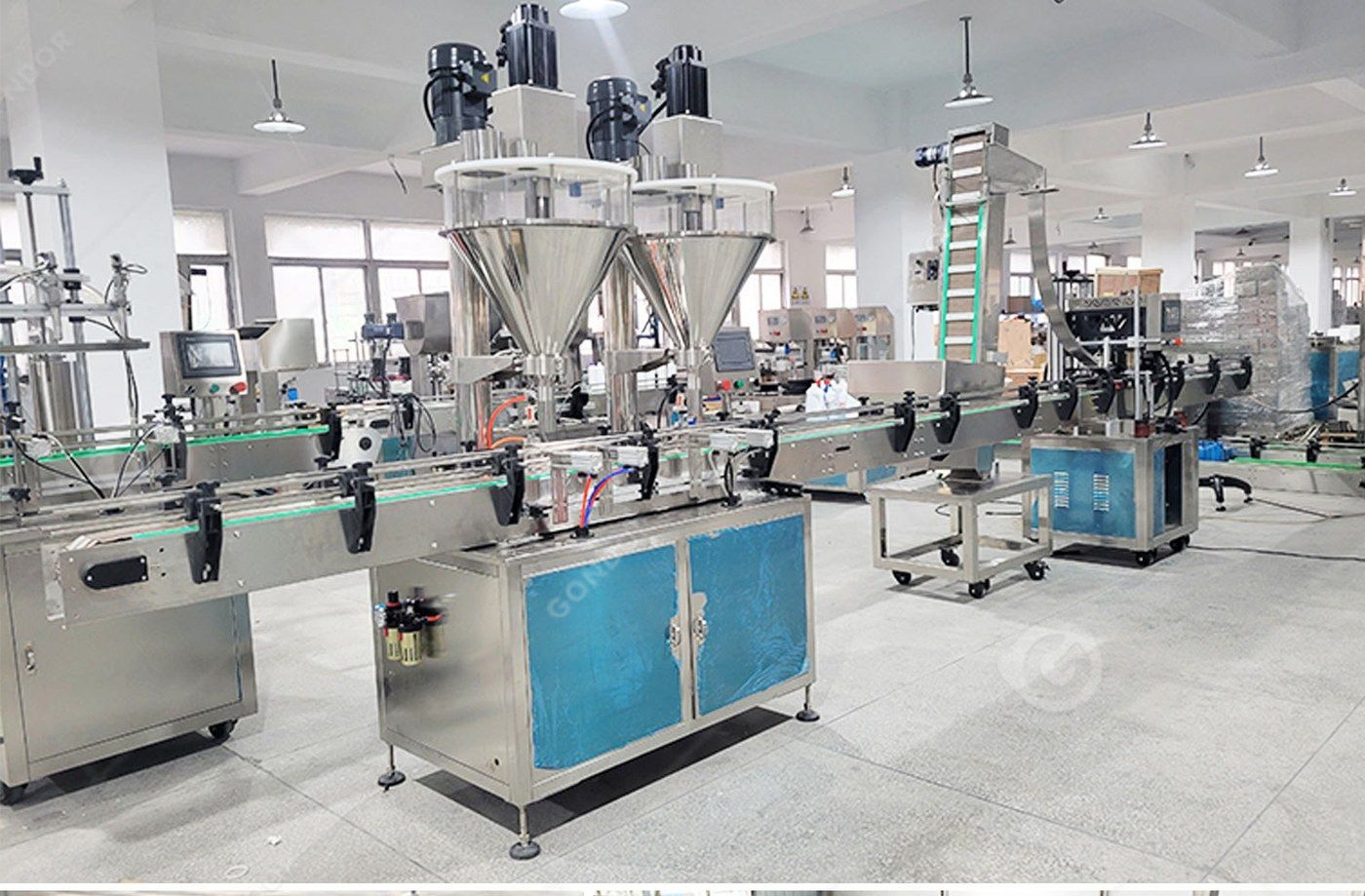
- Line expansion. The single machine can pair with a turn table, capping machine, labeling machine and collection table into a filling line. The layout proposal can be quoted together with the machine.
Quality Inspection and After-sales
- Pre-shipment inspection. A machinery test report and video inspection are provided. Fill accuracy and anti-drip performance are tested item by item before release.
- Warranty. One year on the whole machine and one year on core components (PLC, motor, bearing, gear).
- Installation. A manual and video demonstration ship with the machine, with remote guidance for calibration; on-site engineer support is available where needed.
- Spare parts. Consumables such as silicone tube are stocked long term. Nozzles and seals can be ordered per model; the spare parts list is confirmed against your sample and pack format.
- Response. Faults are diagnosed remotely first; a field visit is arranged when the issue cannot be resolved from distance.
How a Liquid Filling Machine Meters One Bottle at a Time
The flow in one paragraph. Empty bottles are placed at the infeed and the conveyor carries them under each filling head in turn. Once the position sensor confirms a bottle, the servo-driven piston draws and discharges product over a set stroke for one metered fill, and the bottle moves on with the conveyor. The PLC touch screen sets volume and speed globally. No bottle, no fill; low product, alarm. Accuracy rests on two structures: the servo stroke and the suck-back nozzle.
Product Performance Advantages
- Servo piston metering, error within ±1%. Fill volume follows the servo stroke. Digital setting repeats exactly, batch weight spread shrinks to the minimum, and quality inspection passes the first time.
- Parallel heads, 1200 to 2400 bottles per hour. Choose 4 to 12 heads by output. More heads mean less cycle time per bottle, and a single machine covers the single-product filling of a mid-size plant.
- Suck-back nozzles, no drips, no leaks. The nozzle retracts the last drop at the end of each dose. Bottle mouths stay clean, the conveyor stays clean, the floor stays clean, and so does the cleaning workload.
- No bottle, no fill, sensor-triggered. The position sensor skips a missing bottle automatically. No empty shots, no sprayed product, and no material lost during case changes or jams.
- Fast changeover, parameter-driven. Bottle and volume changes are mostly touch-screen work, and saved recipes recall with one tap. Shops rotating multiple SKUs cut changeover time sharply.
- 316L contact parts, food to daily chemical. Product-contact parts are 316L stainless steel, resistant to acid and alkali and easy to clean. Milk and juice in the morning, shampoo and detergent after lunch on the same machine.
Engineering Design
Metering structure. Servo motor plus piston metering is where the accuracy comes from. Against time-controlled filling, piston metering locks volume into a mechanical stroke, so viscosity drift barely moves the accuracy. Against gravimetric feedback, the structure is simpler, faster to respond and cheaper, which makes it the sound choice for the 100 to 5000 ml range.
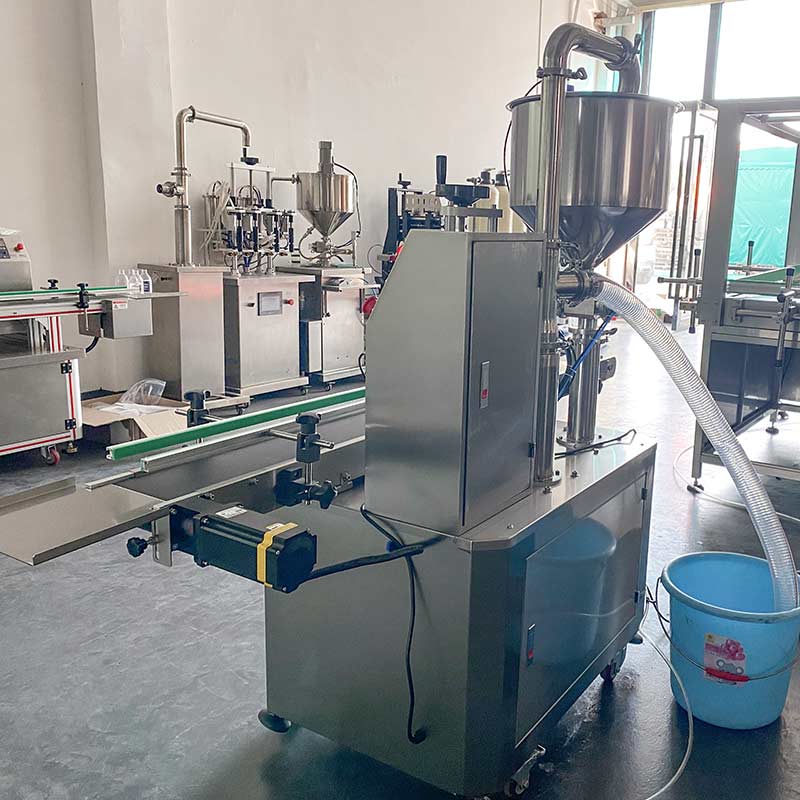
Head group. Each head meters and starts independently, with a suck-back 316L nozzle. All heads share one conveyor, and head spacing is laid out to the bottle diameter. Send bottle diameter and output together when inquiring, and we lay out the head count and spacing from the data.
Conveyor and sensing. The conveyor runs on variable frequency drive, coupled to the filling cycle. The position sensor confirms each bottle, triggering the fill in position; with the leak-prevention design, error stays low and rejects stay few.
Material and hygiene. The frame is 304 stainless steel, and the metering cylinder, pipework and nozzles in contact with product are 316L. Strip-down is straightforward and meets the hygiene management requirements of food and daily chemical production.
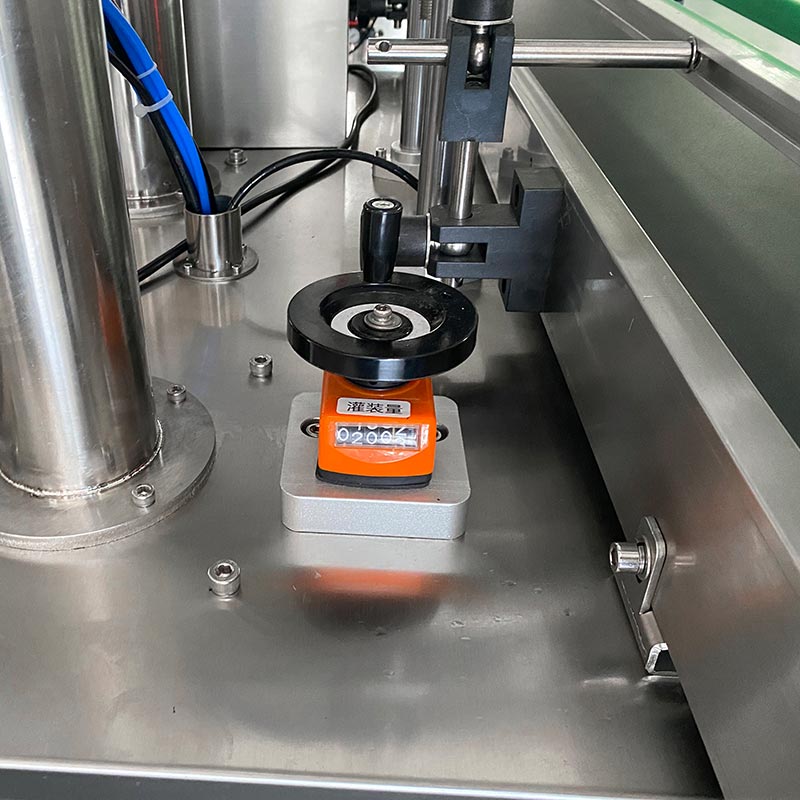
Control and electrical. A PLC touch screen centralizes volume, speed and count, with a hard-wired emergency stop. Working air is 0.5 to 0.8 MPa at 4 kg×30 L/min, and a standard plant air line covers it.
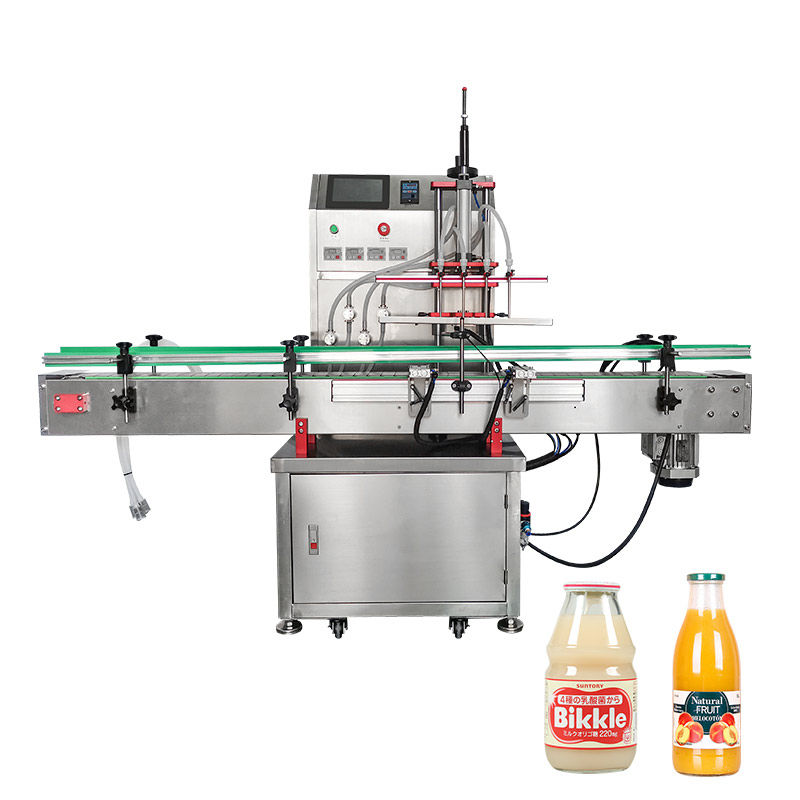
Structure breakdown (five parts)
| No. | Part | Function |
|---|---|---|
| 1 | Stainless steel body | 304 frame, carries and guards the machine |
| 2 | PLC control panel | Parameter setting, start/stop, counter display |
| 3 | E-stop switch | Emergency stop, hard-wired independently |
| 4 | Filling nozzles | 316L dosing with suck-back anti-drip |
| 5 | Conveyor belt | Bottle infeed and discharge, VFD speed |
Operating Procedure
- Pre-start. Connect power and air, check the supply tank level and pipework, and confirm the nozzles match the shift’s bottle type.
- Parameter setting. Set fill volume, speed and count target on the touch screen, and run a small-sample check for any new specification.
- Trial calibration. Fill ten bottles in a row, weigh and record. Within ±1%, go into production. If out of tolerance, check for pipe bubbles and piston seals.
- Continuous production. Top up product at intervals and watch the suck-back for clean cutoff. Skipped fills on missing bottles are normal behaviour, not a fault.
- Clean-down. At the end of the run, flush the pipework with water or cleaning solution, strip the nozzles for cleaning, and drain the metering cylinder.
Where a Liquid Filling Machine Is Used Across Product Types
Beverage and dairy. Bottled water, juice, milk and tea drinks are the main scenario. The 316L contact parts pass cleaning validation without fuss, and dairy-grade hygiene management between product changes is manageable.
Wine and condiments. Red wine, cooking wine, soy sauce and vinegar in defined doses. Glass and plastic bottles both run, and a bottle change is a parameter adjustment.
Edible oil. Table oil in 100 to 5000 ml packs. Oil flows cleanly with little foam, so piston metering shows its full strength.
Daily chemical and detergent. Shampoo, hand soap, laundry detergent and softener. Low-viscosity formulas fill directly; thicker formulas take a larger-bore nozzle. The anti-drip structure earns its keep on sticky materials.
Central kitchens and drink shops. The desktop GD-T4 and GD-T6 fit small-output scenes: shop back rooms and workshop-scale drink processing, compact and plug-and-play.
Choosing the Right Liquid Filling Machine for Your Viscosity
- Start with output. GD-FM01 covers 1200 to 2400 bottles per hour. Divide daily volume by shift hours; near the top of the range choose 10 or 12 heads, near the bottom choose 4 or 6.
- Then fill volume. Anything within 100 to 5000 ml works. For small volumes under 500 ml at modest output, the desktop GD-T4 or GD-T6 is more economical.
- Then material behaviour. Low-viscosity liquids run directly. High-viscosity, particle-loaded or foaming materials need targeted nozzle and metering configurations; describe the material fully before ordering.
- Then bottle dimensions. Bottle height or neck outside the standard range needs custom conveyor width and nozzle stroke. Send drawings or samples.
- Then expansion. If capping and labeling are likely within half a year, choose a configuration with line-interface wiring, so the machine upgrades without waste.
Limits worth stating plainly. The machine is built for low-viscosity liquids. High-viscosity pastes at the tahini or honey level need a different metering solution and should not be forced onto this unit. Products with large particles can jam nozzles and must be evaluated first. Foaming materials such as beer should be trial-filled or fitted with anti-foam measures. Speed is designed at 1200 to 2400 bottles per hour; real output depends on fill volume and material flow.
Liquid Filling Machine Questions Buyers Ask Before Ordering
1. What filling accuracy can it hold?
The official figure for GD-FM01 is within ±1%, and 0.5% error for the desktop GD-T4 and GD-T6. Real accuracy depends on material flow and volume setting. One trial run with your material confirms it.
2. Can one machine handle different materials?
Yes. Clean the metering cylinder and pipework between products. The 316L contact parts resist acid and alkali, and food-to-daily-chemical rotation is fine. Run strongly flavoured products at the end of each shift.
3. How long does a bottle change take?
Mostly touch-screen changes to volume and conveyor parameters, with saved recipes recalling directly. Large bottle-diameter changes adjust nozzle spacing. On-site training covers this during the first installation.
4. Will it drip and dirty the conveyor?
The nozzle has a suck-back anti-drip structure that retracts the last drop at the end of each dose, so bottle mouths and the conveyor stay clean under normal conditions. Persistent hanging usually means an aged seal, and replacement fixes it.
5. Can it run without an air supply?
GD-FM01 needs a plant air line at 0.5 to 0.8 MPa for its actuators. The desktop models use very little air (0.3 to 0.4 MPa) and a small compressor is enough.
6. Can you build more than 12 heads?
Standard options go to 12 heads. Larger outputs or special layouts go through a custom evaluation. Send output and bottle diameter data, and engineering will confirm feasibility before quotation.
7. How are warranty and after-sales handled?
The machine carries a one-year warranty and core components one year, with a manual and video included. Faults are diagnosed remotely first; a field visit follows when needed, and engineers can assist with installation and training.
8. Can it link with a capping machine and a labeling machine?
Yes. The machine reserves line-interface wiring. Pair it with a turn table, capping machine, labeling machine and collection table to form a filling line, and later expansion costs nothing extra.
What Happens After You Send a Filling Requirement
Send four items: your material, fill volume, bottle dimensions and shift output. We will return the head count, model recommendation and quotation. If the material is unusual or you want the accuracy verified first, send samples and empty bottles, and we will trial-fill and return finished bottles with the weighing record.
Contact
Henan Gondor Machine Co., Ltd. Website inquiry form, WhatsApp or email. Replies within 24 hours on working days.
Related Equipment
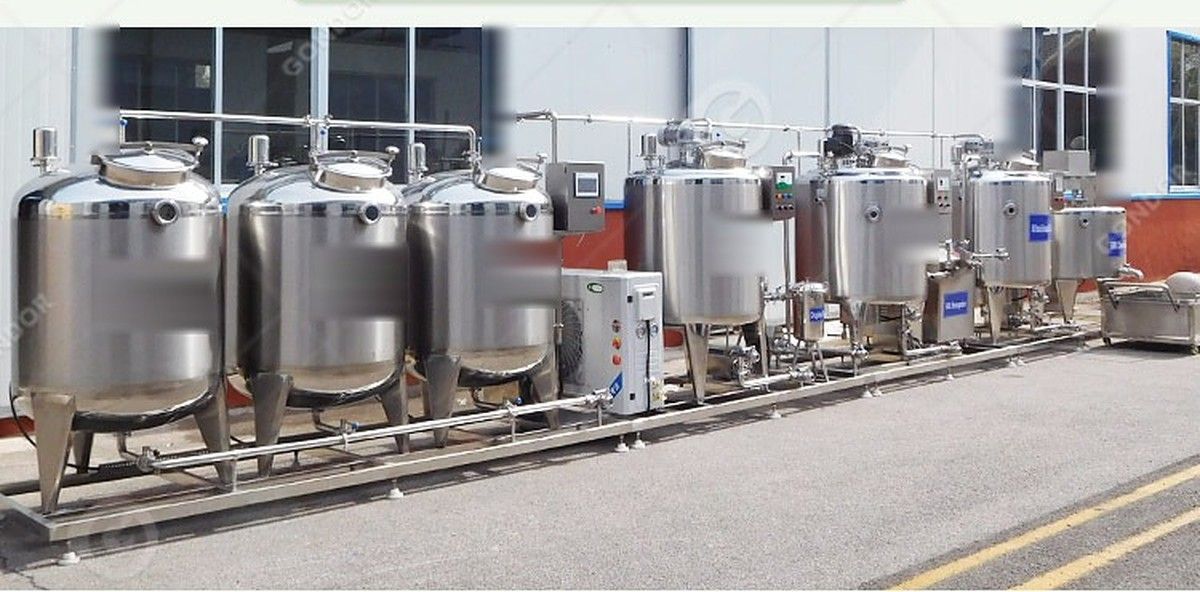
- Milk Pasteurizer Machine — cools the milk to filling temperature before it reaches this filler.
Get Liquid Filling Machine Pricing and Lead Time
Send us the daily volume, the product and the container or pack format you are working with, and we will come back with a model recommendation, a utility list and a price.