
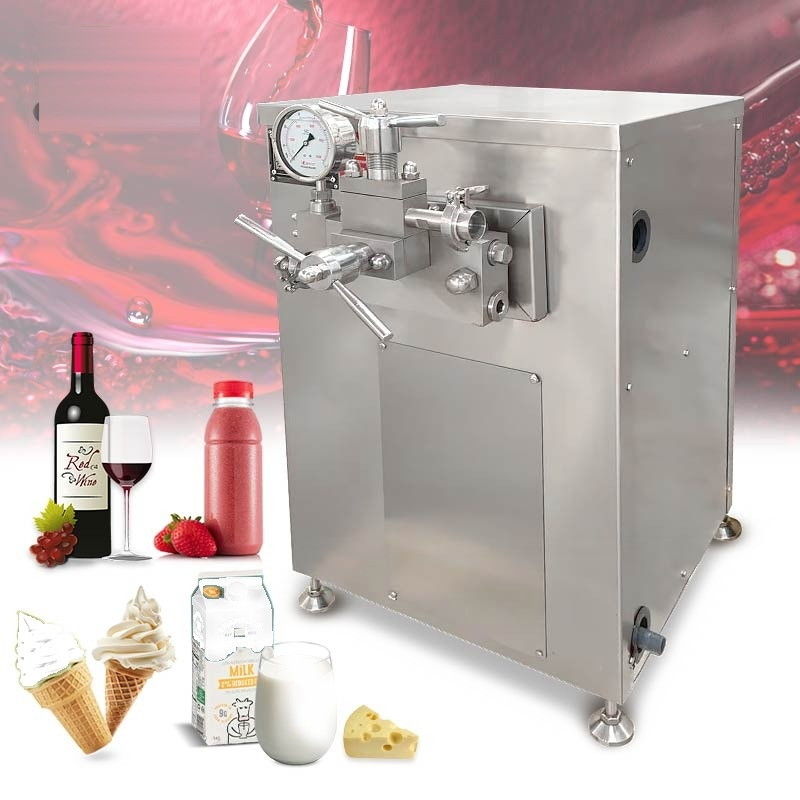
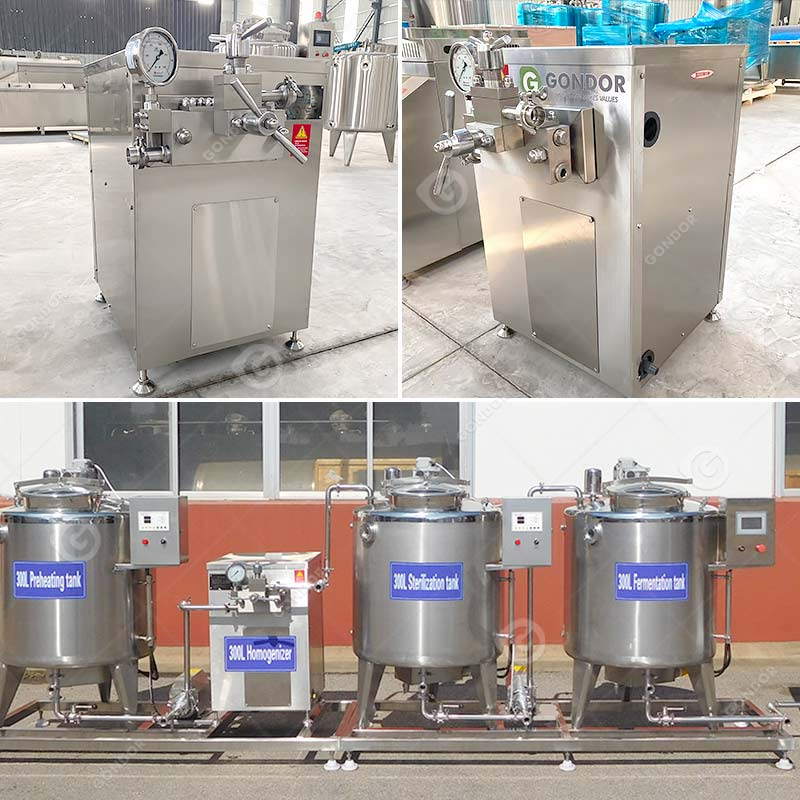
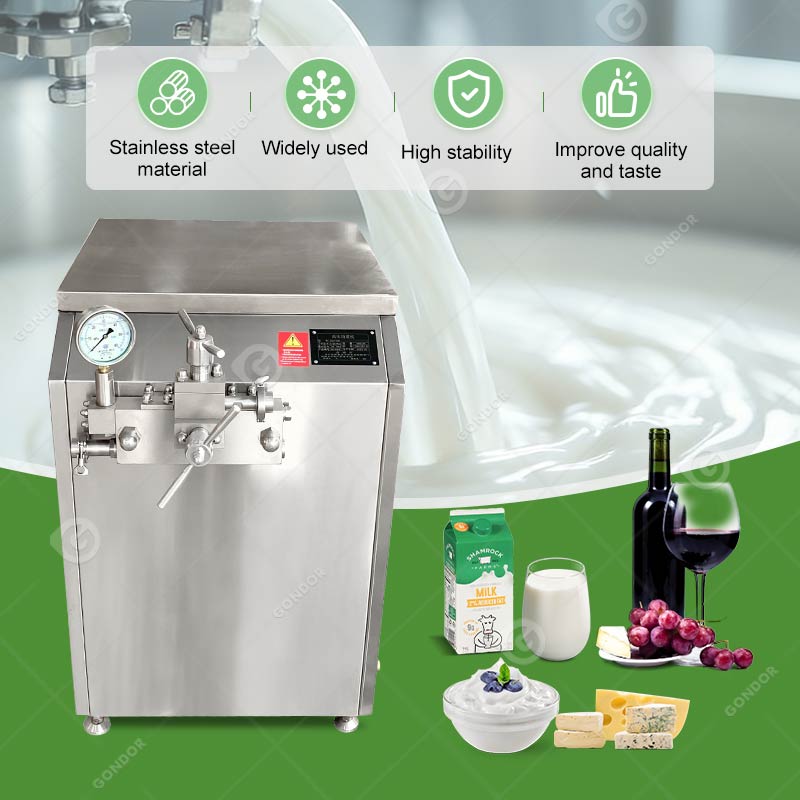
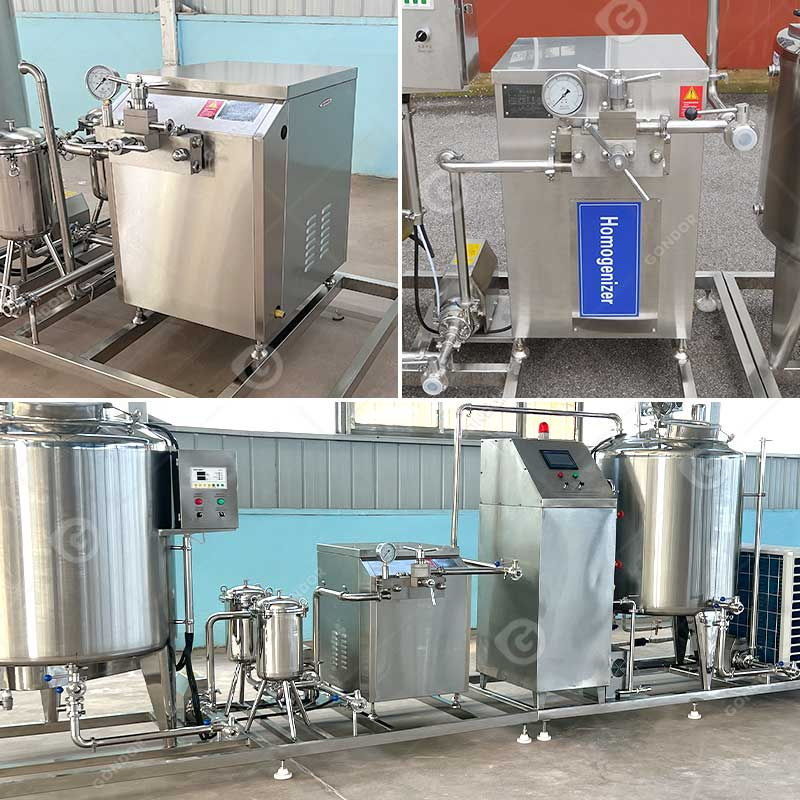
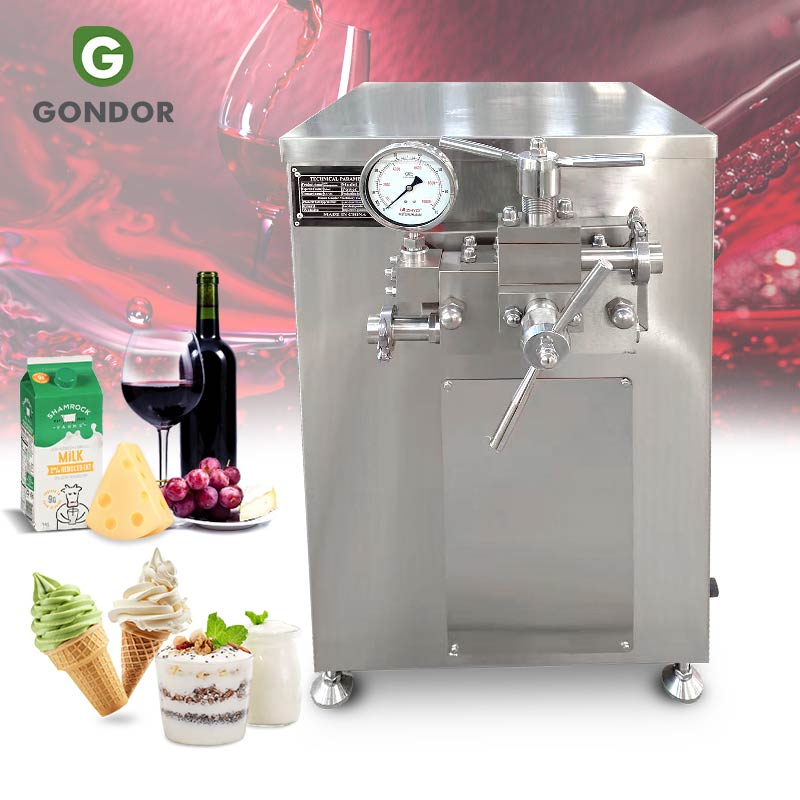
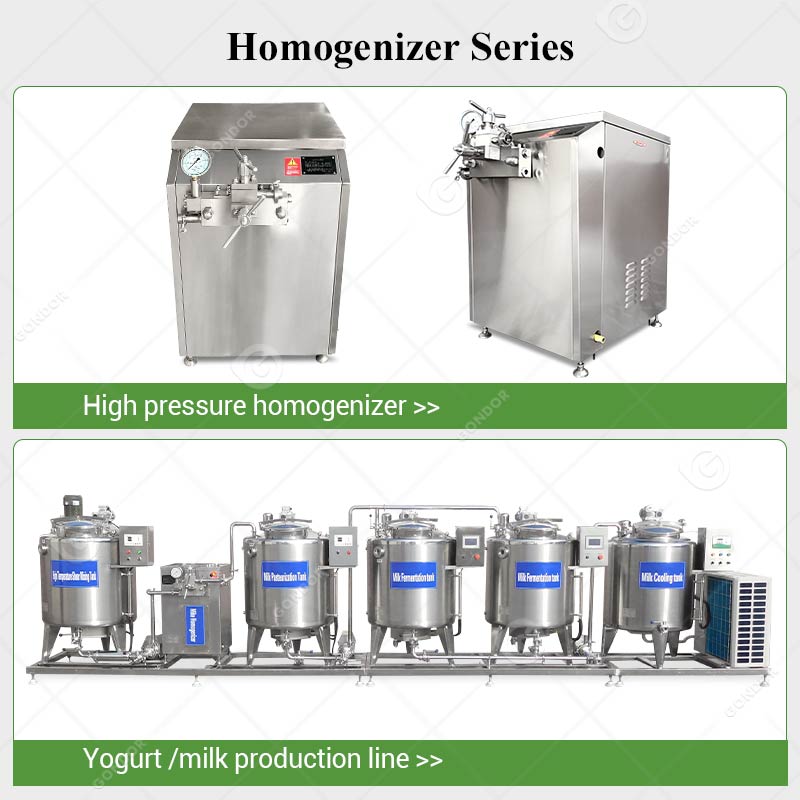
Three-plunger high-pressure homogenizing at 20 MPa working pressure and 100-2000 L/h, breaking fat globules small enough to stop creaming and grittiness.
What a High-Pressure Homogenizer Does to Fat Globules
Dairy plants hear the same complaints again and again: this batch of milk feels heavy on the palate, that batch of yogurt turns gritty. Trace it back and the cause is usually the same. Fat globules and protein aggregates were never broken down fine enough. Unhomogenized milk shows a clean cream line after a few hours of standing. Milk homogenized to spec stays uniform for days and drinks smooth.
Settling and filtration cannot fix this. Pushing fat globules from an average of 3 to 4 microns down below 1 micron takes pressure. A high-pressure homogenizer uses a three-plunger reciprocating pump to raise the product above 20 MPa and forces it through a homogenizing valve with a micro-scale gap. Turbulence, cavitation and shear act together inside that gap, and the material leaves refined. The documented figures: average emulsion fineness below 1 micron, average solid dispersion below 2 microns.
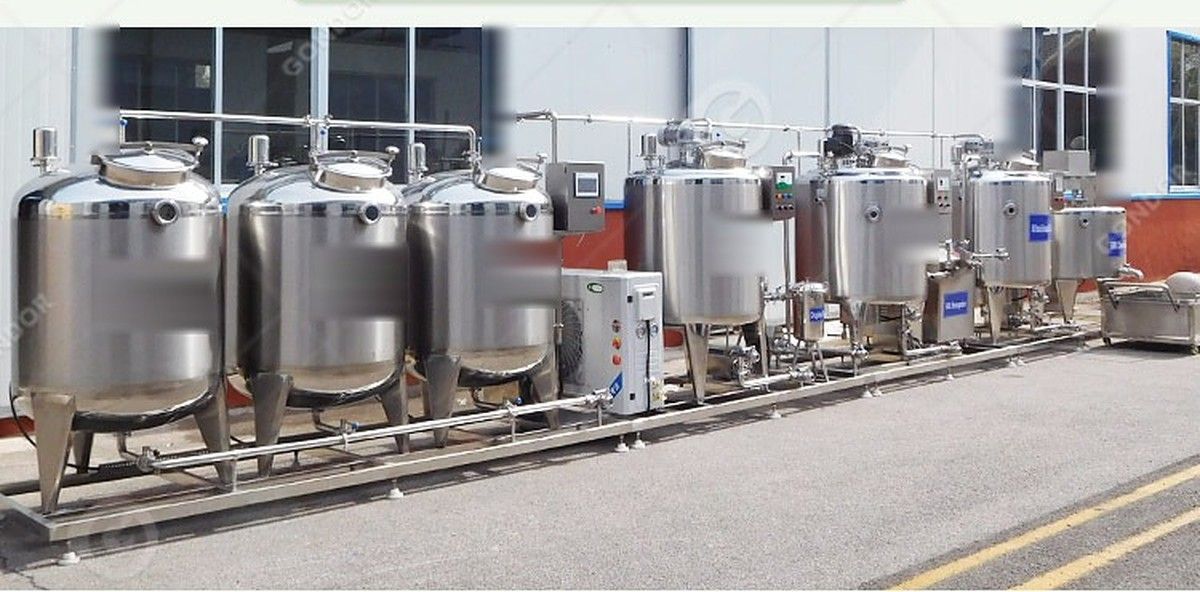
The unit handles liquid-liquid and liquid-solid materials below 0.2 Pa·s in viscosity and below 80 °C, covering milk, yogurt and juice. Flow options run from 100 L/h to 2000 L/h with motors from 1.5 to 37 kW. It sits between the mixing tank and the sterilizer or filler as the homogenizing station of a dairy or beverage line.
High-Pressure Homogenizer Capacity, Pressure and Power
General parameters (per the official attribute table)
| Item | Specification |
|---|---|
| Series model | GD-XMHG01 |
| Rated pressure | 25 MPa |
| Working pressure | 20 MPa |
| Processed material | Milk, yogurt, juice and other liquids (liquid-liquid or liquid-solid) |
| Viscosity limit | Below 0.2 Pa·s |
| Temperature limit | Below 80 °C |
| Flow options | 100 / 200 / 300 / 500 / 600 / 1000 / 1500 / 2000 L/h |
| Motor power range | 1.5 / 2.2 / 3 / 4 / 7.5 / 11 / 15 / 18.5 / 22 / 30 / 37 kW |
| Voltage | 220 V / 380 V |
| Weight range | 250 to 900 kg |
| Dimension range | 755×520×935 mm to 1605×1200×1586 mm |
| Homogenizing fineness | Emulsion average below 1 micron, solid dispersion average below 2 microns |
| Pressure regulation | Two-stage mechanical |
| Material | Stainless steel product-contact parts, alloy steel core parts |
| Certification | ISO 9001, ISO 14001, ISO 45001, CE, BSCI, ETL |
| OEM / ODM | Accepted |
Flow option details
Note: the official attribute table lists power, weight and dimension values in parallel without mapping each value to a flow option. The matching columns above stay open pending engineering confirmation before publication.
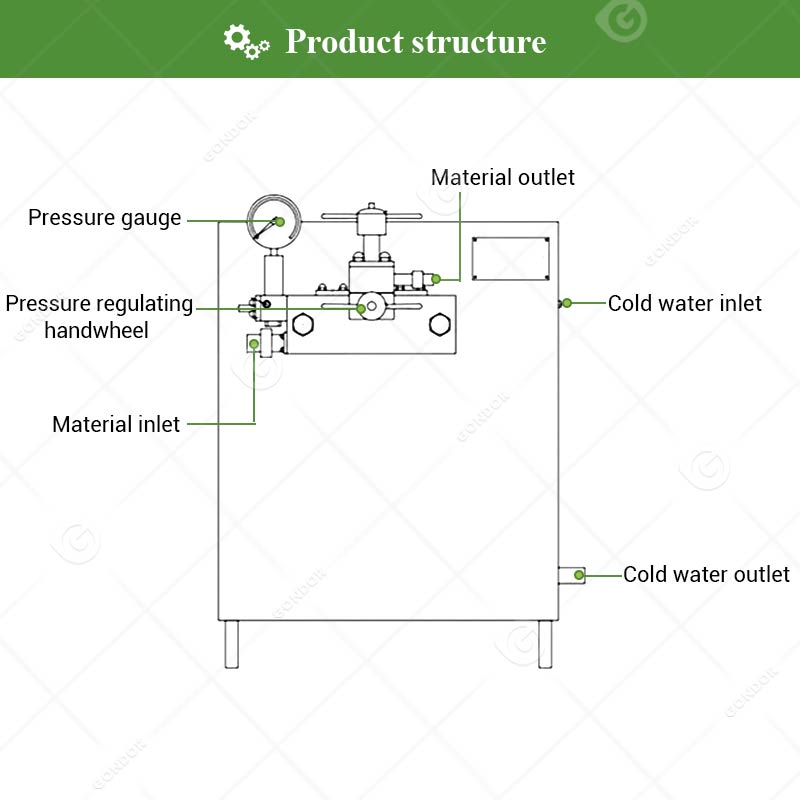
Inside a High-Pressure Homogenizer: Valve, Plungers and Pressure Stage
In short. Material is drawn in, pressurized by a three-plunger reciprocating pump, pushed through the homogenizing valve, and refined by turbulence, cavitation and shear as it squeezes through the micro gap between valve seat and valve disc. It leaves the outlet at stable fineness. The process runs continuously, with feed and discharge in parallel.
Product Performance Advantages
- Micron-scale fineness, the direct source of dairy texture and stability. Documented figures are average emulsion fineness below 1 micron and average solid dispersion below 2 microns. At that scale milk does not separate and yogurt does not turn gritty, and sensory consistency holds through the shelf life.
- Two-stage mechanical pressure regulation that can be seen and locked. Compared with single-stage regulation, the two-stage design separates primary pressure from homogenizing pressure. Switching products means turning the wheel back to the process card values, and batch-to-batch variation stays small.
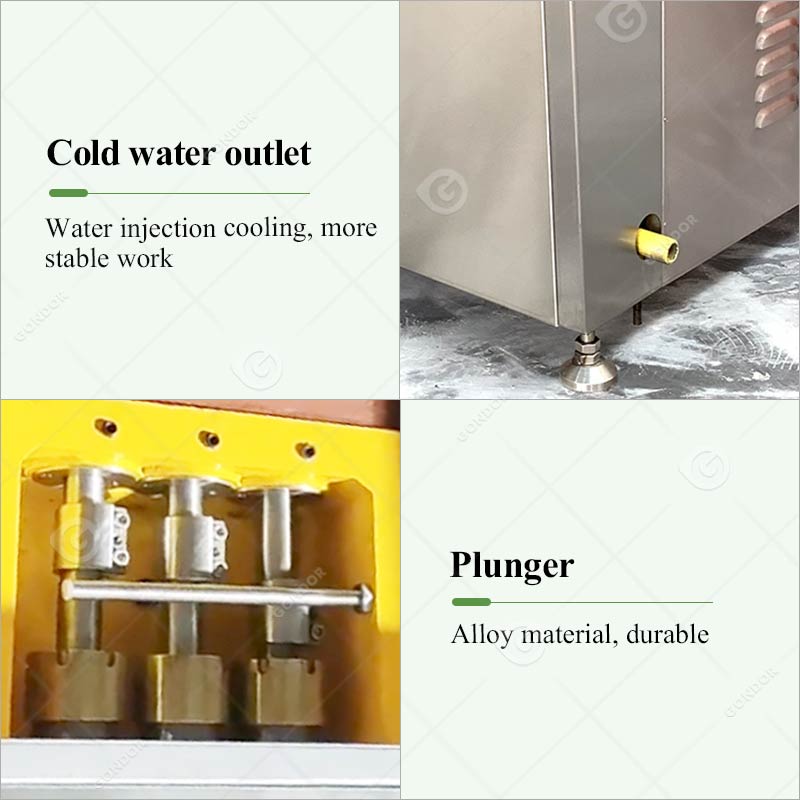
- Core wetted parts selected for high-pressure duty. The homogenizing valve and other core parts are alloy steel, built for repeated pressure impact. Product-contact surfaces are stainless steel, temperature and corrosion resistant, meeting food-contact hygiene requirements.
- Flow options from 100 to 2000 L/h. Small workshops and volume plants can both find a rating inside the same family without paying for capacity they will not use.
- Low noise and steady running. The three plungers are phased to cancel flow pulsation, so the pump group runs smoothly, which matters when the unit stands close to the filling hall.
- One-pass homogenization that trims additive dependence. Stability after homogenization reduces reliance on thickening aids, leaving room to compress recipe cost.
Engineering Design
Pump group. The three-plunger reciprocating pump is the heart of the unit. The plungers are phase-offset so suction and discharge alternate and the delivered flow stays steadier than a single plunger can manage. Plungers, seals and pump valves form the high-pressure wear combination. The documented wear parts are seals and belts; keep a service log by operating hours.
Homogenizing valve group. The valve pairs a disc with a seat, and the gap between them sets the shear intensity. In the two-stage layout the product passes two valves in series: the first stage does the main breakup and the second trims the particle size distribution. That is the structural reason a 20 MPa working pressure can hold 1-micron fineness.
Pressure display and safety. The pressure gauge reads line pressure in real time for checking against the process card. The regulator locks mechanically so the setpoint cannot drift from an accidental touch.
Lubrication and drive. The crankcase drives the three plungers, and a belt connects the motor to the reduction end. The belt is on the wear-parts list; check tension on the schedule in the manual.
Structure breakdown
| No. | Part | Function |
|---|---|---|
| 1 | Three-plunger reciprocating pump | Draws in and pressurizes the product, sets flow and pressure ceiling |
| 2 | Homogenizing valve | Micro gap between disc and seat creates shear, turbulence and cavitation |
| 3 | Two-stage pressure regulator | Sets primary and secondary pressure separately, with mechanical lock |
| 4 | Pressure gauge | Shows line working pressure in real time |
| 5 | Feed inlet | Connects to upstream mixing or buffer tank |
| 6 | Discharge outlet | Connects to downstream sterilizing, degassing or filling |
| 7 | Motor and belt drive | Supplies power; belt is a wear part |
| 8 | Crankcase | Drives the plunger reciprocating motion with internal lubrication |
Operating Procedure
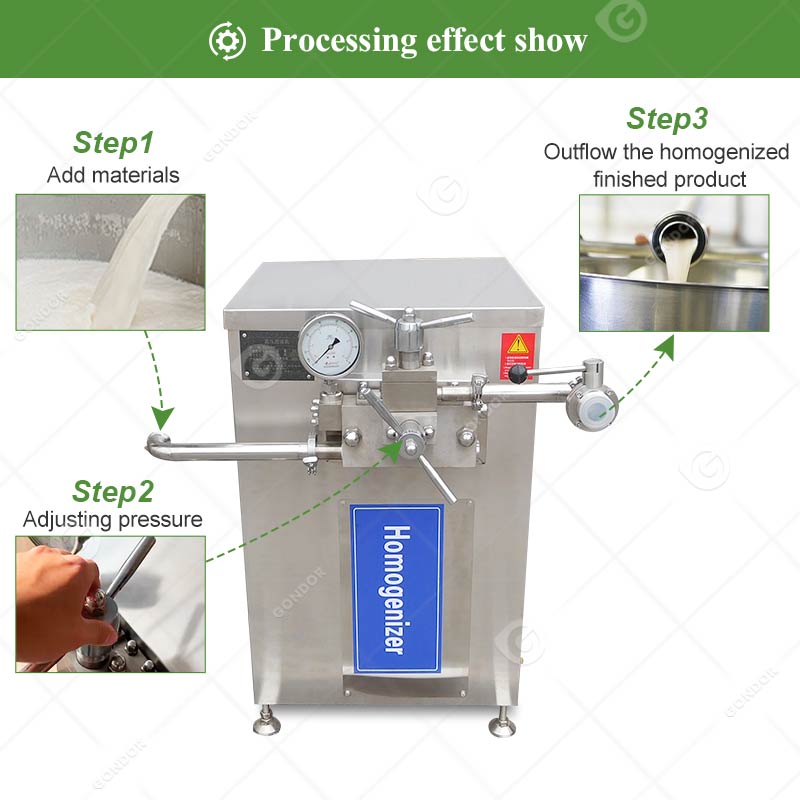
- Pre-start check. Confirm crankcase oil level, correct belt tension, correct positions of all line valves, and a gauge at zero.
- Preheating and feeding. Bring the product to process temperature (below 80 °C) and let it enter the feed end. Confirm smooth feeding without cavitation noise.
- Pressure build-up. Start at low speed and raise the pressure stage by stage with the hand wheel to the working pressure per the process card. Lock the setting once the gauge reading stabilizes.
- Homogenizing run. Material passes the homogenizing valve continuously. Patrol pressure fluctuation, pump group temperature and any leakage at seals.
- Depressurizing and cleaning. After the run, circulate water or cleaning solution at low speed to push residual product out of the line, then depressurize and stop. Clean product-contact surfaces and the valve group per shift so bacteria cannot breed in dead corners.
Typical Applications for a High-Pressure Homogenizer
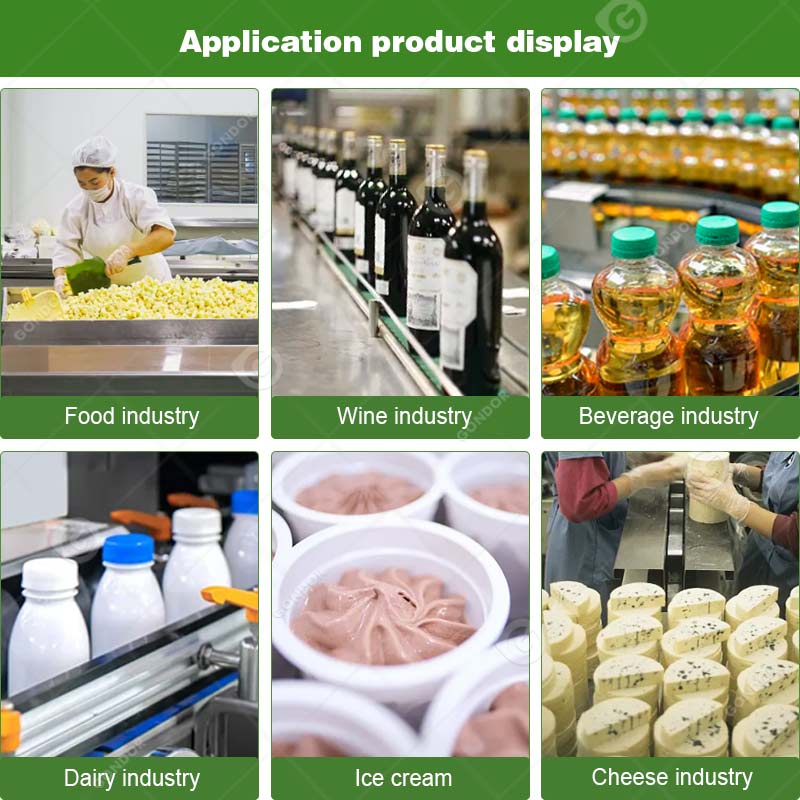
Homogenizing and emulsifying milk, yogurt and juice is the core duty. Within the limits of 0.2 Pa·s and 80 °C, liquid-phase treatment of blended protein drinks and pulp feed before further processing also fits. Viscous material beyond the limit starves the plunger pump, and that material belongs on a high-shear or vacuum emulsifying route instead. Sort this out at selection stage: the three homogenizer categories are not interchangeable.
Customization
Voltage can be configured to 220 V or 380 V for the target market, and OEM and ODM projects are accepted. Specific combinations of flow, power and homogenizing pressure, plus wetted-part material and control panel language, are subject to engineering review. Tooling lead time and minimum order quantity: quoted with the offer.
Quality Inspection and After-Sales
Pre-shipment video inspection and a mechanical test report are provided, with the manual and test data shipped with the unit. Core components (bearing, motor, gear) carry a one-year warranty. After the warranty, online technical support and spare parts supply continue. Wear parts (seals, belts) are worth covering for one service cycle in the first order.
How to Specify a High-Pressure Homogenizer for Your Product
A high-pressure homogenizer is chosen on three numbers: flow, pressure and material limits.
- Size the rating from peak line flow. Eight options run from 100 to 2000 L/h. Choose by the peak, not the average, or the upstream mixing tank will keep backing up.
- Set pressure by process, not by more-is-better. Routine milk homogenization at 15 to 20 MPa already meets fineness targets. This unit works at 20 MPa with a 25 MPa rating, covering standard dairy duty and leaving headroom for thicker recipes.
- Respect the material limits. Viscosity below 0.2 Pa·s, temperature below 80 °C. Large solids, fiber or unfiltered impurities belong upstream of this machine; the plunger pump does not work as a filter.
High-Pressure Homogenizer Questions Buyers Ask
1. How fine can the output be?
Per the documented figures, average emulsion fineness is below 1 micron and average solid dispersion below 2 microns. Actual results depend on feed condition and pressure setting, so we recommend a sample trial run for confirmation.
2. What do working pressure 20 MPa and rated 25 MPa mean?
25 MPa is the allowed ceiling and 20 MPa is the routine process band. Two-stage mechanical regulation holds the pressure near the setpoint, and the process card lets you reproduce a previous batch’s settings.
3. Can it handle juice with fruit pulp?
Liquid-solid dispersion systems are within scope, but the solid fraction must be sized upstream so the pump draws it smoothly. Large pulp pieces or coarse fiber will jam the feed end; that material belongs on a crushing or high-shear route.
4. Which parts wear, and how often do they change?
The documented wear parts are seals and belts. There is no fixed service hour in the source data. Judge by pressure holding and flow stability, and inspect when leakage or pressure fluctuation appears.
5. How is this different from the large vacuum emulsifying mixer and the small high-shear unit?
This machine runs a continuous in-line pressurizing route at the 20 MPa class with 100 to 2000 L/h flow. The large emulsifying mixer is a batch vacuum tank with a heating jacket, taking 300 to 5000 L per batch. The small unit is a high-shear dispersing head over a movable vessel, taking 50 to 500 L. They do not replace each other.
6. Can the voltage be changed for export?
Yes. 220 V and 380 V configurations are available, and unusual local voltage is handled as a customization. Share the local voltage and frequency before ordering.
7. How are warranty and inspection arranged?
Core components carry a one-year warranty. Video inspection and a mechanical test report come before shipment. Third-party inspection or a factory run can be arranged on notice.
8. What are the MOQ and lead time?
Both vary by rating and customization, and the source data gives no unified figure. They are confirmed per specific inquiry.
From Inquiry to High-Pressure Homogenizer Installation
Send over your product type (milk, yogurt or juice), hourly flow and local voltage, and we will propose a rating and pressure configuration. To verify fineness first, send a sample for a trial run and we will return a before-and-after particle size comparison.
Contact
Henan Gondor Machine Co., Ltd. Website inquiry form, WhatsApp or email. Replies within 24 hours on working days.
Related Equipment
- High Shear Homogenizer — takes the thick, high-viscosity batches that starve a plunger pump.
- Vacuum Emulsifying Mixer — batch emulsification in a jacketed vacuum tank from 300 to 5000 L.
- Milk Pasteurizer Machine — usually stands after the homogenizer on a pasteurised milk line.
Request High-Pressure Homogenizer Pricing
Send us the daily volume, the product and the container or pack format you are working with, and we will come back with a model recommendation, a utility list and a price.