


Mixing Tank
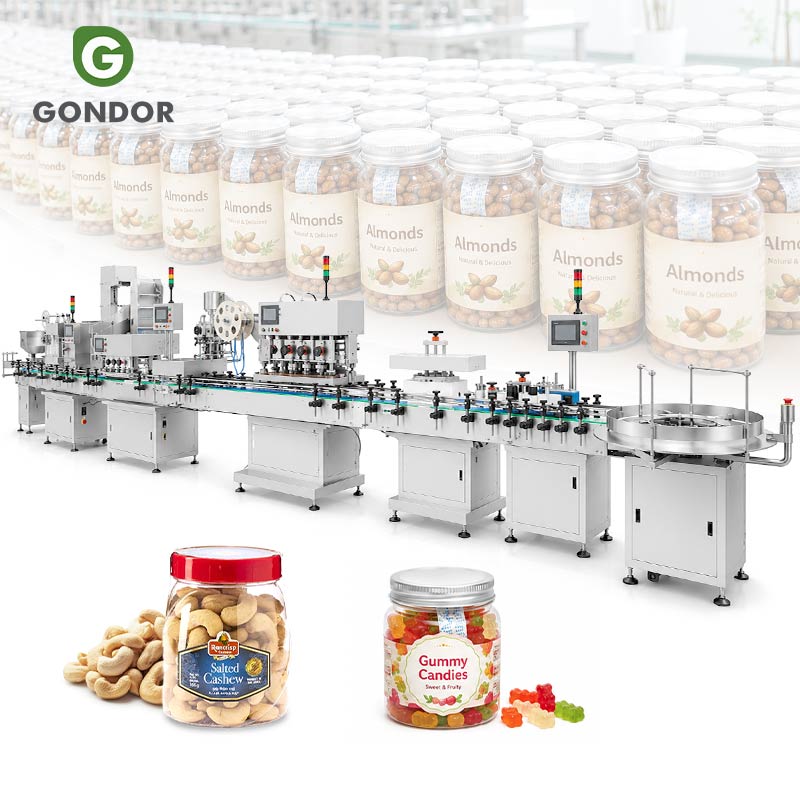
A powder bottle sold by net mass and a gummy bottle sold by piece count require different measurement systems. Both may use bottle feeders, cappers and labelers, but their core filling duties are different.
Define the saleable-pack requirement first. The choice between auger dosing, weighing and piece counting follows from that requirement and the product's physical behaviour.
Identify what the package must contain
| Product requirement | Main measurement question | Detailed guide |
|---|---|---|
| Powder with a defined net weight | How is delivered mass measured or controlled? | Auger fill-weight drift |
| Protein powder in an integrated bottle line | How do feeding, dosing and closure stages work together? | Powder bottling workflow |
| Solids sold by piece count | How many usable pieces can reach each bottle? | Count and output calculation |
| Sticky gummies | Can the feed system separate pieces before sensing? | Photoelectric gummy counting |
A list of supported products is a starting point. Actual samples are needed where flow, stickiness or geometry changes the measurement task.
Powder dosing depends on product condition
An auger can repeat the same screw movement while delivering a different mass if bulk density or feeding changes. Hopper level, refill behaviour, settling and bridging can all matter.
Specify the powder's expected bulk-density range and provide representative samples. Ask whether the proposed arrangement uses operator weight checks, automatic rejection or dose correction from measured weight. Those are different functions with different equipment requirements.
The weight-drift guide shows why motor repeatability alone does not establish net-weight accuracy.
Piece counting begins with separation
A counter needs a stream of individually detectable pieces. Touching gummies, overlapping seeds or irregular clusters can make that presentation difficult.
Evaluate the feeder and channel arrangement before concentrating only on the sensor specification. The product may also need conditioning before it reaches the counter if its normal surface state produces persistent clusters.
For a purchasing test, verify finished bottles independently. A sensing specification and the proportion of correctly filled bottles are not interchangeable quality measures.
Translate the target into the right capacity unit
For powder, give the required fill weight and accepted bottles per shift. The same machine can need a different dose time for different weights or powder behaviour.
For counted solids, include the target pieces per bottle. Doubling that count can substantially change the counting workload even if the bottle format remains the same. The counting-line guide provides a simple calculation.
In either case, the capper, seal system and labeler must accept the resulting bottle stream. Include cleaning and replenishment in the schedule when they occur during normal production.
Keep the bottle neck and closure in the assessment
Powder at the mouth can affect the intended closure or liner bond. Large solids can bridge at a narrow neck even when the counter releases the correct batch.
Supply the actual bottle and closure set. Optional induction sealing, gas flushing or desiccant insertion should follow the product specification and have a defined acceptance method. Their inclusion should be explicit in the quotation.
Compare a complete line with staged automation
A standalone dosing or counting machine may suit an operation where operators can handle the surrounding tasks at the required rate. A connected line becomes useful when repetitive bottle handling, closure work or synchronization limits output.
Compare accepted shift output, staffing and changeover requirements for both approaches. Avoid assuming that every automated station reduces the total number of tasks by the same amount.
Start with the unit declared on the saleable package
A product sold by mass needs a net-content measurement basis, while a product sold by a defined number of pieces needs verification of that count. The surrounding bottle may look similar, but the acceptance question is different.
Some projects also have a nominal mass expectation for a counted product or another secondary requirement. State those requirements separately rather than assuming that one measurement automatically proves the other.
If the product specification is still being developed, identify which part is confirmed and which remains a planning assumption. A supplier can propose a route more usefully when the saleable-unit requirement is explicit.
Describe how the material reaches the machine
Powder can arrive aerated, settled or prone to bridging. Small solids can arrive as independent pieces or as clusters. The incoming condition affects whether the dosing or counting stage receives a consistent feed.
Provide representative material and describe its normal storage and transfer. Include the holding time before packaging and the product condition likely to be most difficult. Avoid selecting only easy-flowing samples for a machine intended to handle a more variable production supply.
Ask the supplier to identify any preparation step assumed before filling. If that step requires separate equipment or operator work, it belongs in the proposed process and capacity review.
Translate the order into a material workload
For an illustrative powder order of 10,000 bottles at 400 g, the net saleable powder is 4,000 kg. For a counted product at 60 pieces in 10,000 bottles, the machine must deliver 600,000 accepted pieces into the packages.
These calculations establish different workload units. They do not predict running time until the tested dose or count rate and the surrounding packaging capacity are known.
Add the actual schedule for replenishment, cleaning and changeover. Identify rejected material and retained product separately so gross material handled is not mistaken for saleable output.
Compare standalone and integrated arrangements on the same duty
A standalone filler or counter can be assessed with manual bottle presentation and closure handling if that is the intended operation. An integrated line should be assessed with its connected stages running.
Use the same product, package, quality definition and shift target for both proposals. Record staffing and intervention rather than assuming that automation at the core station removes every surrounding task.
Check whether future integration is included in the present design. Define the relevant bottle transfer, signals and space requirements rather than treating a general statement about expandability as a complete connection plan.
Review the closure with the product inside
Powder at the neck and solids bridging at the opening are different problems, but both show why filling and closure performance must be assessed on the assembled package.
Use actual bottles and caps, and identify any liner or sealing component required by the specification. Optional stations should have a defined purpose and a measurable acceptance method.
Observe the product through final collection. Packages damaged or mixed during handling can reduce accepted output even when the dosing or counting station performed correctly.
Keep the evidence detailed enough to diagnose variation
For powders, retain individual net-weight results and mark refill and stop events. For counted solids, retain independently verified finished-bottle counts and record separation problems.
Classify rejects and manual interventions. A satisfactory average can conceal wide variation, while a short uninterrupted run can miss the event that limits a full shift.
The final proposal should link the tested material condition, tooling, fill weight or piece count and accepted rate. That reference lets the plant assess later product changes without assuming that a successful demonstration validates every powder, gummy or bottle combination in the supplier's general range.
The [powder and solid filling category](/products/powder-solid-filling/) contains the current related equipment. For a route assessment, send representative material, the net-weight or piece-count requirement, bottle and cap samples and the intended production schedule. Include cleaning and recipe changes so the proposal reflects the full operation.
Related guides
Related Products


Sizing equipment for your line?
Send the product, the batch size and the utilities you have. We reply with the model, the cycle time and what the cooling side needs.



