


Cheese Processing Production Line
A small yogurt line cannot be sized from the pasteurizer or filler alone. Fermentation holds product for a substantial part of the production schedule, and a tank stays unavailable during filling, cooling, emptying and cleaning as well.
The useful capacity question is how many saleable litres can complete the whole route within the working day, with the intended yogurt style and packaging format.
Start with stirred or set yogurt
For stirred yogurt, milk is prepared, heat treated and cooled for inoculation. Fermentation occurs in a tank, followed by controlled cooling and the relevant gentle handling, blending and filling operations.
For set yogurt, the inoculated product is generally filled before incubation, and the gel develops in its retail container. This changes where capacity is occupied: incubation space and package handling become central constraints.
The [Tetra Pak fermented-milk chapter](https://dairyprocessinghandbook.tetrapak.com/chapter/fermented-milk-products) distinguishes these product routes. Equipment should follow the selected route rather than assuming that every yogurt ferments in a tank before filling.
A practical stirred-yogurt flow
Milk reception and chilled storage → preparation and any required standardization → heat treatment → cooling for inoculation → fermentation → controlled cooling → filling and refrigerated storage.
Homogenization, ingredient addition and optional deaeration belong at the positions defined by the product process. Fruit addition and the treatment of fruit preparations need their own specification.
The supplied small-line documents include storage, preheating, filtration, homogenization, heat treatment, fermentation, cooling and CIP equipment. Those modules form a starting discussion, while the final piping and process sequence must match the recipe.
Calculate occupied tank time
For each fermentation tank, add:
Filling time + fermentation time + any cooling time inside the tank + discharge time + cleaning and preparation time.
This is the interval before the same vessel can accept its next batch. Fermentation time alone understates the required tank availability.
As an illustrative schedule, suppose a process requires 1,200 L of stirred yogurt per day and uses 300 L working batches. Four completed batches are needed. If the agreed occupancy is ten hours per batch, the requirement is 40 tank-hours. Four tanks could each provide one ten-hour slot, subject to shared preparation, cooling and filling capacity. Two tanks would need two suitable slots each, which may not fit the staffing schedule.
The ten-hour figure is an assumption for this calculation, not a recommended culture time or a promised machine cycle.
Why a larger filler may add little output
A filler can empty an available buffer quickly, but it cannot supply yogurt that is still fermenting. Similarly, a large heat-treatment unit may spend time waiting if no clean fermentation vessel is available.
Prepare a simple timeline with one row for each vessel and utility. Mark product loading, processing, discharge and cleaning. Shared chilled water and CIP can create conflicts even when the tank count appears sufficient.
Match cooling to the yogurt
The cooling system must achieve the required product condition while preserving the intended texture. A standard refrigeration storage tank should not automatically receive a hot load beyond its design duty. Define the inlet temperature, batch size and required cooling time with the supplier.
If cooling occurs outside the fermentation tank, include transfer equipment and a suitable heat exchanger or cooling stage. If it occurs inside, count that time in tank occupancy.
Information that makes quotations comparable
| Supply this information | It helps establish |
|---|---|
| Stirred, drinking or set yogurt | The correct fermentation and filling route |
| Saleable litres per day and shift hours | The required batch schedule |
| Working batch size and number of recipes | Vessel count and changeover allowance |
| Pack size and container type | Filler duty and downstream handling |
| Cooling utility conditions | Whether the scheduled cooling time is achievable |
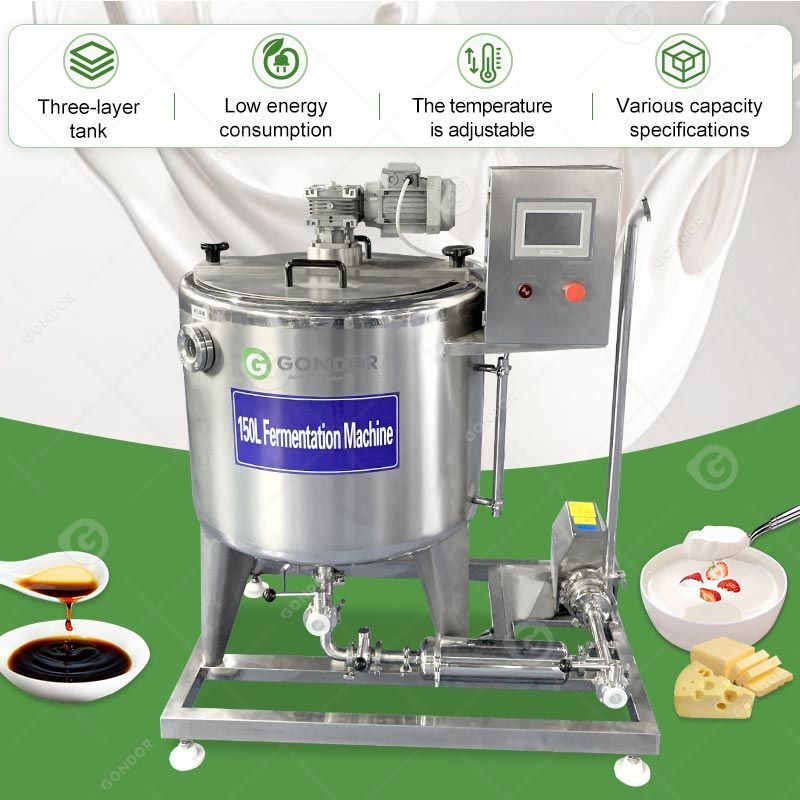
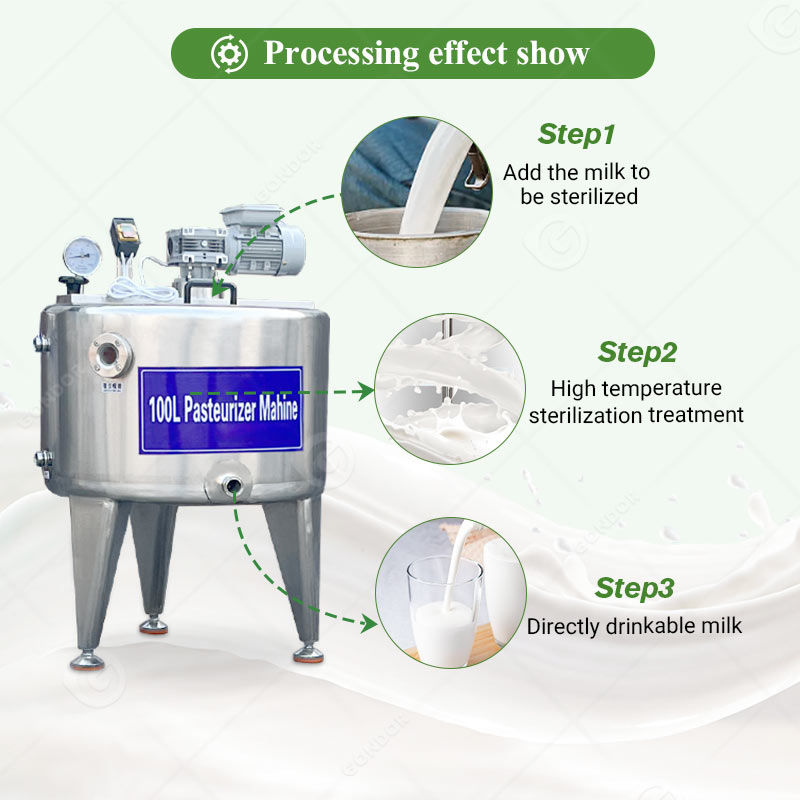
Review the existing [fermentation tank](/product/fermentation-tank/) and milk pasteurizer pages for component details. A complete line requires these components to be matched together.
Build a schedule from release times
Begin with the time at which each fermentation batch must be ready for cooling or filling. Work backward through the recipe's occupied stages to establish when each tank must receive prepared milk.
Then check whether the shared preparation equipment can supply those starts. If two tanks need milk at the same time but the heat-treatment stage can prepare only one batch, the schedule needs staggering or another preparation arrangement. The appropriate solution depends on the daily product mix rather than tank count alone.
Record the expected end of cleaning for every tank. A vessel emptied at the required time may still be unavailable for the next batch if cleaning and preparation were omitted from the schedule. Treat availability as a defined event, not an assumption that a drained tank is immediately ready.
Use sensitivity calculations before choosing vessel quantity
In an illustrative four-batch schedule, adding 45 minutes of cooling and 30 minutes of cleaning to each occupied interval adds five tank-hours in total. That increase can matter if the original plan had little spare capacity.
Run the calculation with the expected occupancy and with a credible longer occupancy supplied by the product specialist. Also examine the effect of a late milk delivery or a planned recipe change. These are scheduling scenarios rather than predictions of how a specific culture will behave.
A small amount of deliberate spare capacity may be more useful than an ambitious schedule that depends on every stage finishing at its shortest observed time. Explain the assumptions in the supplier discussion so the additional capacity has a clear purpose.
Separate fermentation capacity from refrigerated storage
A fermentation vessel and a finished-product storage space can become occupied for different reasons. If the filler is unavailable, finished yogurt may need an approved holding arrangement rather than continued occupation of equipment intended for another batch.
Define where the product may wait, under what conditions and for how long according to the validated process. Include the transfer and cleaning requirements of any buffer vessel. Adding a buffer without those details can move a queue rather than resolve it.
For packaged yogurt, calculate how much finished storage is required at the busiest point of the day. Dispatch timing and product release can determine that peak more strongly than the average daily output.
Account for flavour changes and ingredient handling
A daily target divided among several flavours may require more interventions than the same volume of one product. Identify ingredient preparation, dosing, mixing, line clearance and cleaning between products.
State which operations occur in the fermentation tank and which occur afterward. If fruit or flavour is added later, the preparation, addition and transfer equipment must fit the intended texture and package. The fermentation-vessel quote should not silently include processes that require separate equipment.
The small dairy workflow guide provides the wider route for checking these shared operations. It is especially useful when one plant makes drinking milk and yogurt on different days or within the same shift.
Make the capacity trial end at an accepted package
For an integrated demonstration, count product completing the required route rather than only milk loaded into tanks. Record the amount held for further handling, the amount remaining in equipment and the amount rejected under the agreed specification.
Check the proposed staffing throughout the run. Culture addition, sample handling, container supply and cleaning can require attention at overlapping times. A schedule that is mechanically possible may still need revision if it assumes one person performs several simultaneous tasks.
Ask the supplier to provide the process drawing, batch timeline, utility assumptions and boundary of supply together. These documents make the litres-per-day claim traceable to actual occupied equipment and a defined finished product.
For a capacity review, [send the yogurt style, daily output, batch size, shift length and pack format](/contact/). Include the culture supplier's process requirements so the proposed schedule is based on your product.
Related guides
Related Products


Sizing equipment for your line?
Send the product, the batch size and the utilities you have. We reply with the model, the cycle time and what the cooling side needs.



