

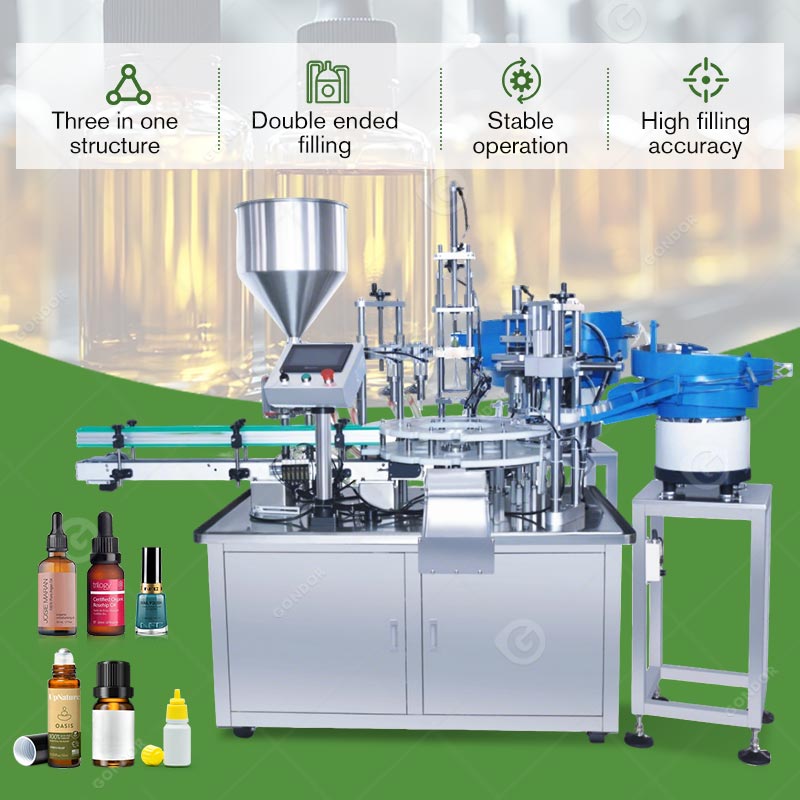

3-in-1 Filling and Capping Machine
A batch milk pasteurizer processes a measured quantity of milk through heating, a controlled holding period and cooling. Its useful daily output depends on the entire cycle, including filling, draining and cleaning. A tank marked 100 L does not automatically deliver 100 L every hour.
For a small dairy comparing equipment, the first question is how the milk moves through that cycle and how quickly the available utilities can remove heat afterward.
How heat reaches the milk
In a jacketed or water-bath machine, an electric heater or another heat source warms a service fluid around the product vessel. Heat crosses the vessel wall into the milk. The milk stays separate from the heating water during normal operation.
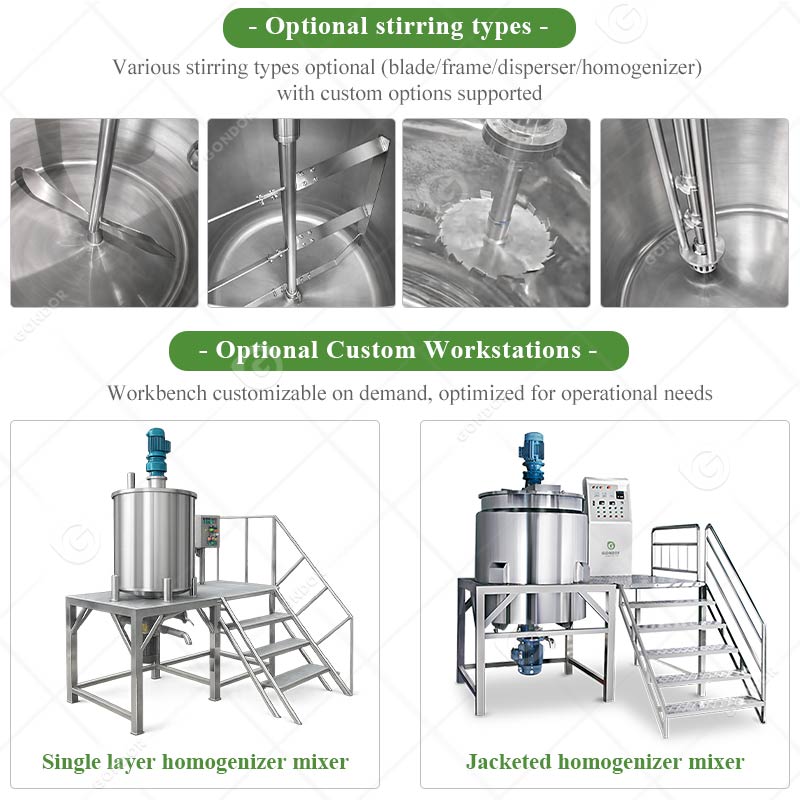
An agitator circulates the batch so that heat reaches the product more evenly. Without adequate circulation, the temperature beside a warm wall can differ from the temperature elsewhere in the vessel. Agitation must suit the actual fill level and product, since a partially exposed impeller can introduce air.
The controller reads a temperature probe and regulates heating. Probe location and calibration therefore matter as much as the temperature displayed on the screen.
The five parts of a batch cycle
- Load and start circulation. Fill within the approved working-volume range and confirm that the product covers the required sensors and mixing elements.
- Heat toward the process target. Record the product temperature, rather than relying only on the jacket temperature.
- Hold under the validated process. Reaching a setpoint alone does not establish a completed treatment. The time and temperature combination must match the product and the applicable food safety process.
- Cool to the next operation. Cooling requirements differ for refrigerated drinking milk, cultured products and cheese milk.
- Transfer and clean. Include pipe drainage, residue removal and the approved cleaning cycle before the next batch.
This sequence describes a batch process. It should not be treated as interchangeable with a continuous HTST system or a UHT system. A small tank with a temperature setting below boiling is not a UHT installation.
Why cooling often limits output
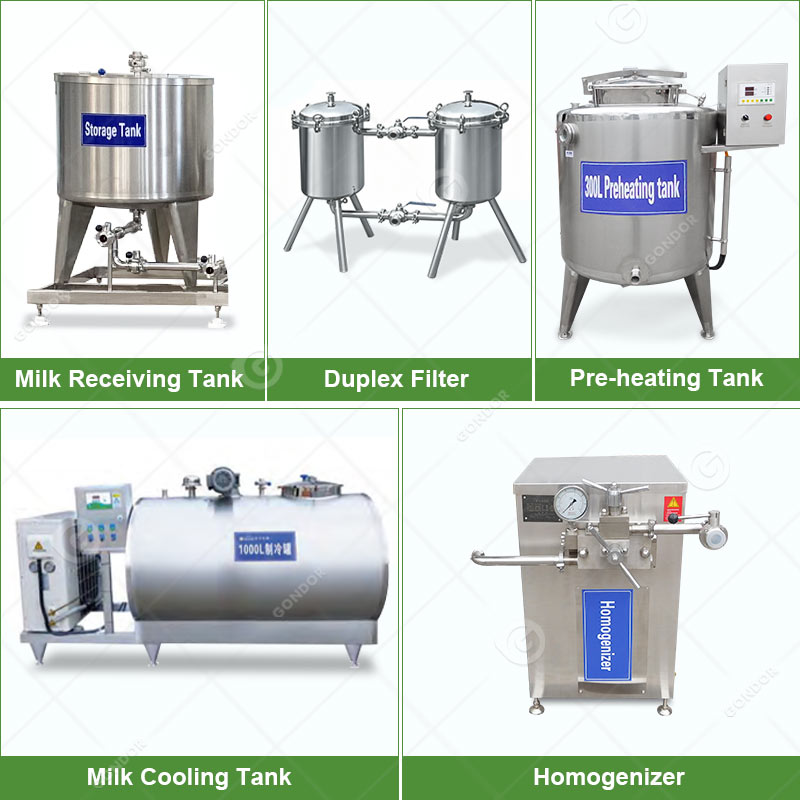
As the milk approaches the cooling-water temperature, the temperature difference becomes smaller and cooling slows. Warm mains water may handle the first part of cooling but cannot bring the product below its own inlet temperature. Reaching a low final product temperature requires an appropriately designed chilled-water, glycol or refrigeration arrangement.
Ask which cooling equipment is included. A water connection, a cooling jacket and a complete refrigeration system describe different supplies. Also check the allowable jacket pressure and whether switching services requires manual valves or automatic control.
Calculate capacity from occupied time
Use this planning equation:
Daily batch output = usable volume per batch × completed batches per day.
For illustration, 100 L of usable volume completed three times in a shift gives 300 L before transfer losses. If cooling delays allow only two completed cycles, output falls to 200 L even though the tank size is unchanged. These figures illustrate scheduling, rather than a performance promise for a particular pasteurizer.
Compare quotations using the same starting temperature, target cooling temperature, utility conditions and cleaning allowance. Otherwise, two quoted cycle times may describe different duties.
Questions to settle before ordering
| Detail | Why it changes the selection |
|---|---|
| Minimum and maximum working volume | Determines whether both trial batches and normal batches can circulate correctly |
| Heating supply and available electrical power | Limits the practical heating rate |
| Cooling-water temperature and flow | Determines whether the required discharge temperature is achievable |
| Temperature recording and probe calibration | Supports repeatable operation and process verification |
| Outlet height and transfer arrangement | Affects drainage, residual volume and connection to the next tank |
The [batch milk pasteurizer product page](/product/milk-pasteurizer-machine/) describes the available tank range. Choose a size against the full production schedule rather than matching only the litres in one recipe.
Does a larger heater always shorten the cycle?
Only if the heat-transfer surface, agitation and electrical supply can use the additional power. Faster heating also does not remove a cooling bottleneck or reduce a validated holding requirement.
Can the same tank prepare milk for yogurt?
A suitable tank may support milk heat treatment, but yogurt production also needs controlled cooling for inoculation, fermentation and final cooling. Check the complete route and cleaning arrangements before assuming that one vessel covers every operation.
Separate an equipment delay from a process requirement
When a batch takes longer than expected, divide the record into intervals before changing the machine specification. A long heating interval, a required holding interval and a long cooling interval have different causes. Shortening a required treatment to recover production time changes the process rather than improving the equipment.
Record when the tank begins filling, when heating starts, when the product reaches the required condition, when cooling begins and when transfer finishes. Add the time at which cleaning ends. Use the same event definitions for each batch so the comparison does not depend on who completed the log.
Compare a slow batch with an acceptable batch of the same size. If both heat similarly but one cools much more slowly, investigate the cooling service and product circulation. If the whole schedule slips before heating starts, the constraint may be product preparation or operator availability. Neither observation is a reason to buy a larger heating element without further evidence.
Use a heat balance to check the scale of the duty
A simplified calculation helps establish whether a proposed heating time is plausible. Sensible heat is product mass multiplied by specific heat and the required temperature rise. The result is energy; dividing it by available useful heating power gives an idealized time.
For an arithmetic illustration, assume 100 kg of liquid, a specific heat of 4 kJ/(kg·K) and a 40 K temperature increase. The product requires 16,000 kJ, equivalent to about 4.44 kWh. At 6 kW of useful heat transfer, the idealized heating time is about 44 minutes.
This example uses assumed material properties and useful power. An electrical heater rated at 6 kW does not necessarily transfer 6 kW into the product throughout the interval. The vessel and service fluid also absorb heat, and losses occur. The calculation is a discussion tool, not a thermal treatment recommendation or a guaranteed cycle time.
Check what changes between small and full batches
A partly filled vessel has a different product depth and may expose a different amount of active heat-transfer surface. The agitator and temperature probe must still operate as intended. A successful full-volume demonstration therefore does not prove that the same machine is suitable for every small batch.
Ask for trials at the minimum batch you expect to run and at normal working volume. Record the same start and finish conditions at both volumes. Check whether the controller overshoots, whether product temperature remains representative and whether the outlet drains without trapping a significant amount of saleable milk.
Include transfer and cleaning in the purchasing test
Heating and cooling can look satisfactory while transfer remains awkward. Confirm the hose or pipe size, receiving-vessel height and intended pumping arrangement. Measure product left in the tank and lines using an agreed method. A nominal batch of 100 L is not the same as 100 L reaching the next operation.
Next, observe the cleaning sequence that will actually be used. Establish which components are removed, which surfaces can be inspected and how operators verify that the equipment is ready. The supplier's cycle estimate should state whether cleaning and preparation for another batch are included.
When several dairy products share this vessel, connect its schedule to the small dairy processing workflow. That wider schedule shows whether the pasteurizer is waiting for a clean receiving tank, an available filler or a cooling service already occupied by another batch.
Make the comparison sheet specific
For each quotation, place usable volume, starting product temperature, discharge condition, heating supply, coolant conditions and full occupied time on the same page. Mark estimates separately from demonstrated results. A proposal based on colder coolant should not be compared directly with a demonstration using warm mains water.
Request an acceptance record built around those agreed inputs. This makes the final discussion about an achievable milk-processing duty rather than an isolated tank size or an unexplained promise of batches per hour.
For a cycle assessment, [send your batch size, daily milk target, available power and cooling-water conditions](/contact/). Include the starting temperature and required discharge temperature so the proposed equipment can be assessed against a defined duty.
Related guides


Sizing equipment for your line?
Send the product, the batch size and the utilities you have. We reply with the model, the cycle time and what the cooling side needs.



