


Cheese Processing Production Line
Uneven fills on a piston liquid filler can arise from air in the product, changing supply conditions, valve leakage or differences between filling heads. Before changing every head's setting, determine whether the error is common to the line or isolated to one nozzle.
A structured sample check is usually more informative than adjusting the machine after looking at bottle fill levels alone.
How piston dosing works
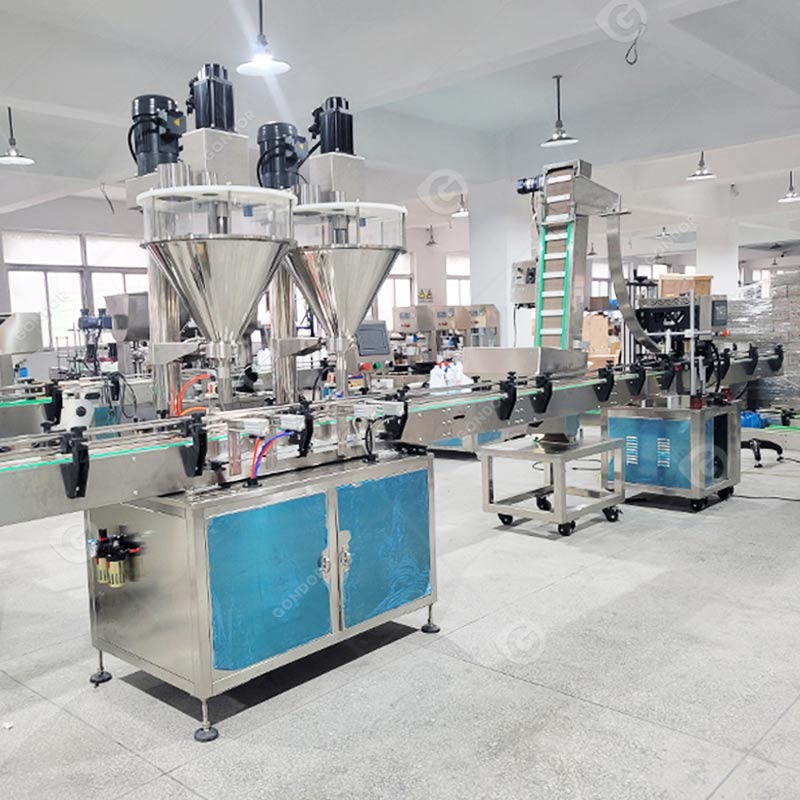
A piston draws product into a defined chamber and then displaces it toward a filling nozzle. The valve sequence controls which path is open during intake and discharge. A servo-driven arrangement controls motion and can support stored settings for different fills.
The actual dose still depends on the chamber filling properly and the flow path operating consistently. A precise motion command cannot correct air occupying part of the chamber or a valve that fails to close properly.
Confirm the dosing mechanism on the quoted machine, since the general term liquid filler can also cover gravity, pump and other arrangements.
Measure individual heads
Collect several consecutive bottles from each nozzle and identify the head that filled them. Tare bottles individually where necessary, weigh the product and record the result in filling order.
Look at both the average and the spread. A head can average the correct amount while producing an unacceptably wide range. Conversely, a stable head with a consistent offset may need a different correction from one with intermittent short fills.
Do the comparison during steady operation and after a normal stop and restart. Some faults appear only when the feed line drains, air enters or product stands in the nozzle.
Weight and volume are different measurements
If the requirement is stated in millilitres but the test uses a balance, convert using the product density at the relevant temperature:
Volume = net product mass ÷ density.
For illustration, 500 ml of product at 1.05 g/ml has a net mass of 525 g. Treating a 500 g sample as 500 ml would misstate the fill. This is a calculation example, not a density assumption for every liquid.
Bottle mould variation can also change apparent fill height. Use the agreed measurement method before attributing every visual difference to dosing error.
Match the error pattern to the likely area
| Pattern | Area to inspect |
|---|---|
| All heads drift together | Product temperature, density, supply level and common feed conditions |
| One head remains consistently low | That head's calibration, intake path, valve and seals |
| Intermittent short fills with bubbles | Air entry, feed starvation or unsuitable intake conditions |
| Correct dose followed by drips | Nozzle shutoff, product stringing and discharge timing |
| Errors mainly after restart | Product settling, line drainage and the restart sequence |
Use the supplier's inspection and isolation procedure for mechanical work. The table identifies investigation areas rather than prescribing adjustments for an unknown machine.
Control the liquid before changing the settings
Record viscosity and temperature at filling, especially if the product thickens while cooling. Check whether the supply tank maintains a stable feed and whether the pump introduces air.
For products containing particles, confirm that valves and nozzles pass the specified particle size without inconsistent distribution. A machine tested with clear water has not demonstrated performance with a thick or particulate product.
If the liquid foams, compare the product before the filler and after the nozzle. Foam introduced upstream needs a different solution from foam caused by the filling trajectory or drop height.
Define accuracy before comparing quotations
Ask whether the quoted tolerance applies to each fill or an average, which fill volume it uses and under what product and speed conditions it was tested. Confirm that the measurement excludes container tare and uses a calibrated instrument.
Use the sample pattern to choose the next comparison
Create a row for each filling head and record consecutive net contents in production order. Include the time and any known feed or temperature change. This arrangement shows whether errors follow a nozzle, a period of time or the complete line.
If all heads move together, compare the common product supply and measurement method before adjusting individual calibrations. If one head remains different while the others stay stable, concentrate on that head's path and settings under the supplier's inspection procedure.
Retain enough detail to distinguish a stable offset from random variation. Adjusting the mean of a highly variable head may centre its results without making individual fills acceptable.
Check the weighing method before interpreting small differences
Use a balance appropriate to the required measurement and follow the agreed tare procedure. Empty bottles can vary in mass, so a single assumed tare may introduce apparent variation that did not come from dosing.
For volume requirements, establish density at the relevant product condition. Do not use a previous formula's density merely because the bottles and nominal millilitres are unchanged. If temperature varies through the run, record that variation so the conversion basis remains clear.
Keep foam and sample handling consistent. A bottle that is still draining or a sample transferred differently from the others can complicate the comparison. Define when and how each filled bottle is measured.
Compare intake and discharge time as separate parts of the cycle
A piston cycle must fill the dosing chamber and discharge the product. Increasing the overall rate changes the time available for those actions. The supplier should evaluate whether the intended product feeds and discharges consistently at the proposed speed.
Observe whether the problem begins only above a certain tested rate, and keep product supply conditions stable during that comparison. Do not conclude that a faster motion command gives the same actual dose without measuring the output.
For a product containing particles, include representative material rather than removing difficult pieces for the demonstration. Record the maximum particle size and concentration used in the accepted trial.
Follow changes in hopper and supply condition
Mark refill events and periods when the supply runs low. Compare the filled quantity immediately before and after those events. If the pattern follows supply condition, evaluate the feed arrangement with the machine supplier.
Check the actual product at the nozzle rather than assuming the preparation-tank condition remains unchanged. Transfer time, holding and temperature variation can alter the state presented to the filler.
Where the product is aerated upstream, separating that problem from nozzle-induced foam is useful. A change in filling motion may improve package appearance without establishing that air in the dosing chamber has been removed.
Evaluate the filler within the required packaging rate
The liquid-packaging process guide places dosing beside bottle handling and closure operations. Use the required accepted line rate as the trial condition, because a very slow demonstration may conceal the constraint relevant to production.
Also include the smallest and largest intended fills where these form part of the purchase. A machine family can cover a broad range using different tooling or configurations, and that distinction belongs in the quotation.
Agree on a result that can be verified later
Define the target content, allowable variation, product condition, operating rate and sample method. Identify whether the requirement applies to individual fills, a sample distribution or another agreed measure.
Request a head-by-head record from the accepted trial and keep it with the machine setup. This creates a useful reference if later wear, material changes or supply conditions cause drift. It also keeps the accuracy claim tied to the actual liquid and working format rather than an unexplained percentage from a catalog.
The [liquid filling machine page](/product/liquid-filling-machine/) describes the current servo-piston arrangement. For troubleshooting or a trial, [send the liquid properties, target fill, operating speed and a head-by-head sample record](/contact/). Include bottle and closure samples if the project also covers capping and line integration.
Related guides
Related Products


Sizing equipment for your line?
Send the product, the batch size and the utilities you have. We reply with the model, the cycle time and what the cooling side needs.



