

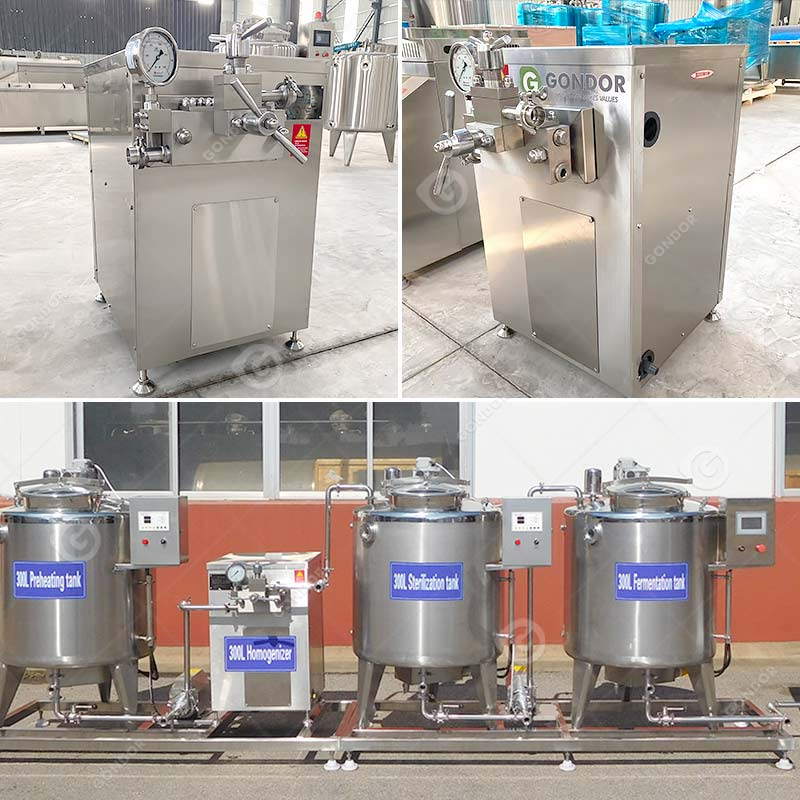

High-Pressure Homogenizer
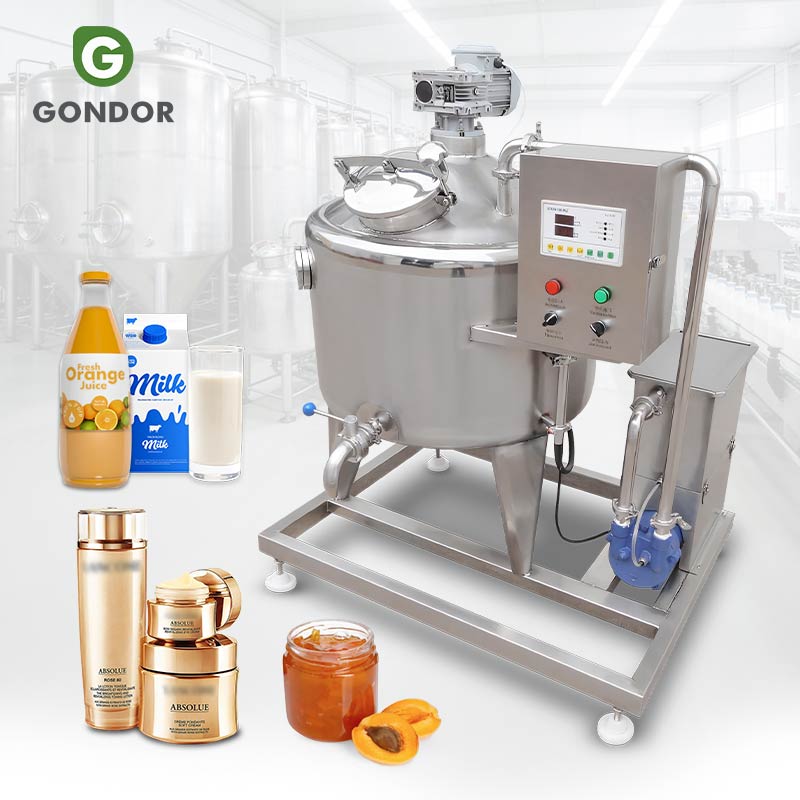
A vacuum emulsifying mixer combines bulk circulation, high-shear treatment and air removal in a controlled vessel. For lotion production, these functions solve different problems: circulation moves the batch, shear helps form the emulsion, and vacuum helps remove entrained gas.
If a lotion remains full of bubbles, increasing the homogenizer speed alone may not solve the problem. The complete mixing and transfer route needs attention.
Why a lotion can look uniform but still contain air
Fine bubbles may be distributed throughout a thick batch without forming an obvious foam layer. They can affect apparent fill volume and leave visible pockets in the package. A sample taken immediately after mixing may therefore look different after standing.
Air can enter while charging powders, pouring phases, forming a surface vortex or transferring through an unsuitable connection. A vacuum stage can remove some of that gas, but later handling can introduce it again.
What each part of the mixer contributes
| Function | Its role in the batch |
|---|---|
| Slow bulk agitator | Circulates material between the vessel wall and the main body of the product |
| Wall scraper, where fitted | Returns wall material to the batch and supports heat transfer |
| High-shear head | Applies localized shear to help disperse ingredients and reduce droplet size |
| Vacuum system | Lowers vessel pressure and removes released gas |
| Heating and cooling jacket | Brings the batch through the recipe's thermal stages |
These systems must be matched to the formulation. A high-speed head cannot compensate for weak circulation in a batch that is too viscous to reach it consistently.
A typical batch sequence
Prepare the required phases, bring them to the specified condition and combine them in the validated order. Establish bulk circulation and apply the required high-shear treatment. Use vacuum at the suitable stage, then cool while maintaining the mixing needed by the recipe. Add temperature-sensitive ingredients at the specified point and transfer without excessive aeration.
The order, temperatures and vacuum conditions depend on the formulation. A supplier's general demonstration recipe should not be adopted as the processing specification for every lotion.
Why bubbles remain after vacuum treatment
First check where the bubbles are observed. If the batch is low in visible air inside the vessel but foamy at the filler, inspect the transfer pump, suction connections and receiving hopper.
If air remains in the vessel, examine circulation, product depth, vacuum stability and treatment time. The available gas-removal area and the viscosity at that stage affect how readily bubbles can escape.
A vacuum reading by itself does not prove that the whole batch has been adequately deaerated. The gauge shows vessel pressure, while the product still needs an effective path for gas release.
Vacuum has limits
Some ingredients contain volatile components that can be lost under unsuitable vacuum conditions. The relationship between pressure and temperature also changes boiling behaviour. Define the product's limits and the vacuum system's handling of vapour and condensate before trials.
Vacuum mixing does not, by itself, establish a sterile product or guarantee storage stability. Packaging, formulation and the rest of the manufacturing process remain part of the product specification.
What to measure in a trial
Use the intended formula and record batch volume, temperature history, mixing stages and vacuum history. Compare density or another agreed air-content indicator before treatment, after treatment and after transfer. Assess the cooled product and packaged samples using the same storage and inspection method.
Check the actual working-volume range. The [vacuum emulsifying mixer page](/product/vacuum-emulsifying-mixer/) covers larger batch vessels, and a development batch must still engage the installed mixing system correctly.
Will a bigger vacuum pump fix the issue?
It may help when pump capacity is the confirmed constraint, but it will not correct a leaking connection, unsuitable vessel circulation or air introduced after discharge. Identify the location of air entry before changing equipment.
Use density comparisons to locate retained air
Visible foam does not describe every form of air in a lotion. A product can contain small dispersed bubbles without a large foam cap, so an appearance check should be supported by an agreed measurement where air content is important.
One practical comparison is apparent density measured under a consistent procedure. Use the same sample temperature, sample container and filling method before and after the treatment. Otherwise, differences in handling or temperature can obscure the change that the vacuum stage produced.
For an illustration, suppose an air-containing sample has an apparent density of 0.95 g/ml while a suitable reference from the same formulation is measured at 1.00 g/ml. Filling a nominal 100 ml with the first sample delivers 95 g, compared with 100 g for the reference. This shows a possible packaging consequence; it is not a universal air-percentage test or a density specification for lotion.
Compare the product at three locations
Take representative samples from the main vessel, after the transfer equipment and at the filling supply point. Keep the sampling method comparable and label the time of collection.
If the main-vessel sample meets the agreed requirement while the transfer sample does not, concentrate on the connecting operation. Review falling product streams, receiving-vessel level, suction connections and the pump arrangement. The appropriate investigation follows where the condition changes.
If all three samples contain too much air, return to charging and mixing. Record whether powders were added at the surface, whether a vortex developed and when vacuum was applied relative to viscosity development. A process that traps air before becoming very thick may need a different evaluated sequence from one that introduces air mainly during discharge.
Do not use mixing time as the only endpoint
A fixed cycle time is useful for repeating a validated process, but it should originate from a product result. State how the cooled emulsion will be evaluated for texture, appearance and any required stability characteristic.
Record the separate periods of bulk agitation, high shear and vacuum. If a trial simply states 30 minutes of mixing, it leaves unclear which functions operated during that interval. A later operator may reproduce the elapsed time while applying a different treatment.
Also record when ingredients were added and when the product passed through the stages at which viscosity changed. These events can explain why two apparently identical cycles produced different circulation or gas-release behaviour.
Review scale-up with the whole vessel in mind
The liquid-preparation process guide places vacuum emulsification alongside bulk mixing, pressure treatment and other operations. Use that wider view when deciding whether a larger vacuum mixer replaces an existing operation or adds a separate stage.
For the proposed vessel, ask how the minimum batch reaches the homogenizing head and how the maximum batch circulates. Confirm the usable volume rather than relying on the model name. Check the product-contact materials and cleaning arrangements for the intended duty, especially if the product family also includes machines for different industries.
Specify a run that reveals the practical limits
Provide enough representative material to observe charging, the normal batch cycle, cooling and transfer. Include the product left in the vessel and lines in the material record. A sample taken only from an easy-to-reach location can miss material that did not circulate or discharge effectively.
Ask the supplier to state which results are demonstrated, which are estimates and which require a longer product assessment. The proposal should identify the vessel, head arrangement, agitator, vacuum equipment, utilities and included controls. That information makes the trial repeatable and prevents an attractive sample from being treated as proof of every required production condition.
For a mixing assessment, [send the lotion's viscosity at processing temperature, batch size, phase-addition sequence and photos showing where bubbles appear](/contact/). Include whether the issue is present in the vessel, after transfer or only in the final package.
Related guides
Related Products


Sizing equipment for your line?
Send the product, the batch size and the utilities you have. We reply with the model, the cycle time and what the cooling side needs.



