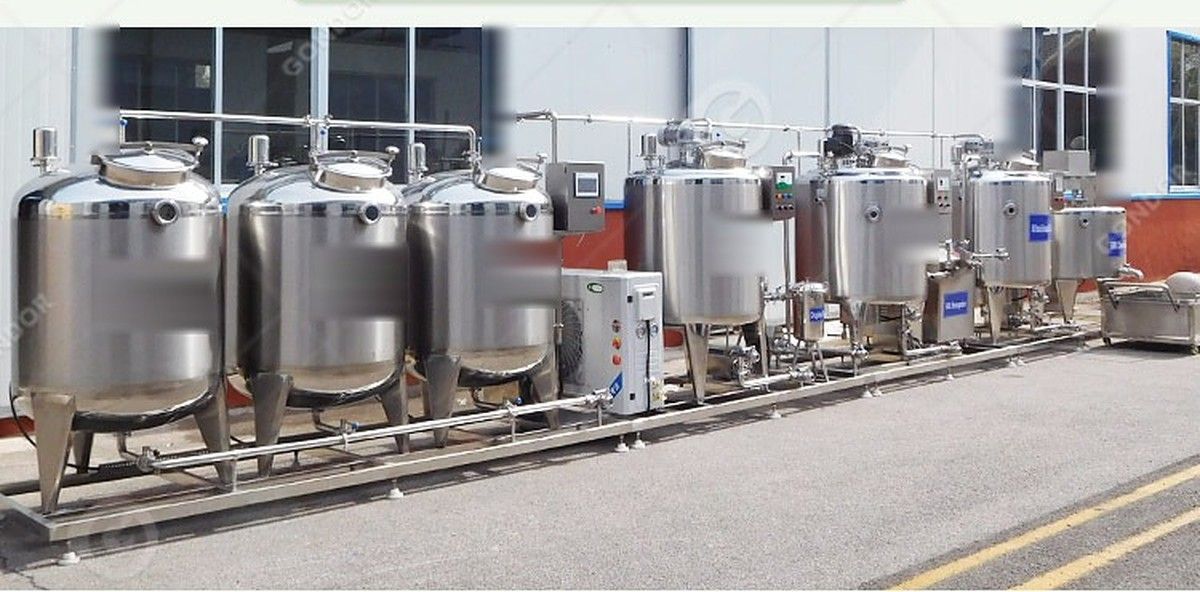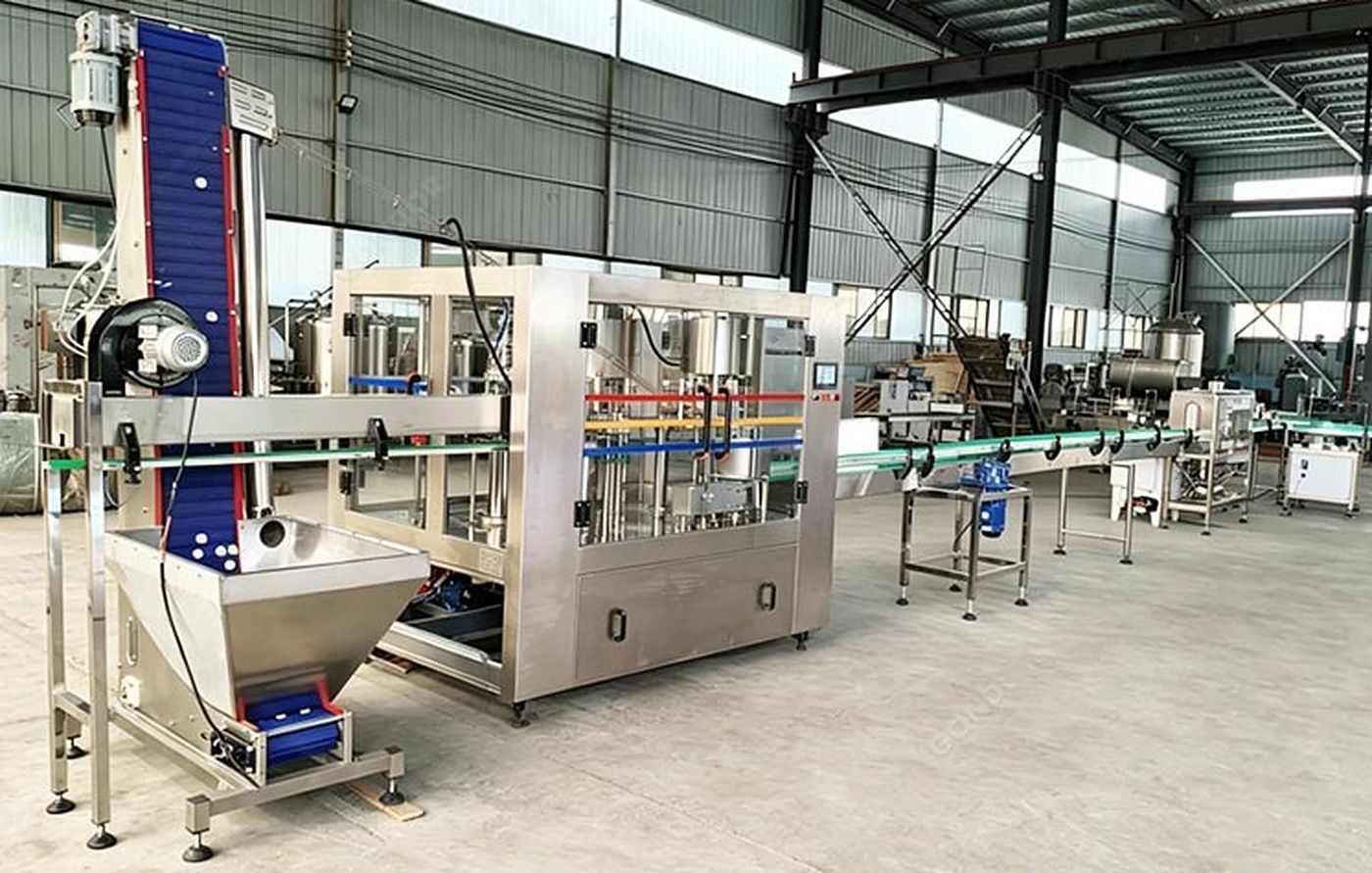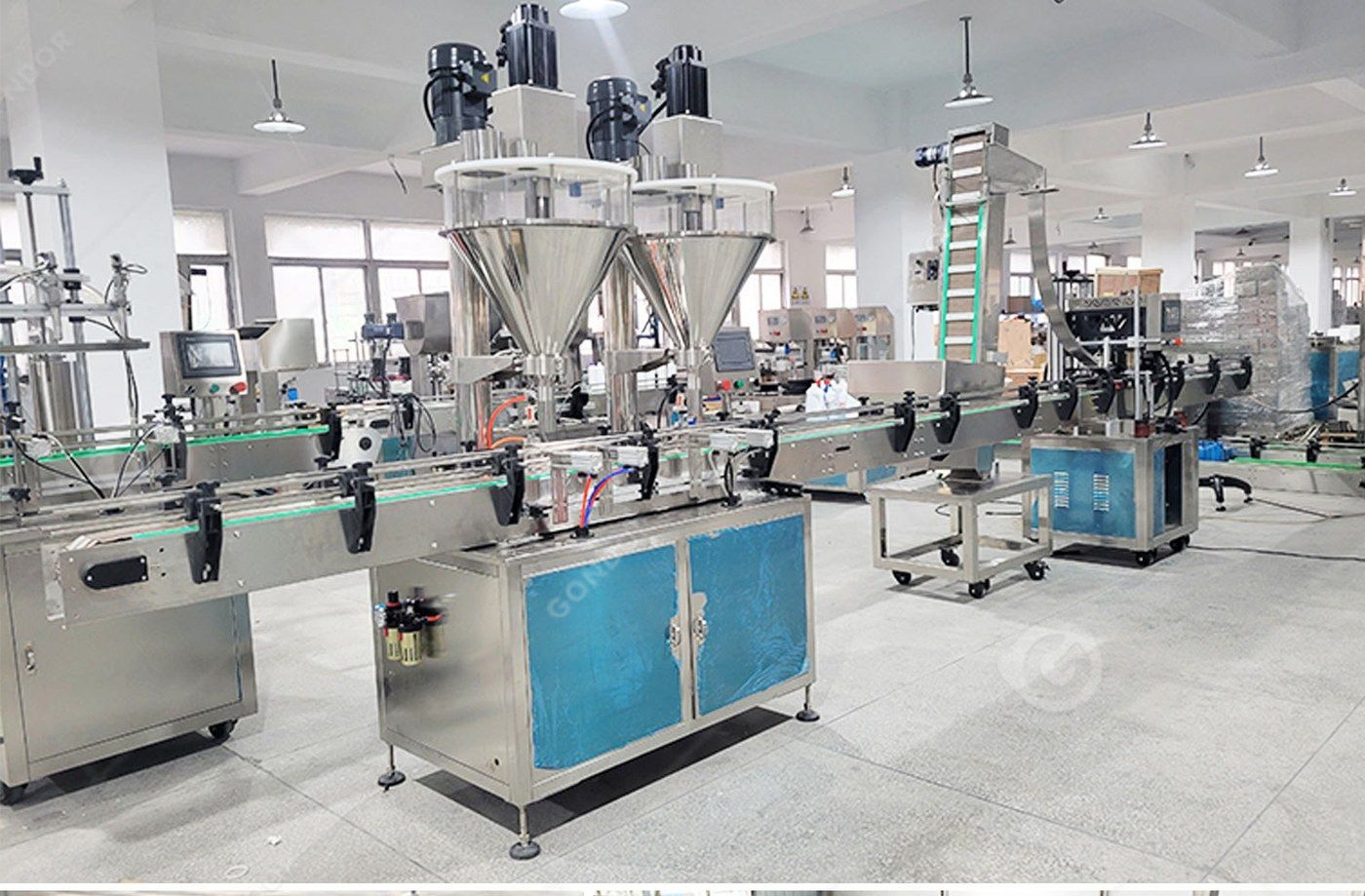


Cheese Processing Production Line
At a Glance
| Item | Detail |
|---|---|
| Core spec | 100-1000 L in five sizes |
| What sets it apart | Six process steps in one vessel at ±1 °C |
| Pain point solved | Open vats heated by hand give a different batch each time |
A 100-1000 L jacketed cheese vat holding ±1 °C, carrying culturing, cutting and cooling through in one vessel for a repeatable recipe.
Overview of a Cheese Making Machine and What It Replaces on the Floor
Anyone who has made cheese for a living knows that seven tenths of a vat’s outcome hang on temperature. Drift two degrees off the fermentation setpoint and the starter culture falls out of rhythm. Coagulation time becomes a guess, the curd cuts either too fine or too loose, and the direction of the whole batch changes. The old open-bucket-plus-hot-water approach relies on a hand in the milk and an eye on the clock, and no two batches land the same, which makes locking a recipe down nearly impossible.
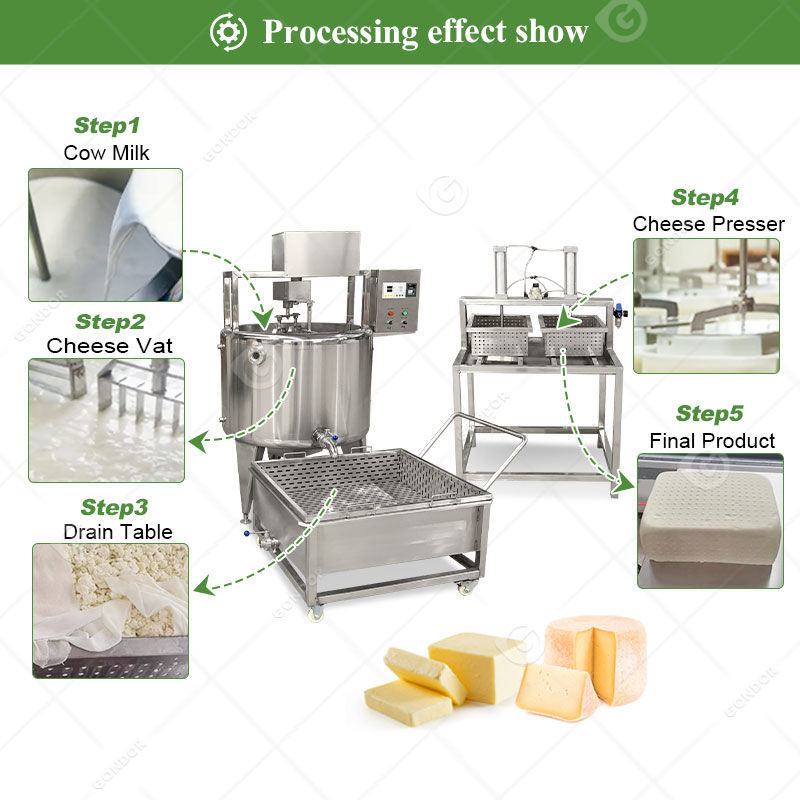
The cheese making machine pulls that entire vat of work into one jacketed tank: pasteurizing, inoculated fermentation, rennet coagulation, curd cutting, whey separation and cooling all happen in place, with temperature and agitation speed under automatic control and fermentation held within ±1 ℃ of setpoint. Five models run from 100 L to 1000 L per batch, with steam or electric heating and variable-frequency agitation for materials at every stage of the process. Fresh cheese, soft white rind cheese, goat cheese, washed rind cheese and semi-hard cheese are all in scope, and mozzarella process preparation runs in the same vat.
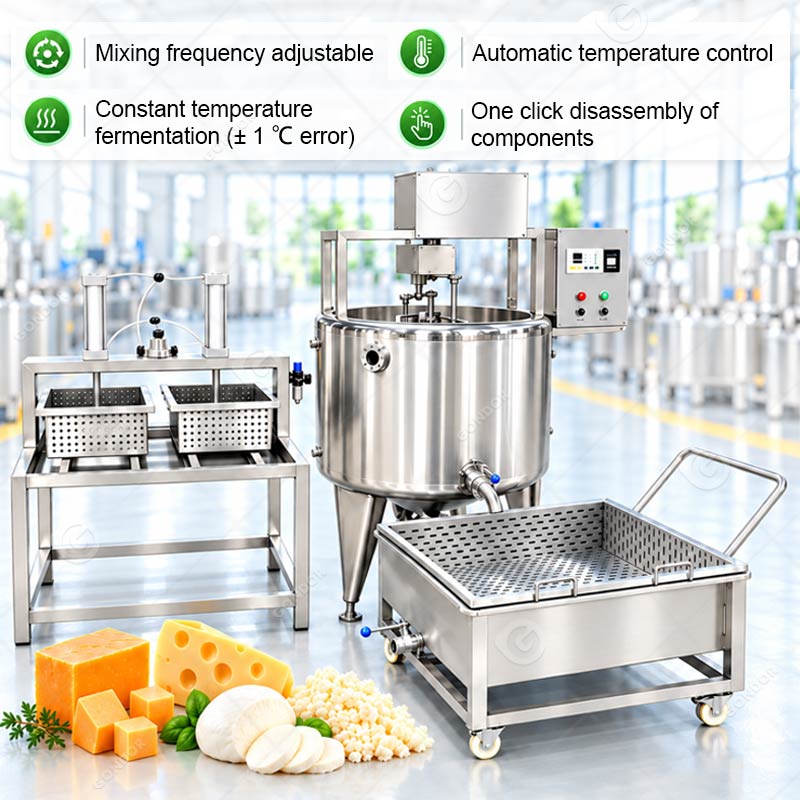 A GD-500 vat with its press, molds and draining cart — the whole cell fits a 6 × 4 m room.
Cheese Making Machine Technical Data and Vat Sizes
Five-model comparison (per the official parameter table)
| Item | GD-GCCM100 | GD-GCCM200 | GD-GCCM300 | GD-GCCM500 | GD-GCCM1000 |
|---|---|---|---|---|---|
| Batch capacity | 100 L | 200 L | 300 L | 500 L | 1000 L |
| Tank material | SUS304 | SUS304 | SUS304 | SUS304 | SUS304 |
| Voltage | 220 V/380 V 50 Hz | 380 V 50 Hz | 380 V 50 Hz | 380 V 50 Hz | 380 V 50 Hz |
| Heating power | 6 kW / 9 kW | 9 kW | 9 kW×2=18 kW | 12 kW×2=24 kW | 12 kW×4=48 kW |
| Agitation power | 0.37 kW | 0.37 kW | 0.55 kW | 0.55 kW | 0.75 kW |
| Agitation speed | 0-36 rpm | 0-36 rpm | 0-36 rpm | 0-36 rpm | 0-36 rpm |
| Tank diameter | 740 mm | 770 mm | 900 mm | ID 1000/OD 1200 mm | ID 1050/OD 1500 mm |
| Internal height | 400 mm | 670 mm | 650 mm | 650 mm | 2030 mm |
| Inlet/outlet | DN51 | DN51 | DN51 | DN76 | DN76 |
| Machine dimensions | 1100×850×1550 mm | 1200×900×1650 mm | 1250×1000×1700 mm | 1500×1150×1900 mm | 2400×1500×1650 mm |
General parameters
| Item | Specification |
|---|---|
| Series code | GD-GCCM |
| Batch capacity | 100-1000 L/batch |
| Function | Pasteurizing, fermenting, coagulation, curd cutting, cooling |
| Tank structure | Jacketed, insulated |
| Heating | Steam / electric |
| Cooling | Water (jacket) |
| Agitation control | Variable frequency, 0-36 rpm |
| Fermentation temperature accuracy | ±1 ℃ |
| Unit weight | 280 kg (base model) |
| Certification | ISO 9001, ISO 14001, ISO 45001, CE, BSCI, ETL |
| OEM / ODM | Accepted |
Note: the 1000 L model is a tall vessel at 2030 mm internal height, so room clearance and the machine access route need checking before order time. Official material gives the unit weight only for the base model; other figures are confirmed per contract.
Working Principle and Structure of a Cheese Making Machine
In short. The process divides into four steps: milk enters the tank and is heated for pasteurization, then cooled and inoculated for temperature-controlled acidification, rennet is added so milk proteins set into a curd, and the curd is cut, stirred for whey release, and cooled for molding. The jacket handles heating and cooling, the agitator handles mixing and cutting, and the control system follows the process curve while the operator watches parameters instead of guessing by hand.
01Charging and pasteurizationFresh milk enters through the DN51 or DN76 ports. The jacket raises it to pasteurization temperature, holds, then drops it back into the fermentation band.
02Temperature-controlled fermentationAt 32–45 °C for common types the starter goes in. Variable-frequency agitation runs slow and holds the vat within ±1 °C of setpoint.
03Rennet coagulationRennet is dosed per recipe and the proteins cross-link into a gel. No heat and no agitation while the curd sets.
04Cutting, stirring and coolingThe agitator switches to cutting duty, whey releases, then the jacket moves to cooling water ready for molding.
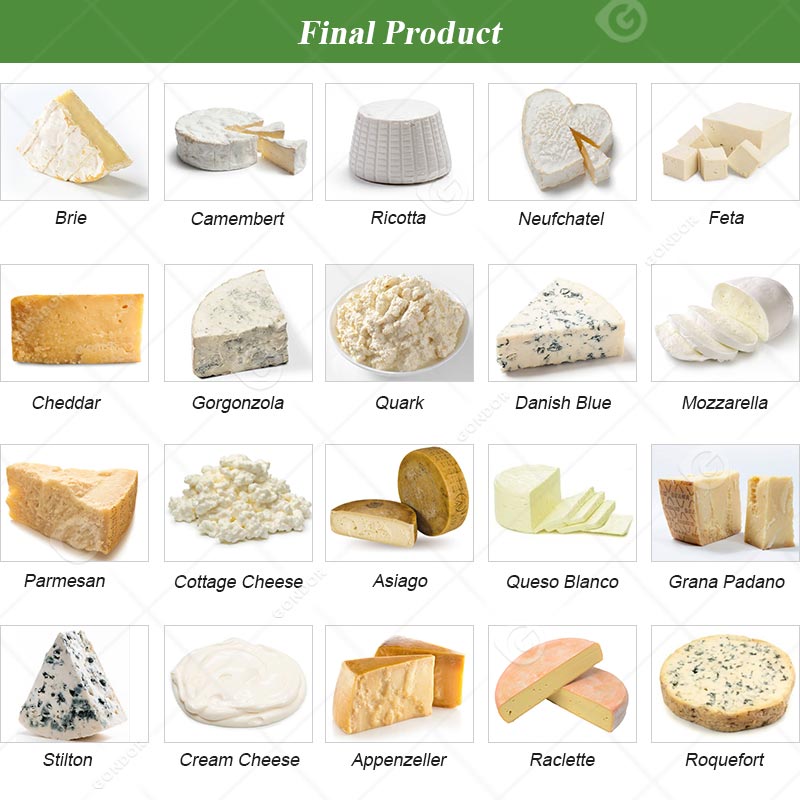 Fresh, soft white rind, goat and washed rind types all run in the same vat — only the culture and the cut size change.
Product Performance Advantages
- Six process steps in one vat, with no intermediate transfer. Pasteurizing, fermentation, coagulation, cutting, whey separation and cooling all happen in the same tank. Every transfer is a contamination chance and a whey loss, a bill that adds up fast for plants running many small batches.
- Fermentation held within ±1 ℃, so a recipe can actually be fixed. Automatic temperature control plus slow variable-frequency agitation runs the same curve on every batch. Customers making standardized products know this is the line an auditor looks at first.
- Five capacities from trial runs to full production. 100 L, 200 L, 300 L, 500 L and 1000 L models. Develop on a small vat, scale to a large one, and carry the process parameters across without starting over.
- Variable-frequency agitation from 0 to 36 rpm, gentle or firm as the material asks. Low speed for even mixing during fermentation, then a switch to cutting duty. Materials at every moisture level are handled without forcing.
- Jacketed insulated tank with SUS304 contact surfaces. The double-wall jacket holds heat or cold as the step requires. All milk-contact parts are food-grade 304 stainless steel, polished, and clean readily by CIP or by hand, meeting the hygiene reviews standard in dairy plants.
- Steam or electric heating, matched to the plant. Plants with a boiler take steam heating; the rest take electric. Export orders are configured to local energy conditions.
Engineering Design and Structure
Jacketed tank. The tank is a double-wall insulated structure with steam, hot water or cooling water in the jacket. Tank diameters run from 740 mm up to 1050 mm internal with a 1500 mm external jacket on the largest model, and the internal height follows batch capacity. The 1000 L model uses a tall, slim geometry at 2030 mm internal height to balance agitation coverage against floor space.
Mixing and cutting system. The shaft carries a planetary agitator that reaches every corner of the vat, so curd grain size stays uniform and whey release stays complete. Agitation power runs 0.37 to 0.75 kW on variable-frequency drive at 0 to 36 rpm.
Hydraulic forming frame and filter cart. Some models add a hydraulic forming frame that presses wet curd in the mold to drain; a filter cart takes the whey separation step, where gravity plus compression firms the curd.
Temperature control and electricals. Heating temperature and agitation speed are controlled automatically, with the cabinet centralizing the loops. Probe and drive readings sit in plain view. Tight fermentation temperature is the anchor of the machine’s value.
Structure breakdown
| No. | Part | Function |
|---|---|---|
| 1 | Jacketed tank | Process vessel for heating, holding and cooling |
| 2 | Mixer shaft & planetary agitator | Mixing and curd cutting, no dead corners |
| 3 | Hydraulic forming frame | In-mold pressing and drainage (some models) |
| 4 | Filter cart | Whey separation and curd transfer |
| 5 | Control cabinet | Automatic temperature and agitation control |
| 6 | DN51/DN76 inlet and outlet | Milk charging and product discharge |
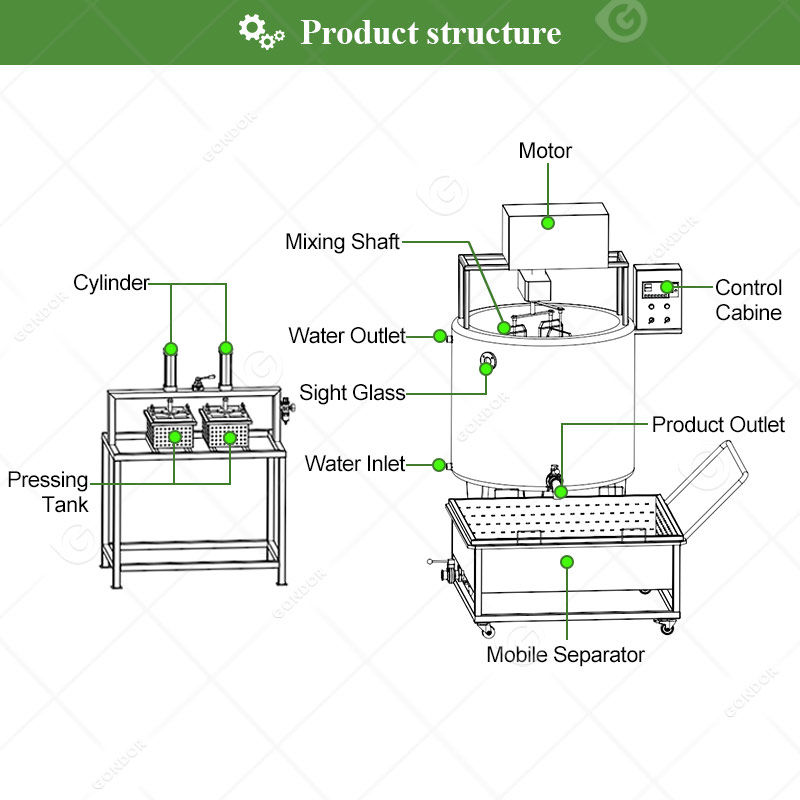 Numbers 1–6 match the structure breakdown in the table above.
Operating Procedure
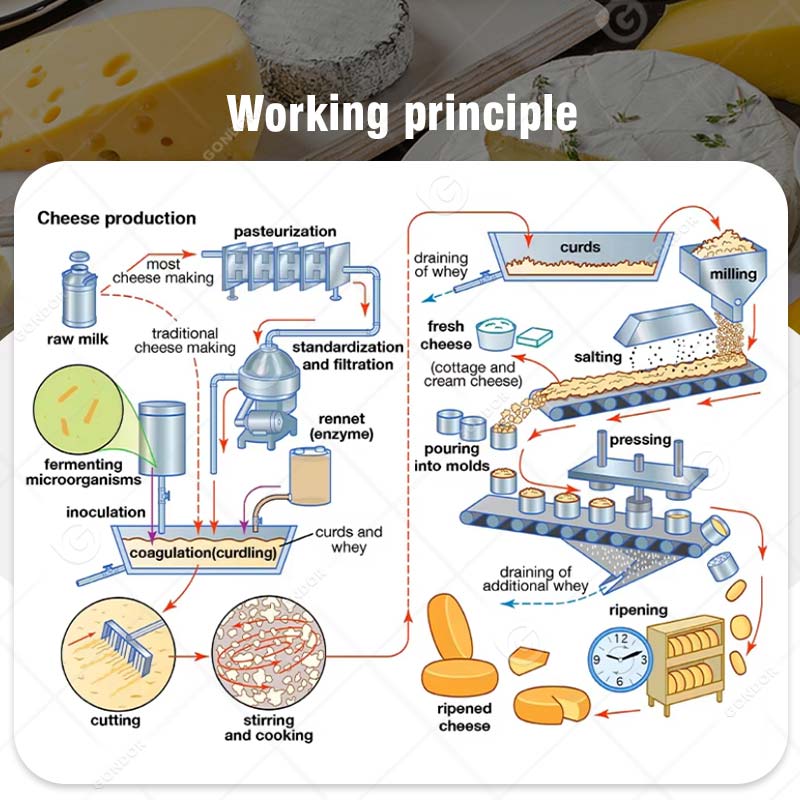
- Pre-start check. Tank cleaned, jacket water or steam circuit clear, agitator seated, cabinet parameters reset.
- Charging and heating. Pump milk into the vat, raise to pasteurization temperature in the jacket, hold, then cool into the fermentation band.
- Inoculation and fermentation. Add the starter culture, set fermentation temperature and agitation speed, and run at constant temperature until acidification is reached.
- Rennet coagulation. Add rennet and let the vat rest while the curd sets; watch curd condition.
- Cutting and stirring. Switch to cutting duty, cut the curd into grains, then stir gently for whey release and drain the whey.
- Cooling and forming. Switch the jacket to cooling, then move the curd to the filter cart, forming frame or press.
- Cleaning close-out. Run CIP or a manual wash on the tank, agitator and pipework after production ends.
Which Cheeses a Cheese Making Machine Handles
Dairy plants and cheese workshops. Batch production of fresh cheese, soft white rind cheese, goat cheese, washed rind cheese and semi-hard cheese is the core duty. Mozzarella process preparation through heating runs in the same vat.
Central kitchens and catering supply chains. In-house cheese supply and mozzarella preparation for pizza chains stay far more controllable by the batch than by hand.
Dairy farms and farmstead operations. Farms with a steady milk supply convert several hundred litres a day into cheese and cream cheese on site, at a value well above selling raw milk. The 100 L model exists for exactly this case.
New product development in food plants. Trial new cultures and recipes in small batches on the 100 L or 200 L model at low risk, then scale to production models once the process is fixed.
University and laboratory work. Dairy technology teaching and sample preparation for fat and protein analysis fit comfortably within the temperature accuracy and hygiene level of the machine.
Selection and Sizing of a Cheese Making Machine
Settle three questions before choosing a capacity.
- Milk supply and batch size. Back-calculate from the daily milk volume. A rough guide is 10 L of milk to 1 kg of hard cheese, and leave margin for the drain table and press downstream.
- Product line. Fresh soft cheeses need pasteurization plus short-cycle fermentation. Semi-hard or stretched varieties need cutting and heating duty, so state the full process when selecting.
- Heat source. Take steam heating where a boiler exists, electric otherwise. At 500 L and above, heating power reaches 24 kW and 48 kW, so incoming line capacity must be confirmed before ordering.
- Site and hygiene. Large-vessel models approach 2 m in height. Check the access route, room height, drainage and CIP conditions together. Do not let the machine arrive at a door it cannot pass.
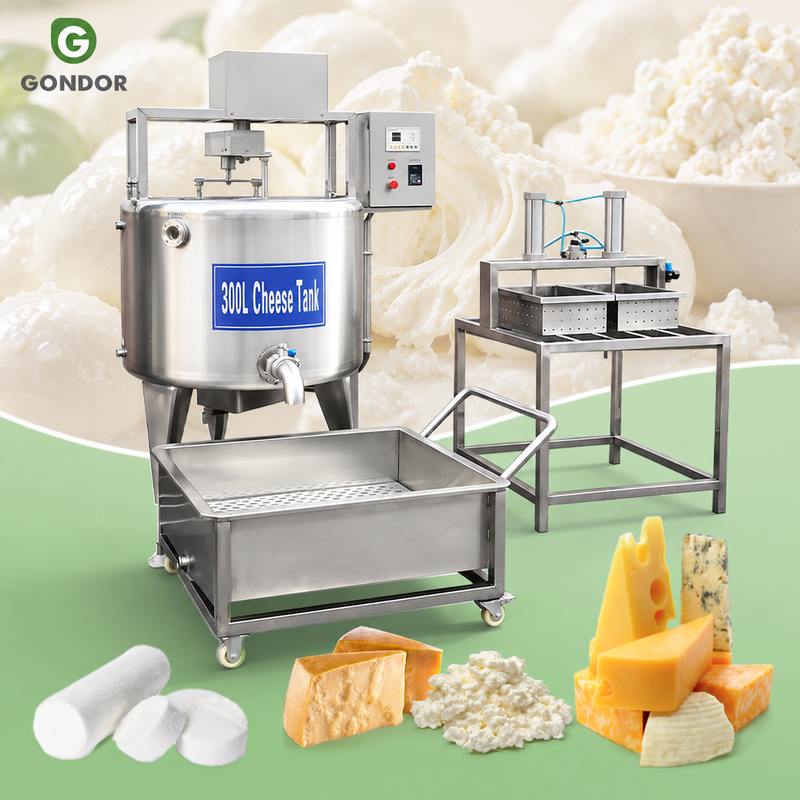 The 300 L set: vat, press and draining trolley arrive as one package for a startup room.
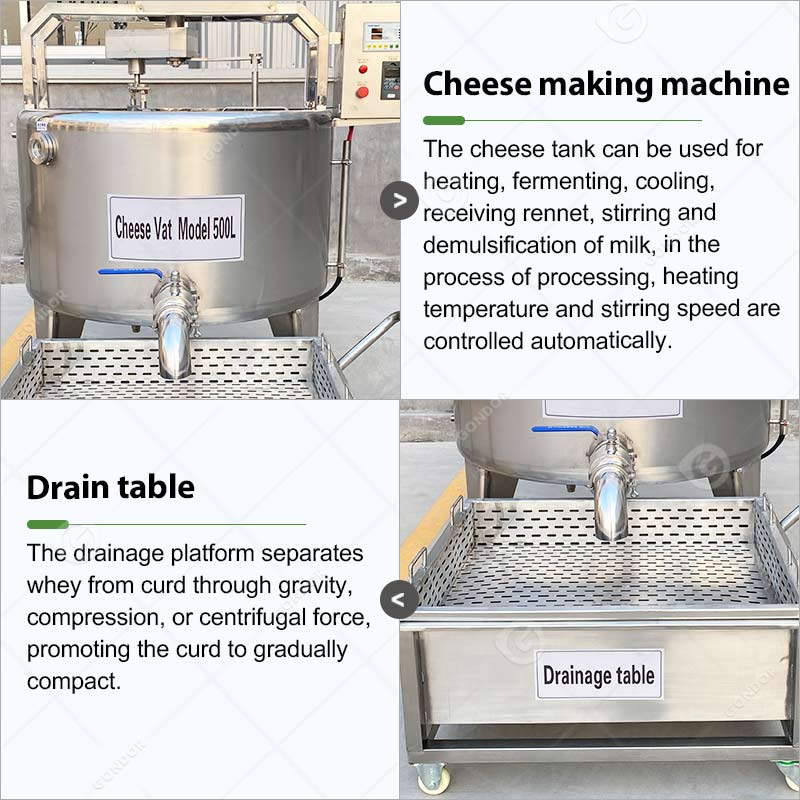 The 500 L vat with its drainage table — similar footprint, twice the batch, no trolley in the way.
Limits worth stating plainly. This is a cheese process machine, not a fully automatic cheese line: whey draining, molding, pressing, salting and aging still need supporting equipment and hands-on work. Fermentation time runs from a few hours to more than ten depending on variety, so capacity planning follows the process cycle rather than the tank volume alone. Use fresh whole milk. Ultra-high temperature treated milk and skim milk set poorly, which is a raw material limit rather than an equipment defect.
Customization
OEM and ODM are both accepted. Tank capacity, heating method, agitation form and automation level are all adjustable to requirement, and the control interface language follows the order. Retooling lead time: quoted with the offer. MOQ: quoted with the offer. Export orders are wired for the target market voltage, with 220 V limited to smaller capacities.
Commercial Information
- Minimum order quantity (MOQ): quoted with the offer
- Standard lead time: quoted with the offer (custom builds per contract)
- Packaging: inner waterproof film, outer standard wooden case for international transport
- Trade terms and loading port: quoted with the offer
Quality Inspection and After-sales
A pre-shipment video inspection is provided, and a mechanical test report ships with each unit. Factory inspection covers jacket pressure integrity, temperature control accuracy and agitation running. Warranty period: quoted with the offer. Spare parts list and supply cycle: quoted with the offer. After-sales runs mainly on online technical support, installation and commissioning are guided remotely, and operator training material ships with the machine.
Cheese Making Machine Questions Buyers Ask Before Ordering
1. Which cheeses can this machine make?
Fresh cheese, soft white rind cheese, goat cheese, washed rind cheese and semi-hard cheese, plus in-vat preparation for mozzarella stretching. Fermentation temperature and time differ by variety, so name the target types at order time and the process parameters ship with the machine.
2. How long does milk take to become cheese?
By variety, commonly 4 to 12 hours. Stretched types run about 4 to 5 hours including heating and stretching; cream cheese types ferment slowly for 8 to 12 hours. These figures cover vat time only, excluding draining, salting and aging.
3. What milk does it need?
Fresh whole milk, ideally 3.5% fat or above for good stretching. UHT-treated and skim milk set poorly and are not recommended as the main feed. Starter culture and rennet are dosed per the variety recipe.
4. Why did my milk fail to set?
Three common causes: UHT or low-fat milk was used; fermentation temperature drifted outside the 32 to 45 ℃ band; or the rennet failed, so check its shelf life and cold storage. If the batch still fails after those checks, send the parameters to after-sales for analysis.
5. Steam or electric heating?
Either, fixed at order time. Plants with a boiler or steam source take steam at lower running cost. Without steam, take electric and confirm installed power and line capacity accordingly.
6. How is the tank cleaned?
Run a CIP cycle after daily production. All milk-contact parts are food-grade 304 stainless steel with a polished finish and no hygiene dead corners. Stubborn milk scale can be removed by circulating a 1:2 white vinegar and water mix at low temperature, then rinsing. Avoid hard tools that scratch the polish.
7. Can capacity or tank geometry be customized?
Yes, OEM and ODM are both accepted. Capacity, agitation form, heating method and automation level adjust to requirement. Retooling lead time and MOQ are settled per order review.
8. How are voltage and certification handled for export?
Voltage follows the target market, with 220 V available on smaller capacities. CE, ISO 9001/14001/45001, BSCI and ETL documents ship with the order. State special market requirements before ordering.
Moving Forward With a Cheese Making Machine Project
Send three items: the daily milk volume available, the target cheese varieties, and the heat source condition, steam or electric. We will recommend the matching capacity, set out the process parameter sheet and prepare a quotation. To validate the process first, describe the variety and recipe direction and we will provide reference process curves from comparable products.
Contact
Henan Gondor Machine Co., Ltd. Website inquiry form, WhatsApp or email. Replies within 24 hours on working days.
Related Equipment
- Cheese Cutting Machine — takes the pressed block and forms it into cubes or strips at a set size.
- Cheese Processing Line — wraps this vat into a ten-station line when the volume outgrows a single batch.
- Milk Pasteurizer Machine — can run ahead of the vat where pasteurising is done off-vessel.
Talk to an Engineer About Cheese Making Machine Pricing
Send us the daily volume, the product and the container or pack format you are working with, and we will come back with a model recommendation, a utility list and a price.
Related guides
Related Products


Sizing equipment for your line?
Send the product, the batch size and the utilities you have. We reply with the model, the cycle time and what the cooling side needs.